
 0
0
 0
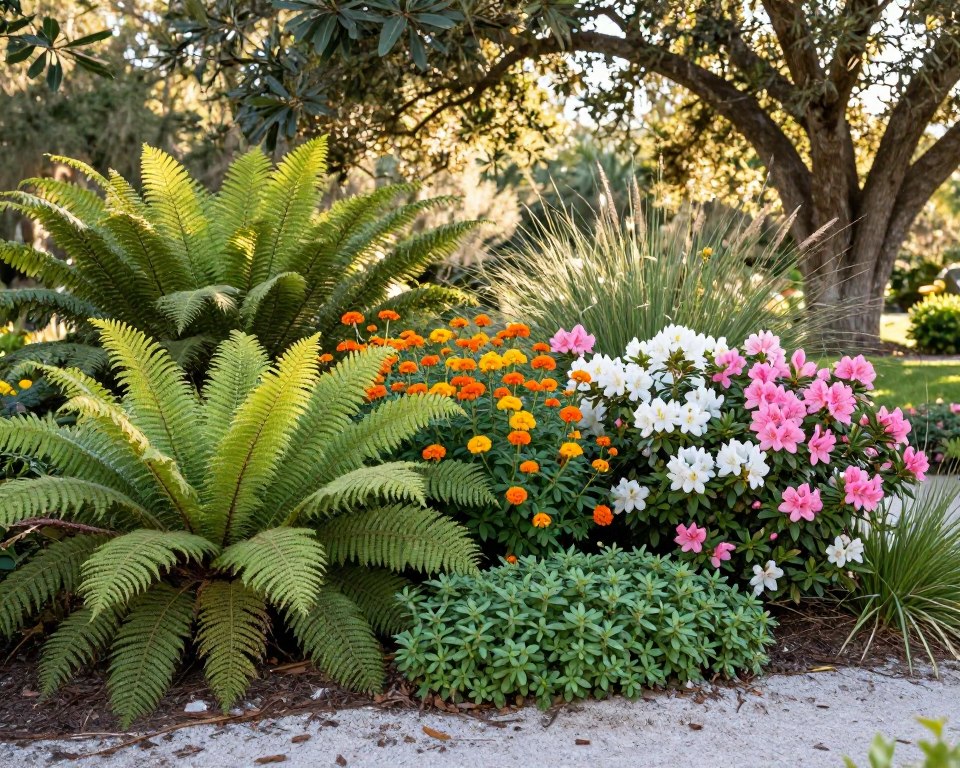
0 Florida native plants for shade gardens thrive under filtered light and make small urban yards feel like living corridors for birds, bees, and butterflies.
Look, many species here handle a patchwork of sun and dappled cover beneath pines and oaks. Filtered sunlight often still triggers blooms that attract pollinators, even if full sun blooms drop off.
Use the right plant in the right spot to cut maintenance and reduce fertilizer needs while building habitat. Expect fewer flowers in deep cover, but plan around moisture, root competition, and light levels to improve establishment.
Key Takeaways
- Define shade areas: yards usually have mixed light under trees and near structures.
- Filtered light can still support flowering species that feed local wildlife.
- Choose plants matched to full shade, partial shade, or dappled light and soil moisture.
- Right plant, right place reduces inputs like fertilizer and irrigation.
- Expect less bloom in dense shade; pick groundcovers, ferns, and shrubs suited to each site.
Match the Plant to Your Shade: Full Shade, Partial Shade, and Dappled Light
Measure how many hours of direct sun a location gets, then pick species built for that level. Use a simple rule of thumb: less than two hours of sun is full shade, two to four hours is partial, and scattered rays through a canopy are dappled light.
Full shade spots
Full shade appears under dense live oak canopies, north-facing walls, or beneath porches. These areas rarely get direct sun and favor low-light species that tolerate moist, cool conditions.
Partial shade areas
Partial shade is the sweet spot for many bloomers. Morning or late-day sun with afternoon protection gives two to four hours of sun and supports more flowering and pollinator visits.
Dappled light under pines and hardwoods
Dappled light comes from heavily treed landscapes. Filtered rays often promote more flowers than deep cover because intermittent sun boosts photosynthesis.
- Quick rule: count daily sun hours to place each spot correctly.
- Watch seasonal changes and canopy openings after storms or pruning; light conditions shift fast.
Quick Site Check for Better Results in Shady Areas
A quick weekend audit sets expectations and reduces wasted effort. Walk each area at three times — morning, midday, late afternoon — and note where light falls. Sketch a simple map showing bright, dappled, and dark spots so planting choices match conditions.
- Count light hours: Check each spot during morning, midday, and afternoon. Record total hours of direct sun and mark the map.
- Watch roots and trees: Test digging depth near large trees. If roots crowd the top 6 inches, expect limited root space and less water retention.
- Measure soil depth: Wildflowers need about 6–12 inches of good soil for root development. Choose smaller specimens where depth is shallow.
- Do a drainage test: After heavy rain, note whether water pools or soil stays wet 12+ hours. Persistent standing water calls for wet-tolerant choices; quick-draining areas need drought-tolerant options.
- Clear competition: Remove weeds, vines, and grasses before planting. Leave open spacing between groups to boost airflow and cut lingering moisture.
| Site Feature | Quick Check | Action |
|---|---|---|
| Light | Count hours across day | Map spots; match species to light |
| Soil depth | Probe 6–12 inches | Pick smaller stock if shallow |
| Drainage after rain | Note pooling over 12 hours | Choose wet or dry tolerant types |
| Competition | Look for weeds, vines, grasses | Clear before planting and mulch lightly |
Florida Native Plants for Shade Gardens That Support Wildlife
Connected plantings in yards and along streets act like soft corridors that let wildlife travel, feed, and nest across urban neighborhoods. These green linkages matter most where open habitat is broken by houses and roads.
Why plantings act as habitat highways
Small, continuous patches give birds, bees, and butterflies safe places to refuel between larger natural areas. Even narrow strips of vegetation let pollinators move and find nectar or pollen.
What wildlife uses in shaded beds
- Birds use berries, seeds, and dense shrubs for food and cover.
- Bees and butterflies rely on flowers and nectar during migration and breeding.
- Leaf litter and old stems supply shelter, pupation sites, and insect prey.
| Feature | How it helps wildlife | Low-effort action |
|---|---|---|
| Connected beds | Enable movement and gene flow | Link front and back yards with continuous plantings |
| Layered structure | Provides food at multiple heights | Mix groundcovers, perennials, shrubs, and vines |
| Seasonal blooms | Maintain nectar across months | Choose species with staggered flowering |
| Leaf litter | Boosts insects and shelter | Leave some leaves and stems through winter |
Expect more flowers in sunnier spots, but filtered light still supports nectar sources that attract bees and butterflies. The upcoming plant lists show specific choices and where each performs best.
Low-Growing Native Groundcovers for Shade Beds
Low-growing groundcovers form the foundation of any shady bed, holding soil and cutting weed pressure. Use them to cover bare soil, reduce maintenance, and create a tidy framework before adding taller layers.
Oblongleaf twinflower (Dyschoriste oblongifolia)
Where it works: well-drained spots under open canopy and low-traffic lawn replacements.
What it looks like: spreads to form a soft carpet with small blooms and glossy foliage.
Watch for: start in groups; it will fill gaps but avoids heavy foot traffic and compacted soil.
Common blue violet (Viola sororia)
Where it works: adaptable shade coverage in moist or seasonally dry beds and meadows.
What it looks like: heart-shaped leaves and purple flowers that naturalize and attract butterflies.
Blue-eyed grass (Sisyrinchium angustifolium)
Where it works: edging, small beds, and tidy borders where a low profile matters.
What it looks like: fine leaves and starry blooms; keeps a neat, lawn-like appearance.
Partridgeberry (Mitchella repens)
Where it works: woodland-style mats under trees and near paths where leaf litter is tolerated.
What it looks like: dainty foliage and red fruit that provide food for birds and small mammals.
- Placement tip: lawn-replacement groundcovers suit low-traffic areas, between stepping stones, or under an open canopy.
- Planting note: begin with small groupings, keep soil evenly moist while roots establish, and let patches knit together naturally.
- Maintenance: minimal once established—thin only to improve air flow and remove invasive weeds.
| Species | Best spot | Key benefit |
|---|---|---|
| Dyschoriste oblongifolia | Low-traffic turf areas | Lawn replacement; low water and mowing |
| Viola sororia | Moist shade beds | Naturalizes; supports butterflies |
| Sisyrinchium angustifolium | Edges and small beds | Tidy, low profile |
| Mitchella repens | Woodland mats | Fruit for birds; ornamental foliage |
Shade-Tolerant Wildflowers That Still Bloom for Bees and Butterflies
Choose wildflowers that keep producing blooms even under lower light to feed bees and butterflies late into the season.
Frostweed (Verbesina virginica)
Flowers late summer through fall along moist woodland edges. It supplies reliable nectar when many beds slow down.
Mistflower (Conoclinium coelestinum)
Mass plantings create a blue haze that concentrates butterfly activity. Best at canopy edges where filtered sun reaches the blooms.
Wild petunia (Ruellia caroliniensis)
Blooms from late spring into early fall. Use it where steady visits from pollinators are desired across the season.
Spotted beebalm (Monarda punctata)
Attracts a wide mix of insects and thrives in partial shade. Plant where some afternoon rays reach the bed to boost flower set.
Stokes’ aster (Stokesia laevis)
Blooms in spring and summer and can repeat when light allows. Place it in brighter edges to extend the flowering year.
- How to pick: place the most bloom-hungry species where filtered sun is strongest, such as canopy edges.
- Mix strategy: combine late-season frostweed with massed mistflower to supply continuous nectar.
| Species | Bloom time | Best spot | Pollinator benefit |
|---|---|---|---|
| Frostweed | Late summer–fall | Moist woodland edges | Late-season nectar for bees & butterflies |
| Mistflower | Summer–fall | Canopy edges, mass plantings | High butterfly attraction |
| Wild petunia | Late spring–early fall | Filtered sun, borders | Steady visits from varied pollinators |
| Spotted beebalm | Early summer–fall | Partial shade beds | Broad insect diversity |
| Stokes’ aster | Spring–summer (repeat blooms possible) | Brighter edges | Attracts bees, wasps, butterflies |
Native Plants With White Flowers for Shady Florida Gardens
White blooms can brighten dim corners and make low-light beds read as intentional, not empty. Pale blossoms reflect available light, helping pollinators spot nectar and guiding the eye through layered beds.
Snow squarestem (Melanthera nivea)
Snow squarestem blooms from summer into early winter and may flower year-round in mild spots. Its show of white flowers draws bees and butterflies and keeps nectar available late in the season.
Scorpionstail (Heliotropium angiospermum)
Scorpionstail offers small white flowers and steady nectar. Use it where subtle color is preferred over bold massing, such as borders or mixed perennials that need a light touch.
Rue anemone (Thalictrum thalictroides)
Rue anemone has a brief spring window of white flowers and is best sited in suitable north Florida locations with cool, well-drained soil. It is state-listed in parts of the range, so protect existing colonies and source carefully.
- Why white works: pale blooms show in low light and extend visual and pollinator interest when leaves dominate.
- Bloom timing: mix early, mid, and late bloomers to supply nectar across the year and help bees and butterflies.
- Sourcing & placement: buy from reputable native nurseries, match a plant to local conditions, and avoid taking wild stock.
- Design tip: pair white-flowering species with darker foliage to increase contrast and day-time visibility.
| Species | Bloom season | Best spot |
|---|---|---|
| Snow squarestem | Summer–early winter (sometimes year-round) | Filtered light edges; moist to average soil |
| Scorpionstail | Summer | Partial shade; tucked among perennials |
| Rue anemone | Early spring | North regions; cool, well-drained understory |
Ferns and Foliage-First Natives for Deep Shade Texture
Where direct sun is scarce, a focus on leaf form and massing creates visual interest year-round. Deep cover often favors texture over flowers, so plan around strong foliage as the bed’s main feature.
Southern shield fern (Thelypteris kunthii)
Best use: group in consistently moist, full shade pockets where many bloomers stall.
Why it works: broad fronds form a soft carpet that reduces weeds and adds layered texture without heavy care.
Coontie (Zamia pumila)
Best use: repeat as a structural evergreen in hammocks and understory beds to provide long-term form.
Why it works: feathery, upright leaves give year-round architecture and resist light competition in hammock settings.
- Placement ideas: mass ferns for a lush groundcover; space coontie as stepping structural elements.
- Care basics: avoid burying crowns; keep watering steady while roots establish; limit fertilizer to avoid leggy growth.
| Species | Preferred spot | Main benefit |
|---|---|---|
| Thelypteris kunthii | Full shade, moist soil | Soft texture; suppresses weeds |
| Zamia pumila | Understory, hammocks | Evergreen structure; low maintenance |
Native Shrubs for Shade: Structure, Flowers, and Seasonal Interest
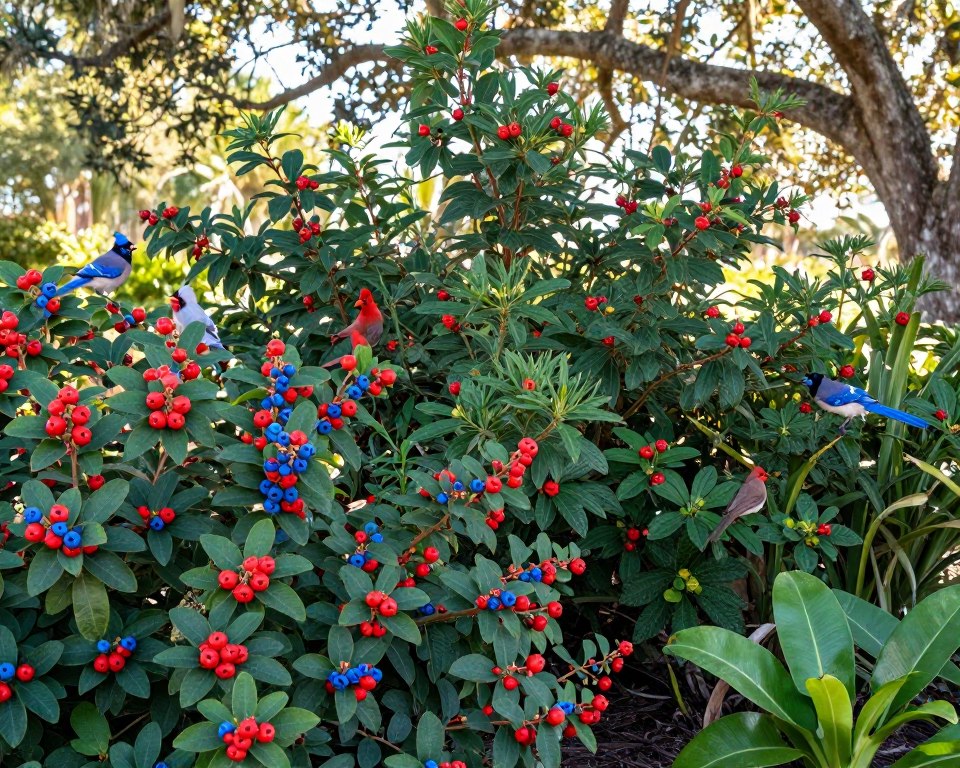
Shrubs form the middle and back layer that makes a dim bed feel complete. They add height, texture, seasonal flowers, and food that supports birds and other wildlife.
Wild coffee (Psychotria nervosa)
What it gives: glossy leaves and small white flowers that attract pollinators. Blooms often appear in spring and summer and may repeat in mild spots.
Best siting: full to partial shade, especially in hammock-style plantings where moist, filtered light is steady.
Beautyberry (Callicarpa americana)
What it gives: magenta berry clusters that feed birds through fall and winter. The bright clusters create a clear seasonal signal.
Best siting: edges of beds and mixed shrub borders where berries are visible to passing birds.
Walter’s viburnum (Viburnum obovatum)
What it gives: showy spring flowers and abundant fruit that extend wildlife value into summer and fall.
Best siting: as a mid-row shrub in mixed hammocks or shaded borders where fruit is reachable by birds.
Coastal doghobble (Leucothoe axillaris)
What it gives: evergreen foliage and spring flowers that mainly attract bees. It offers steady year-round structure.
Best siting: foundation plantings and understory beds where evergreen leaves provide winter form.
- Placement tip: give shrubs space for airflow and their mature size; avoid crowding to reduce disease and improve bloom and fruit set.
- Design tip: pair shrubs with low groundcovers to cut bare soil, suppress weeds, and keep beds tidy.
| Shrub | Main feature | Ideal spot |
|---|---|---|
| Wild coffee | Glossy leaves; white flowers | Full–partial shade; hammock understory |
| Beautyberry | Magenta berry clusters; bird food | Border edges; visible to birds |
| Walter’s viburnum | Spring flowers; summer–fall fruit | Mixed shrub rows; bird-friendly areas |
| Coastal doghobble | Evergreen foliage; spring blooms | Foundation beds; understory structure |
Pollinator and Hummingbird Favorites That Handle Partial Shade
Partial sun areas often host the most reliable bloomers that hummingbirds and other visitors favor. These species do best with morning sun or dappled light and will still produce steady flowers without full-day exposure.
Firebush (Hamelia patens var. patens)
Why it works: Firebush makes tubular, nectar-rich flowers that draw butterflies and hummingbirds when given bright, filtered light.
Coralbean (Erythrina herbacea)
Why it works: Coralbean shows red tubular blooms that are easy for hummingbirds to find along sunny edges of shaded beds.
Coral honeysuckle (Lonicera sempervirens)
Dual benefit: Flowers supply nectar to pollinators and hummingbirds, and later the plant produces red berries that feed birds.
Tropical sage (Salvia coccinea)
Steady performer: Tropical sage attracts bees, large butterflies, and hummingbirds across the warm season when placed in brighter partial light.
- Placement tip: site these shrubs where they get morning sun or dappled afternoon rays for better flowering.
- Moisture note: do not overwater in shade—evaporation is slower and roots can sit wet.
| Species | Best light | Main benefit | Key visitors |
|---|---|---|---|
| Firebush | Morning sun, dappled | High nectar output | Hummingbirds; butterflies |
| Coralbean | Edge of shade | Showy red tubular flowers | Hummingbirds; butterflies |
| Coral honeysuckle | Dappled to partial sun | Nectar and red berries | Hummingbirds; birds |
| Tropical sage | Bright partial light | Consistent blooms | Bees; hummingbirds; butterflies |
Vines for Shady Spots: Vertical Habitat Without Losing Garden Space
Vines are a smart option in low-light beds. They add vertical flowers and shelter while leaving soil free for groundcovers and shrubs.
Carolina jessamine
Carolina jessamine offers evergreen coverage and bright yellow cascades on fences, arbors, or trellises. It works well where year-round foliage is desired and seasonal blooms lift dim corners.
Purple passionflower
Purple passionflower serves as a larval host for butterflies such as Gulf fritillary and Zebra longwing. Expect caterpillars; place this vine where their feeding won’t damage prized shrubs.
Coral honeysuckle
Coral honeysuckle is ideal on trellises to control spread and concentrate blooms. It reliably draws hummingbirds and butterflies when sited in bright, filtered light.
- Planning checklist: choose a sturdy support; leave airflow; keep vines off small shrubs that could be smothered.
- Watch roots: many vines spread by underground roots—edge beds or monitor runners to keep growth in bounds.
- Match vigor to space: pick low- or high-vigor climbers to match available area and maintenance willingness.
| Vine | Main benefit | Use tip |
|---|---|---|
| Carolina jessamine | Evergreen, yellow blooms | Fences, arbors; moderate pruning |
| Purple passionflower | Butterfly host | Place near feeders; expect caterpillars |
| Coral honeysuckle | Attracts hummingbirds | Trellis to contain spread |
Native Shade Plants for Wet Areas, Pond Edges, and Moist Low Spots
Shade plus wet soil is a distinct condition. Low spots that hold water after rain, pond edges, and soggy swales under canopy need species that tolerate low light and long soil saturation.
- Quick site cue: spots that stay wet 24+ hours after rain or sit at the waterline of ponds.
- Do not force wetland species into dry shade; they decline if moisture isn’t reliable.
Buttonbush (Cephalanthus occidentalis)
Use as an anchor shrub along pond margins and wet swales. Showy round blooms attract bees, butterflies, and moths. Ducks and other birds eat the seeds through fall and winter.
Cardinalflower (Lobelia cardinalis)
Place this near water where soil stays consistently damp. Bold red spikes draw hummingbirds, butterflies, and bees in summer and into fall.
Prairie iris (Iris savannarum)
Best as an emergent aquatic at the waterline or shallow margins. Showy spring flowers appear above tussock foliage and tolerate periodic flooding.
Bog white violet (Viola lanceolata)
Suited to small pond edges and marshy borders. Low, delicate growth fills tight spots where larger shrubs won’t fit.
| Species | Best spot | Key benefit |
|---|---|---|
| Buttonbush | Pond edges, wet swales | Bird food; pollinator blooms |
| Cardinalflower | Damp soil near water | Hummingbird magnet; summer blooms |
| Prairie iris | Shallow margins, emergent | Showy spring flowers |
| Bog white violet | Pond/marsh edges | Low border filler; delicate flowers |
Native Grasses and Grass-Like Plants to Add Movement in Shade
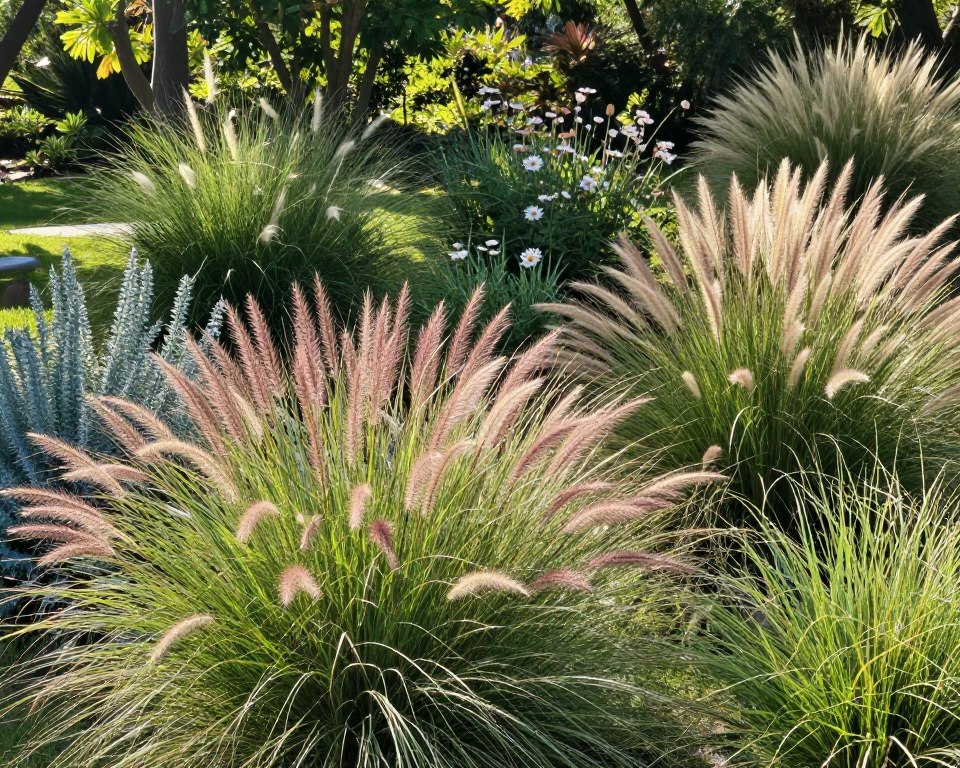
Grasses and grass-like species add motion and quiet structure to dim beds, even when flowers are scarce. They give texture, seasonal sway, and habitat value while filling gaps between perennials.
Wiregrass (Aristida stricta)
Wiregrass is a perennial bunchgrass that adds fine, upright texture to upland spots. It does well in well-drained soil and creates open clumps.
It also supports wildlife: seeds are a food source for tortoises and other ground animals.
Elliott’s lovegrass (Eragrostis elliottii)
Elliott’s lovegrass produces abundant, delicate flowers that form a billowy haze. Use it to soften edges and to fill low gaps between shrubs and perennials.
Lopsided indiangrass (Sorghastrum secundum)
Lopsided indiangrass is more robust and becomes visually prominent in late summer. Place it where you want a late-season accent when many beds fade.
- Use grasses in drifts to create movement and unify the bed.
- Repeat clumps to make simple patterns and rhythm across the garden.
- Match species to soil: most prefer well-drained conditions, so avoid persistently wet spots.
- Keep them out of deep, heavy shade where clumps thin and flowers drop.
| Species | Best soil | Main benefit |
|---|---|---|
| Wiregrass | Well-drained upland | Upland texture; wildlife food |
| Elliott’s lovegrass | Dry to average | Airy flower haze; soft edges |
| Lopsided indiangrass | Average to dry | Late-summer presence; bold form |
Planting and Watering: What to Do the First Few Weeks
Establishment is simple: sensible placement, steady watering, and daily checks during hot spells. Plant any time of year; the key is consistent care while roots begin new growth.
Follow a short, practical routine to reduce losses in shaded beds where tree roots and wet spots can compete. Make sure each hole has 6–12 inches of workable soil depth so roots can develop and handle stress later.
- Water in immediately after planting to settle soil and remove air pockets.
- Keep soil evenly moist for two to three weeks as roots spread. Check moisture every day or two, especially during hot, dry days.
- After establishment, water only during dry spells rather than on a strict daily schedule. Let conditions guide you.
Shade alters water needs: evaporation is lower, but large tree roots can still dry soil fast. Inspect soil at the top 2–4 inches; if it feels dry, water. If it stays wet 12+ hours after rain, reduce mulch and improve drainage.
| Task | Timing | Why it matters | Quick tip |
|---|---|---|---|
| Initial soak | At planting | Removes air pockets; starts root‑soil contact | Use a slow pour around the root ball |
| Consistent moisture | 2–3 weeks | Allows roots to establish and support growth | Check every 1–2 days in heat |
| Follow-up watering | After establishment | Prevents overwatering; matches seasonal needs | Water during dry spells only |
For more on timing and how long to water turf and similar beds, see this short guide on how long to water grass. Small daily checks and attention to soil depth and moisture give new plantings the best chance to thrive.
Mulch, Leaves, and Fertilizer in Shaded Florida Beds
A steady carpet of fallen leaves often does the work of mulch in dim, tree‑covered beds. This natural cover protects soil, feeds microbes, and keeps roots insulated through seasonal swings.
When leaf litter and pine needles are enough
Leaves and needles under trees create a light mulch that slows erosion and suppresses weeds. In hammock‑style settings and wooded edges, leave a thin layer rather than clearing every drop.
Why added mulch can impede drainage in some shady areas
Too much bagged mulch can trap moisture and slow drainage. If soil stays wet 12+ hours after heavy rain, reduce added mulch to avoid root rot and fungal issues.
Skipping fertilizer for wildflowers and shade plantings
Most wildflowers and many local species do well without fertilizer once established. Extra nutrients often favor aggressive weeds and reduce native diversity.
- Keep a thin natural leaf layer; do not bury crowns or crowns with deep mulch.
- Pull weeds early to avoid competition under the litter layer.
- When soil pools or smells sour, remove excess mulch and improve airflow.
| Site cue | Action | Why it helps |
|---|---|---|
| Dry to average soil | Allow leaves to accumulate | Feeds microbes; suppresses weeds |
| Soil wet 12+ hours | Thin or skip added mulch | Improves drainage; avoids root disease |
| Established wildflowers | Do not fertilize | Maintains balance; reduces weeds |
Designing a Shady Florida Garden With Layers and Year-Round Interest
Design a layered bed that reads as a coordinated room, even where light is thin. Start by mapping the groundcovers, perennials, shrubs, and vines in vertical order. This simple structure keeps the bed tidy and makes maintenance predictable.
Layering for diversity and ease
Place groundcovers first to hold soil and reduce weeds. Add perennials next to supply seasonal flowers and nectar.
Use shrubs for backbone structure and vines on trellises to add height without crowding roots.
Building habitat highways through timing
Mix species with staggered bloom times so pollinators and birds find food across the year. Repeat a few backbone shrubs, then rotate seasonal flowers in front.
Paths, seating, and intentional cues
- Clear edges: define a path or lawn edge to show care and invite use.
- Small seat: a bench makes shade feel intentional and reveals mid‑level blooms and birds.
- Verticals: trellises or fences keep vines controlled and create vertical habitat.
Leave seedheads and time cleanup
Allow dried stems and flowerheads to remain through winter. Seeds feed birds and many species reseed naturally.
Delay heavy cleanup until early spring to protect overwintering insects and maintain habitat value.
| Layer | Role | Example use |
|---|---|---|
| Groundcovers | Soil cover; weed suppression | Repeat in drifts |
| Perennials | Seasonal flowers; nectar | Rotate bloom times |
| Shrubs & Vines | Structure; fruit; vertical habitat | Backbone shrubs + trellised vines |
Conclusion
Successful plantings begin with small tests of light, soil depth, and drainage.
Check each area for sun hours, confirm 6–12 inch soil depth, and note root or tree interference before you buy. Clear competing weeds and measure drainage after rain.
Match chosen plant and plants to similar light and moisture conditions. Water consistently for 2–3 weeks during establishment—this often decides long‑term success.
Watch heavy mulch in dim beds; it can slow drainage and harm roots. Build layered beds with flowers, berries, foliage, and seedheads to support wildlife through the year.
Next step: pick 5–10 species from the lists, group them by water and light needs, and plant in small repeatable patches to simplify care and boost habitat value.
FAQ
What shade conditions are best for these native shade plants?
How can I quickly check my site before planting in shady spots?
Will shade plantings support bees, butterflies, hummingbirds, and birds?
Which low-growing groundcovers work well in shady beds?
What shade-tolerant wildflowers bloom for pollinators?
Which white-flowering species do well in shady gardens?
What ferns and foliage-first choices add texture in deep shade?
Which shrubs provide structure and seasonal interest in shade?
What partial-shade plants draw hummingbirds and pollinators?
Can vines provide vertical habitat in shady areas?
Which species suit wet areas, pond edges, or moist low spots in shade?
What grasses or grass-like plants add movement in shady beds?
How should I plant and water new shade additions the first few weeks?
How much mulch, leaf litter, or fertilizer is appropriate in shade beds?
How do I design a shady garden with year-round interest?


