
 1
1
 0
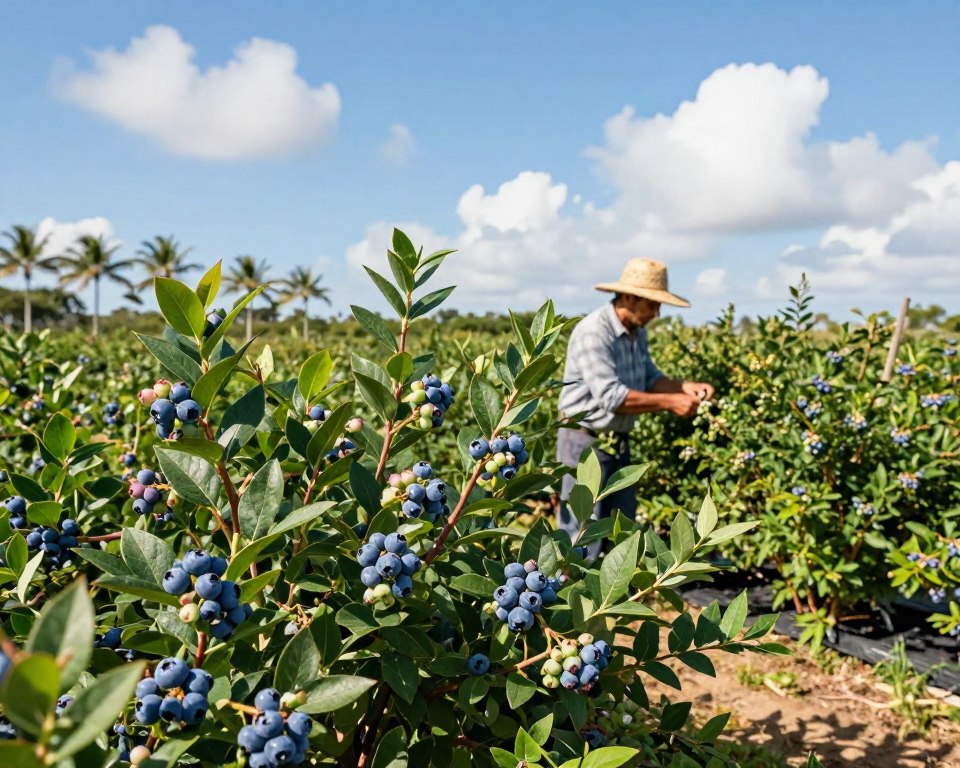
0 The right blueberry choice makes the difference between a scrappy plant and a steady yield. Florida’s mild winters mean most northern varieties fail, so low-chill cultivars developed by UF/IFAS and other breeders are the reliable option for a home garden.
Plant in winter for best establishment, expect light fruit the first year, and plan for solid yields by years three or four with good pollination. Match the cultivar to your region and soil — don’t pick “any bush from the store.”
Florida conditions — sandy soil, a wet season, and occasional late freezes — shape most care decisions. Most varieties need cross-pollination and bees, so a single plant often disappoints.
Key Takeaways
- Choose low-chill cultivars suited for Florida climates.
- Plant in winter; expect full production by year 3–4 with proper pollination.
- Match site, sun, and soil pH; Florida’s sandy ground needs added organic matter.
- Water, fertilize, and prune based on rainy season and occasional freezes.
- Provide at least two compatible varieties for cross-pollination and bee activity.
Choose the right blueberry type for your part of Florida
Choosing a compatible variety for your local climate sets the stage for steady harvests. Match the type to regional chill and site characteristics for best results.
Southern highbush for Central and south-central zones
Southern highbush suits areas generally south of Ocala and north of Sebring. These highbush cultivars ripen earlier and can give an early season advantage.
They demand careful site choice and are more freeze-sensitive because they bloom sooner than other types.
Rabbiteye for cooler winters and northern areas
Rabbiteye thrives where winters are as cold as or colder than Ocala. Rabbiteye plants tend to be vigorous, drought tolerant, and more forgiving on typical Florida soils.
| Feature | Southern highbush | Rabbiteye |
|---|---|---|
| Best region | South of Ocala to Sebring | North Florida and Panhandle |
| Season | Earlier ripening | Later, steady harvest |
| Tolerance | Less freeze-tolerant | More drought and cold tolerant |
Low-chill cultivars matter because insufficient winter chill reduces leafing and flowering, which cuts fruit set and growth. Most cultivars also need cross-pollination: plant at least two compatible cultivars of the same type and encourage bees during bloom for better yields.
Pick cultivars that match your climate and goals
Selecting the right cultivar means balancing bloom timing, disease risk, and when you want fruit. Start with regional fit—match chill needs and typical freeze timing—then pick whether early harvest or lower-maintenance plants matters more.
Southern highbush options commonly grown
Common choices and quick notes:
- Emerald — steady production; good for fresh eating.
- Jewel — flavorful but watch for Phytophthora root rot and rust.
- Star — needs more chill; shorter harvest window.
- Springhigh — ripens early; can be thrips-sensitive.
- Sweetcrisp and Farthing — balanced flavor and firmness.
Rabbiteye options for North Florida and the Panhandle
Early rabbiteye types extend the season; mid/late types usually yield more:
- Early: Beckyblue, Bonita, Climax.
- Mid/Late: Brightwell, Powderblue, Tifblue, Woodard.
Balancing harvest timing and care
Pair varieties that bloom together so bees move pollen between plants. Example: plant Climax with Beckyblue or Bonita for early rabbiteye pollination support.
Planning for pollinators during bloom
- Avoid broad‑spectrum insecticides during bloom.
- Provide water and a few flowering support plants to keep bees active.
- Overlap bloom dates for better fruit set and higher harvests.
| Type | Why choose it | Caution |
|---|---|---|
| Southern highbush | Early season, good for fresh markets | Some varieties are freeze-sensitive |
| Rabbiteye | Hardy, better storage and later harvests | Early types may yield less than mid/late types |
| Pairing | Better pollination and larger fruit set | Match bloom overlap for best results |
Meet the site requirements blueberries need to thrive
Site choice determines whether plants establish quickly or struggle over the first seasons. Use a short checklist and watch the yard after heavy rain to pick the best spot.
Site pass / fail checklist
- Sun: At least 4–5 hours of full sun; more sun improves flowering and fruit quality.
- Distance from buildings: 20 feet or more from foundations to avoid reflected heat, altered water flow, and limited root space.
- Tree roots: Keep plants away from large tree roots. Pines are the common exception; blueberries often do well near pine root zones.
- Drainage depth: A well-drained soil profile at least 18 inches deep. If the site stays saturated after storms, use raised beds.
Why drainage matters: saturated ground for several days raises Phytophthora root rot risk. An 18-inch, well-drained profile helps roots breathe and take up nutrients.
Watch your yard after a heavy rain. Choose the area that dries first but does not go bone-dry quickly. That balance gives the best conditions for young plants.
Get soil pH and organic matter right before you plant
Start with the soil: correct pH and enough organic matter so young plants establish and roots stay healthy.
Target pH and signs of trouble
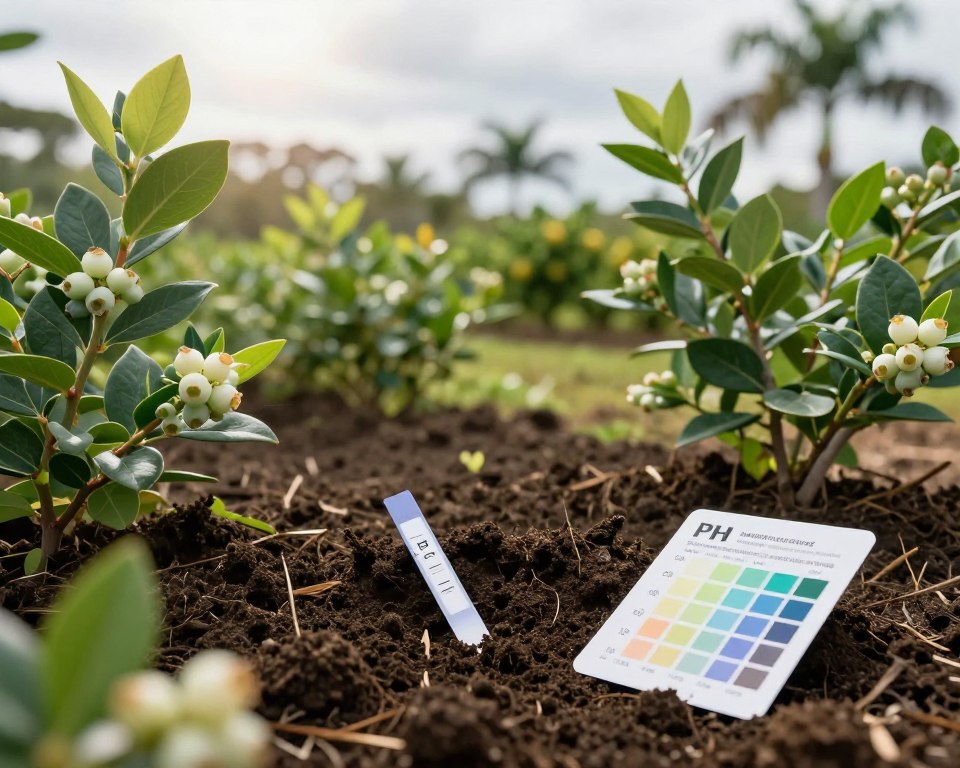
Florida blueberries need a soil pH of 4.0 5.5. That range is often the make-or-break step for good plant growth.
Pale or yellowing new leaves and slow, uneven growth usually point to high pH causing iron and zinc deficiencies.
Simple soil test and amendment steps
- Collect 6–10 samples from the top 6 inches across the planting area and mix them.
- Send the composite sample to your county extension office or a certified lab; they interpret results and recommend rates.
- If pH is high, mix elemental sulfur into the planting rows several months before planting; it works slowly.
- Use acid-forming fertilizers after planting to help maintain pH, but correct major pH issues first.
Improve organic matter and root zone
For Florida sands, incorporate sphagnum peat moss or aged pine bark into the planting mix. This raises organic matter and improves the root zone for steady growth.
| Plant type | Minimum organic matter | Recommended practice |
|---|---|---|
| Rabbiteye | ~1% (mulched) | Mulch plus 1–2% peat or pine bark for best vigor |
| Southern highbush | At least 3% | Incorporate peat moss or pine bark and keep a 3–4″ organic mulch layer |
| Root health | — | Stable organic matter reduces drought stress and lowers disease risk |
Correct pH and healthy organic matter make plants less prone to diseases and support steady growth. Your extension office can guide testing and clear next steps before you plant.
Decide whether to plant in-ground, raised beds, or containers
Deciding between in-ground, raised beds, or containers depends on drainage, space, and how much control you want over the soil. Each option works in typical Florida yards and patios when matched to site conditions.
In-ground: best for well-drained sites
Choose in-ground when the site drains well and the pH is suitable. Roots can spread and stay cooler, which lowers root burn risk over time.
Raised beds: for poor drainage and rainy-season saturation
Use raised beds if your yard holds water or stays wet within the top 18 inches. A raised bed means a defined mound or boxed bed that lifts the root zone above saturated ground, not just a shallow ridge.
Containers: patios, renters, and tight spaces
Containers give maximum control of soil and moisture. Use a purpose-made acidic mix and ensure drainage holes are present. Aim for pots at least about 18 inches in diameter; larger containers buffer heat and drying.
- Decision cue: if drainage is good and you want low maintenance, choose in-ground.
- Choose raised beds when storms leave the top 18 inches saturated or standing water appears.
- Pick containers when space is limited, you need mobility for frost protection, or prefer total control over soil mix.
- Variety note: southern highbush often adapts well to pots and movement for freeze cover; rabbiteye prefers in-ground vigor.
- Watering note: containers dry faster than beds; expect more frequent watering in spring and early summer.
| Option | Best use | Key benefit |
|---|---|---|
| In-ground | Well-drained yards | Strong root systems, lower long-term care |
| Raised beds | Poorly drained sites | Keeps root zone above saturated soil |
| Containers | Patios, renters, frost-risk movement | Control soil and easier freeze protection |
Plant blueberries at the right time and with correct spacing
Planting at the right time and spacing sets young bushes up for steady root growth and easier care.
Best Florida planting window: Plant between mid‑December and mid‑February. Winter planting reduces heat stress and lets roots establish before spring growth begins.
Choose stock and check plants before purchase
- Pick plants about 1.5–2 feet tall with well‑developed roots.
- For bare‑root, keep roots moist until planting.
- For container stock, avoid pot‑bound root balls; loosen circling roots slightly before setting.
Planting hole setup and placement
- Dig a wide hole; loosen soil in a radius at least twice the root spread.
- Mix in 1/4–1/2 cubic foot of acid sphagnum peat moss with the backfill—do not create a peat plug around the crown.
- Spread bare‑root roots evenly; set container plants at the same height as the nursery level.
- On raised beds, flatten the bed near the planting spot and set the plant in a slight depression so water moves toward the root zone and avoids water shedding.
Spacing guidelines
| Type | Area per plant | Hedgerow spacing |
|---|---|---|
| Southern highbush | ~6 ft diameter circle (or 4′ x 4′) | 3 feet apart |
| Rabbiteye | ~10 ft diameter circle (or 7′ x 7′) | 5 feet apart |
| Notes | Proper spacing improves airflow and makes pruning and harvest easier | Measure in feet for layout planning |
Mulch, weed control, and establishment-year pruning
Proper mulching, timely weed removal, and simple pruning at planting protect shallow feeder roots. These steps cut competition and support steady vegetative growth during the first season.
Pine bark mulch depth and coverage
Mulch is not optional. It reduces weeds, moderates soil temperature, protects shallow roots, and adds organic matter as it breaks down.
- Apply pine bark about 3 inches deep.
- Cover a ~2-foot radius around each plant or a 4-foot strip along a row.
Weed-free zones around plants
Keep a clean circle at the base of each plant. Blueberry feeder roots sit near the surface and lose out when weeds steal water and nutrients.
Pruning at planting and first-year fruit removal
- Remove weak twiggy stems at the base and keep the tallest, strongest cane.
- If the top is much larger than the root system, cut back about one-third of top growth to balance demand.
- Remove all flowers and fruit the first year so the plant directs energy to roots and shoot growth.
Refresh the mulch as it decomposes and pull it slightly away from stems to avoid moisture issues. These adjustments help young plants establish for better long-term growth and future fruit yield.
Watering and irrigation practices for Florida conditions
Blueberry water needs shift dramatically as buds swell and new shoots appear. Winter dormancy needs little irrigation, but plants must not dry out on sandy ground. A simple plan keeps shallow roots healthy through active spring growth.
Seasonal pattern and spring shift
Late winter into early spring marks a fast rise in water demand. New leaves and shoots increase transpiration and nutrient uptake. Monitor plants closely from late February through March.
Weekly targets and practical checks
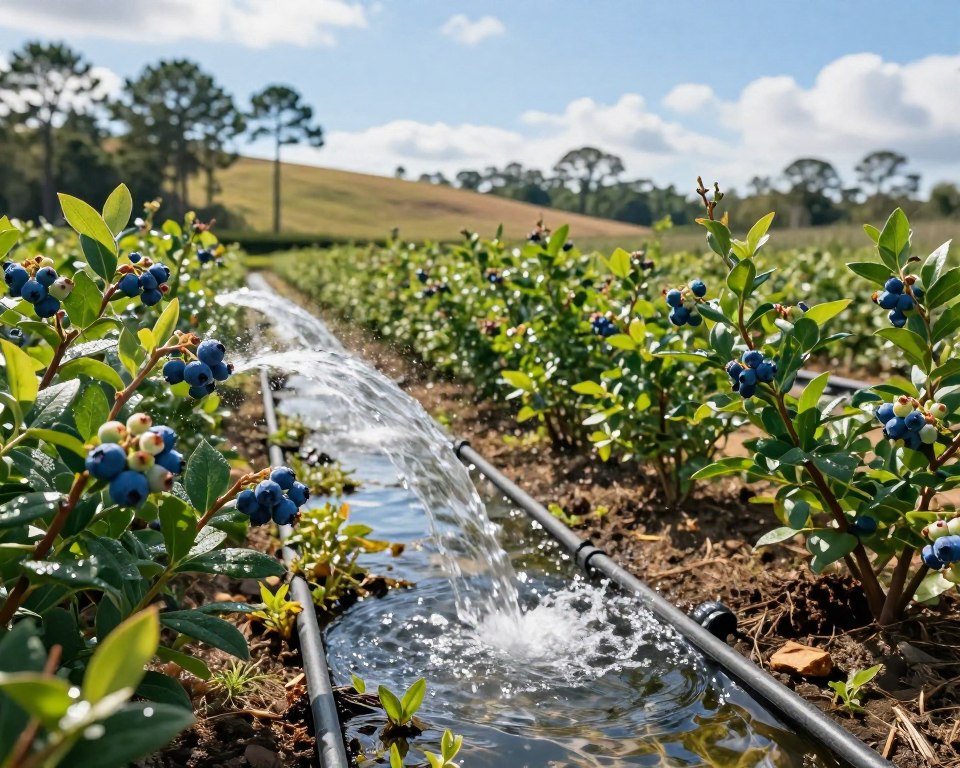
Aim for about 0.6 inches of water per week in March, rising to roughly 1.0–1.2 inches per week in late spring and summer (rainfall plus irrigation).
- Use a rain gauge and check weekly forecasts so irrigation fills gaps, not doubles rainfall.
- Measure irrigation output from a sprinkler or drip line to match the inches target.
Adjustments for sandy soil and plant type
On sand, apply shorter, more frequent irrigation runs; water moves quickly and roots receive pulses rather than a deep soak. Established rabbiteye often needs less frequent supplemental irrigation during normal seasons.
Southern highbush on sandy sites may require closer watering during dry spells or when fruit sets.
Mulch, monitoring, and well-water pH
Mulch slows evaporation, evens soil temperature, and buffers the shallow root zone. Keep 3 inches of organic mulch and refresh as it breaks down.
If you irrigate with high-pH well water, test soil pH yearly. Regular testing catches slow pH shifts before nutrient problems appear.
| Period | Weekly target (rain + irrigation) | Notes |
|---|---|---|
| March | ~0.6 inches | Increase as shoots emerge; avoid letting roots dry out |
| Late spring–summer | ~1.0–1.2 inches | Short, frequent runs on sandy soils; adjust after heavy rain |
| Winter dormancy | Minimal | Keep soil from drying completely, especially in sand |
Fertilizing and pruning for steady growth and reliable fruiting
Balanced, light fertilization paired with routine pruning supports steady growth and consistent harvests. Blueberry roots are shallow and take up nutrients near the surface. Heavy, concentrated applications can burn roots and stress the plant.
Why light, frequent feeding works
Small doses supply nutrients where feeder roots can reach them. This lowers salt build‑up and reduces sudden growth surges that weaken canes.
Seasonal schedule for home gardens
- Apply a light, blueberry‑specific fertilizer in April, then repeat in June, August, and October.
- Spread each application evenly rather than piling it at the crown.
- Always read label rates and do not exceed recommended amounts for young plants.
Placement and safe application
Distribute fertilizer in an even ring around the plant, staying off the trunk and within about 2 feet of the canopy edge. Lightly rake it into the mulch so nutrients reach the root zone, not the crown.
Pruning rules after harvest and for renewal
After picking, remove roughly 1/4–1/3 of the top growth to encourage new shoots and keep height manageable. For plants older than 4–5 years, remove one or two older, woody canes in late winter to renew the bush.
Well‑timed feeding and proper cuts reduce stress and lower disease pressure. Remember: poor drainage and overwatering increase root rot risk and cannot be fixed with fertilizer alone.
| Action | When | Why |
|---|---|---|
| Light fertilizer | Apr, Jun, Aug, Oct | Feeds shallow roots without burn |
| Spread placement | Each application | Even ring within ~2 ft; keep off crown |
| Post‑harvest pruning | After picking | Stimulates fresh shoots for next season |
| Renewal pruning | Late winter, at 4–5+ years | Removes old canes and keeps production steady |
Prevent common problems in Florida blueberry patches
Poor drainage is the single most preventable cause of serious loss in backyard blueberry patches. When roots sit in saturated soil for days, Phytophthora root rot can damage or kill young and mature plants.
Root rot and practical prevention
- Choose a well-drained site or use raised beds where the ground stays wet.
- Avoid adding extra irrigation when weekly rainfall meets plant needs.
- Improve soil with organic matter and avoid compacting the root zone.
Quick symptom checklist
- Sudden wilt after heavy rain
- Stunted growth or yellowing new leaves
- Dieback that fails to recover while soil stays wet
Other common issues
Home patches may see gray mold (flower blight), stem blight, leaf spots, and pests that distort new growth or blemish fruit. Routine scouting during active growth catches problems early.
When to contact your county Extension office
Contact the extension office if symptoms are unclear, dieback repeats, or a treatment decision could harm pollinators. Helpful items for diagnosis: clear photos, a short timeline, cultivar/type, watering pattern, and whether the site floods.
| Problem | Primary cause | Prevention |
|---|---|---|
| Root rot | Water‑saturated soil | Well‑drained soil; raised beds |
| Leaf spots | Humidity, splash | Mulch, airflow, scout weekly |
| Pests | Various insects | Monitor, avoid sprays during bloom |
Most problems are easier to prevent than cure. Prioritize site selection and drainage; those steps matter more than quick fixes. For extra guidance, see this extension link.
Conclusion
A few clear choices early on make later seasons far easier and more productive.
Choose type—southern highbush or rabbiteye—and plant compatible cultivars for cross‑pollination. Fix soil pH and add organic matter before planting so roots start well.
Plant in winter so establishment occurs before spring growth and the main growing season ramps up. Prioritize drainage and a prepared root zone; these steps prevent most failures.
Check spacing and sunlight: keep recommended distances and at least 4–5 hours of sun. Maintain a steady care rhythm—consistent watering, mulch, weed control, light fertilizing, and post‑harvest pruning.
With patience, blueberry plants reward effort. Expect modest harvests by year three or four (about 2–5 pounds per plant with good pollination) and better results when the garden supports bees.
FAQ
What blueberry types suit different parts of Florida?
Why do low-chill cultivars matter in Florida?
Do blueberry plants need more than one cultivar for pollination?
Which southern highbush and rabbiteye cultivars are commonly grown in Florida?
How should site selection factor into placement and sun exposure?
What soil depth and drainage do blueberries require?
What soil pH should be targeted for healthy plants?
How does higher pH cause micronutrient problems?
When should sulfur be used to acidify soil and how much?
Are acid-forming fertilizers recommended?
How should gardeners boost organic matter before planting?
What organic matter levels suit rabbiteye versus southern highbush types?
Where can I get a soil test and local guidance?
Should blueberries be planted in-ground, raised beds, or containers?
When is the best planting window in Florida?
Should I buy bare-root or container-grown plants?
How should planting holes be prepared with sphagnum peat moss?
What spacing is recommended for southern highbush and rabbiteye bushes?
How deep should pine bark mulch be and where should it cover?
How important is a weed-free zone around plants?
What pruning should be done at planting and in the first year?
How do water needs change from late winter into summer?
What are typical weekly water targets for spring and summer?
How should irrigation be adjusted for sandy soils and dry spells?
Should well water pH be monitored?
What fertilizing strategy works best for shallow-rooted blueberries?
Where should fertilizer be applied relative to the plant?
What pruning is recommended after harvest and for older plants?
How can root rot (Phytophthora) be prevented?
What other disease or pest issues should home growers watch for?
When should the county Extension office be contacted?


