
 0
0
 0
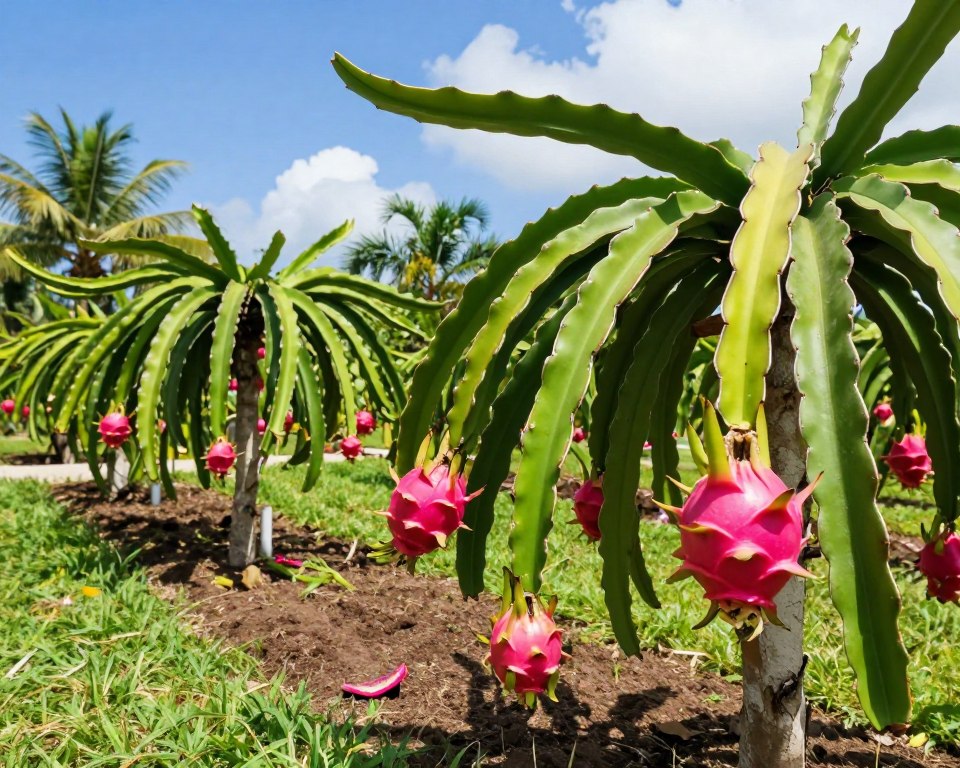
0 how to grow dragon fruit florida starts with site choice and clear expectations: pick a sunny, well-drained spot and plan for a large, climbing cactus that needs serious support.
Pitahaya, often called a strawberry pear, is a subtropical cactus that climbs with aerial roots and can reach 8–20 feet. In Florida yards it thrives when drainage, wind protection, and a strong trellis are in place.
Homeowners should expect a heavy, long plant that needs space, storm-ready supports, and routine pruning. Summer humidity and frequent storms raise rot risk, while occasional cold snaps can damage stems in marginal zones.
Start with cuttings for faster establishment, set a sturdy trellis, and manage water, feeding, and bloom timing. Many flowers open at night and some varieties need cross- or hand pollination for reliable fruit set.
Key Takeaways
- Site matters: sun, good drainage, and space for a climbing cactus.
- Support: install a strong, storm-ready trellis before planting.
- Start fast: use cuttings for quicker results than seed.
- Watch weather: humidity and storms increase rot risk; cold can harm stems.
- Pollination: many blooms open at night; some varieties need hand help.
Florida growing conditions for dragon fruit cactus
In southern and coastal pockets, this climbing cactus finds steady warmth and a longer productive season. Choose sites that combine warm winter lows, good air movement, and rapid drainage.
Best USDA zones and temperature guide
Zones: Best performance is in USDA 10–12; many gardeners succeed in 9b–11 with favorable microclimates.
- Optimal: 65–80°F for steady growth and regular fruit set.
- Minimum: Avoid prolonged periods below ~55°F; freezes and long cold snaps cause damage.
- Microclimate tips: Coastal areas have milder winters; inland low pockets can be colder at night.
Sun exposure, shade choices, and flowering
Sun vs partial shade: Strong sun promotes flowering and better fruit, but extreme afternoon heat near 100°F can scorch stems.
Use dappled afternoon shade in hot inland areas. Too much shade reduces blooms and lowers fruit quality even when the plant looks vigorous.
Why well-drained, sandy soil matters
Drainage rule: After a heavy storm, water should move through the root zone quickly and not pool at the base.
Target a sandy or sandy-loam soil improved with compost for moisture balance. Avoid compacted or constantly soggy soil; humid weather plus poor drainage often leads to stem spots, rot, or collapse.
- Soil targets: Sandy texture, loose structure, added organic matter—but never waterlogged.
- Season advice: Monitor wet months and add organic matter or raised beds in problem areas to reduce disease risk year-round.
How to grow dragon fruit florida: choosing the right planting spot
Find a stable, sunny area with room for a large climbing cactus. Pick a place that gives at least 15–25 feet of clearance from your home, nearby trees, and power lines. This distance keeps heavy stems away from roofs, branches, and cables.
Yard-walk checklist
- Sun exposure: full sun most of the day for best blooms.
- Airflow: open space that reduces humidity around stems.
- Work access: room to prune, hand pollinate, and harvest safely.
- Storm runoff: note where water pools after heavy rain.
Spacing, clearance, and maintenance
Keep plants away from structures and tree canopies. Do not rely on fences that cannot bear weight.
Leaving walk-around space makes pruning and harvesting safer. Stems can be heavy and spiny; easy access reduces risk during maintenance.
Handling drainage and soil
Watch for low spots, compacted fill, or downspout discharge zones. These are common red flags in wet areas and cause roots to stay wet.
Raised-mound basics: build an elevated bed so the root zone sits above saturated soil after storms. Mounds should lift the line of roots several inches above surrounding grade.
| Issue | Sign | Quick fix |
|---|---|---|
| Poor drainage | Standing water after rain | Build 6–12 inch raised mound and amend soil |
| Shade under trees | Few flowers, sparse fruit | Move 15–25 feet from canopy or prune trees for light |
| Close to structures | Stems touching roof or siding | Relocate planting or use container |
Using organic matter and when containers may be needed
Mix compost into the planting hole to improve soil structure and moisture balance. Do not pile soil or mulch up around the stem base; avoid a mulch “volcano” that stays wet at the base.
Homeowners with chronically wet yards, rental limits, or small patios may need container growing. Containers keep the root zone drier and make winter protection easier.
Picking varieties for better fruit production
Variety choice affects fruit production more than many gardeners expect. Compatible pollen and bloom timing are key for reliable harvests.
Self-fertile vs self-sterile: a quick definition
Self-fertile plants can set fruit with their own pollen. Self-sterile cultivars need pollen from another compatible plant.
This explains why some plants flower but do not set fruit.
Why choice matters in a Florida backyard
Warm, humid summers drive fast vegetative production. Still, fruit set often fails without compatible pollen or correct pollinators.
Night-blooming flowers open when bees are inactive. Moths and bats often do the work, so planting multiple varieties helps.
Common cultivars and notes
| Cultivar | Key traits | Pollination |
|---|---|---|
| American Beauty | Sweet, red flesh; vigorous | Self-fertile |
| Dark Star | Deep magenta flesh; ornamental blooms | Self-sterile |
| David Bowie | Large fruit; reliable crop | Self-fertile |
| Zamorano | Slower, good for containers; pink flesh | Self-pollinating |
Practical planting and pollination tips
Place two or three different varieties within easy reach for natural cross-pollination. That also makes hand pollination practical when needed.
Label plants on day one so pollen sources are clear later. Expect that consistent production may take several years and steady pruning.
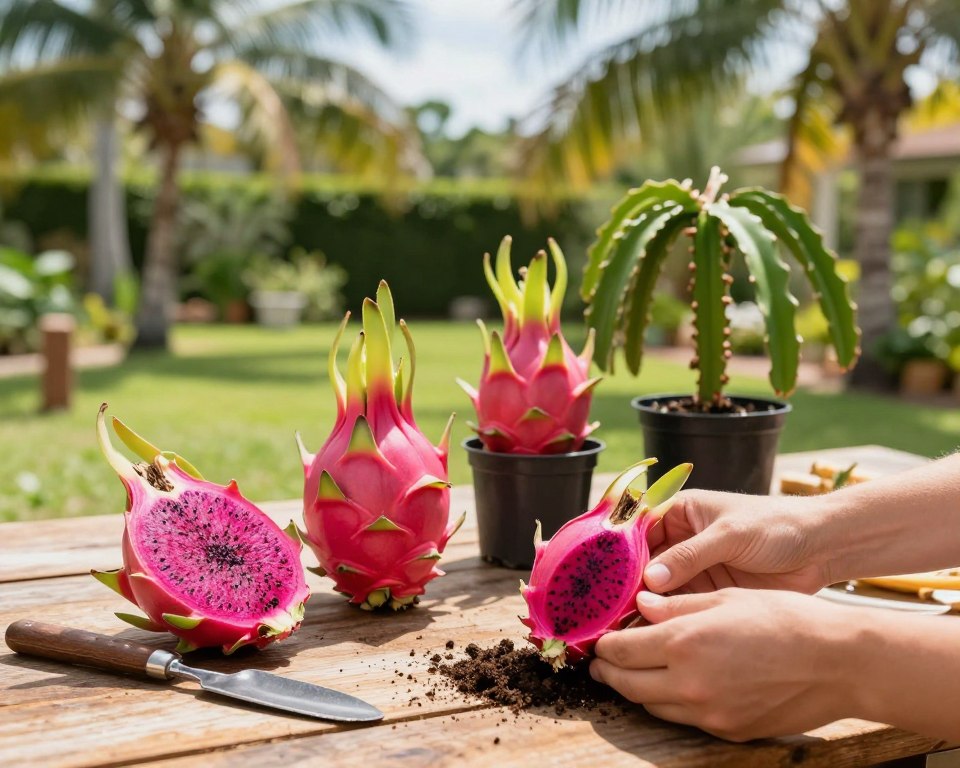
Propagating dragon fruit from cuttings for faster results
Propagating from stem cuttings gives reliable, faster results than starting from seeds.
Choose and prepare the cutting
Select a healthy, firm stem section about 10–12 inches long. Avoid soft spots or lesions.
Make a clean cut and treat the cut end with a fungicide to reduce rot risk.
Callus time
Let the cut end callus in a dry, shady spot with airflow for 7–10 days before planting.
Rooting in pots
Fill a well-draining pot mix and plant the cutting cut-side down about 2–3 inches deep.
Optionally dust the base with rooting hormone, then water lightly and keep the mix lightly moist.
Checking roots and transplant timing
Gently tug after about 3 months. If there is resistance and new growth appears, roots are forming.
Wait until roots are strong, usually 4–6 months, before moving to a larger pot or ground.
First-year expectations
Focus the first year on root build and training a few main stems rather than chasing early blooms.
Many plants produce fruit within 1–3 years from a cutting; seeds can take much longer.
| Method | Time to fruit | Notes |
|---|---|---|
| Cuttings | 1–3 years | Predictable variety traits; faster establishment |
| Seeds | Up to 7+ years | Unpredictable traits; long wait |
| Common mistakes | — | Planting before callusing, overwatering, dense mixes |
Rot prevention: always callus the cut end, use fast-draining mix in pots, and avoid standing water.
Planting dragon fruit in the ground in Florida
Early spring planting lets young plants use the warm main season for root and stem growth. This window (March–August) gives the transplant a full period before late-summer stress.
Step-by-step planting method
- Dig a hole 3–4 times the container diameter and about three times as deep.
- Loosen surrounding soil and improve drainage with coarse sand or compost in the backfill.
- Partially backfill, set the plant so its soil line matches the pot level, then finish filling.
- Firm soil gently—avoid compacting around the roots—and leave the stem base visible above grade.
- Space multiple plants at least 6 feet apart and keep 15–25 feet clear from home, trees, and power lines.
Why depth matters: burying the base too deeply increases rot risk during humid rainy months. Proper depth keeps the root collar dry and healthy.
| Item | Recommendation | Reason |
|---|---|---|
| Hole size | 3–4× container diameter; 3× deep | Room for roots; reduces compaction |
| Spacing | 6 ft between plants; 15–25 ft from structures | Allow canopy, trellis, and safe harvest |
| Initial water | Water in once thoroughly | Settles soil without keeping it wet |
Aftercare: water deeply once, then let soil approach dry between waterings while roots establish. Planting in early spring and preparing drainage reduces summer transplant stress.
Building a trellis that can handle mature weight and storms
A simple post-and-cap trellis gives a backyard plant a clear structure and reduces storm damage.
Why stout support matters
Long stems can reach 6 meters and become very heavy. Weak frames fail in high wind and heavy rain.
Good support keeps stems tidy, reduces breakage, and improves flowering and fruit set for a dragon fruit plant.
Post-and-cap layout for small yards
- Use one pressure-treated or metal post set in concrete with a wide top cap for draping stems.
- Cap should be at least 12–18 inches across to let stems branch and hang.
- Avoid flimsy plastic where the main load sits; use plastic only for light ties or clips.
Tying, training, and storm prep
- Select 3–4 main stems early and tie them loosely up the post with soft ties.
- Train stems to the cap; let side branches hang and form a canopy for blooms.
- Before storms, check ties, remove very long runners, and cut damaged stems to reduce sail effect.
| Feature | Recommendation | Reason |
|---|---|---|
| Post material | Pressure-treated wood or galvanized steel | Resists rot and holds heavy stems |
| Top cap size | 12–18 inches across | Allows branching and a productive canopy |
| Ties and clips | Soft garden ties; avoid load-bearing plastic | Protects stem tissue and lasts in storms |
| Placement | Sunny, accessible spot with room for pruning | Good light and safe harvest access |
Watering, fertilizing, and mulching for healthy growth
In wet summers and dry spells alike, simple checks at the root zone prevent many common problems.
Water schedule: rainy season versus dry spells
During the rainy season, water only if the top few inches of soil are dry. Heavy rains often supply enough moisture for several days.
In dry stretches, water deeply but less often. Let the surface dry between watering to limit rot risk.
A quick “before you water” check
- Push a finger or a trowel 2–3 inches into the soil; if it feels wet, wait.
- Check the base and root collar for soft spots before adding moisture.
- Containers may need water more often; pots dry faster and may need feeding more frequently.
Fertilizer plan and mulch guidance
For the first year, feed every 6–8 weeks with a balanced product (for example, 20-20-20) to support steady growth and root build.
Once established, reduce feeding to a couple of applications in spring and summer. Too much nitrogen boosts stems but can lower fruit production.
| Task | When | Why |
|---|---|---|
| Watering | Rainy: check; Dry: deep every 7–14 days | Prevents overwatering and supports bloom–fruit period |
| Fertilize | First year: every 6–8 weeks; Established: spring/summer | Balanced nutrition for steady growth and fruit set |
| Mulch & compost | Apply 2× year; keep mulch pulled away from base | Builds soil, reduces evaporation, avoids constant wet collar |
Flowers, pollination, and getting fruit to set
Evening-opening blooms are the norm for these cacti. Large buds swell and unfurl after dusk, then often close by morning.
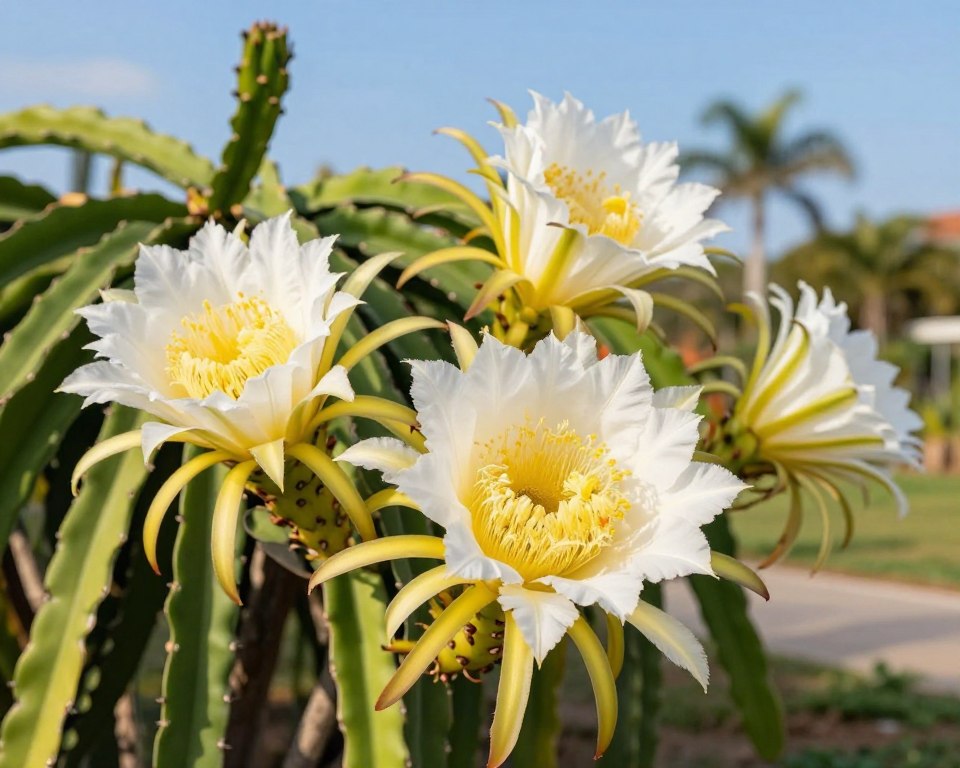
Night visitors and natural pollination
Moths and bats are the main night pollinators. In suburbs and small yards, those visitors may be scarce.
Bees are usually inactive at night, so low visits can mean poor pollination and few fruit.
When to suspect pollination is the limiting factor
If a plant blooms but does not set fruit, suspect pollination first—especially when only one variety is present.
Simple hand-pollination steps
- Find a fully open flower at dusk or during the night.
- Use a fresh cotton swab and rub it over the stamens to collect pollen.
- Gently dab the swab onto the stigma of a compatible flower.
- Repeat across other compatible plants; use a new swab for each plant.
- Check again at dawn; some early-morning blooms can still accept pollen.
Cleanliness and timing matter. Use a fresh swab per plant and avoid mixing varieties when selective crossing is the goal.
| What you’ll see | Outcome | Next step |
|---|---|---|
| Flower wilts and base swells | Successful set | Reduce disturbance; monitor for fruit development |
| Flower falls with no swelling | No set | Repeat pollination next bloom or add another variety nearby |
| Partial swelling, small fruit | Weak pollination or incompatible cross | Try different pollen source and repeat hand pollination |
Clear, timely pollination raises the chance of a consistent harvest from dragon fruit plants.
Pruning, pests, disease, and cold protection in Florida
Planned pruning and quick inspections reduce disease and keep stems productive. Prune to open the canopy, improve light, and cut weight from overloaded supports.
Pruning timing and what to remove
Make major cuts after harvest or during slow growth. Light trims can be done any time you find tangled or damaged stems.
- Remove dead sections and cankered stems.
- Trim overly long whips that stress posts or trees.
- Clear crowded interior growth for better airflow.
Common pests and early responses
Watch stems for mealybugs, mites, thrips, and ants. Check weekly during warm months.
Respond early: wash stems, dab pests off, and use targeted controls when needed.
Disease signs and fungicide use
Look for soft spots, reddish or yellow lesions, and canker. Cut well into healthy tissue and remove infected pieces.
Use labeled fungicides cautiously and pair treatment with improved drainage and airflow.
Cold protection and invasiveness note
In cooler areas, cover plants on frost nights. Move pots indoors when daytime highs fall below about 65°F.
Note: dragon fruit cactus can be invasive in some central and southern areas; manage spread and follow local guidance.
| Issue | Sign | Action |
|---|---|---|
| Pests | Small cottony or webbed spots on stems | Inspect, wash, treat locally |
| Disease | Soft or discolored lesions | Cut out, dispose, apply fungicide |
| Cold | Blackened tips after freeze | Cover or move pots indoors |
Conclusion
Sunny sites with quick drainage and solid support are the core of any successful backyard harvest.
Choose a sunny area with loose soil and a strong post or frame. Start from a healthy cutting and manage water carefully during rainy months.
Two common failure points are soggy root zones and poor pollination. Fix wet soil with raised mounds and improved drainage, and improve set by planting compatible varieties or using hand pollination at bloom time.
Plan for mature size: keep distance from the home and trees, and prune the canopy so light reaches fruiting stems.
Seasonal checklist: spring planting and feeding, summer storm checks and disease scouting, bloom-time pollination, and reduced water plus frost readiness in cooler parts of the area.
Consistent, small adjustments in sun, shade, airflow, and water deliver steadier results than adding more inputs.
FAQ
What USDA zones and temperature range suit dragon fruit cactus in Florida?
Should plants get full sun or partial shade to avoid stem damage?
Why is well-drained, sandy soil important in Florida’s humid, stormy climate?
How much space is needed and how far from homes, trees, or power lines should plants be?
How can Florida drainage problems be handled when planting in the ground?
What’s the difference between self-fertile and self-sterile cultivars for fruit set?
Which cultivars are commonly grown and what are their traits?
How should gardeners plan for cross-pollination?
What size cutting is best and how should the cut end be treated to reduce rot?
How long should cuttings callus in shade before planting?
What are the steps for rooting cuttings in pots and when to transplant?
What growth and fruit timing can be expected in the first year from cuttings?
When is the best window to plant in the ground in Florida?
How large should the planting hole be and how deep should the plant sit?
What spacing is recommended for multiple in-ground plants?
Why do these plants need strong trellis support for mature weight and storms?
What is a simple post-and-cap trellis layout for home gardens?
How should stems be tied and trained up posts for a productive canopy?
What watering schedule works during Florida’s rainy season versus dry spells?
How can gardeners avoid root rot and fungal problems from overwatering?
What fertilizer plan is appropriate for the first year and how does it change once established?
How should compost and mulch be used without keeping the base too wet?
What pollinators visit night-blooming flowers, and what role do they play?
When and how should hand pollination be done for best results?
How is pollen transferred correctly to improve fruit set?
When should pruning be done and what should be removed to improve production?
What common Florida pests affect stems and how should gardeners respond early?
What are signs of stem spots, canker, and rot, and when should damaged tissue be cut out?
How should gardeners protect container plants from freeze risk by area?
Are there invasiveness concerns for these plants in central and southern Florida?


