
 0
0
 0
0 The phrase “how to grow mango trees in florida” is a practical promise for homeowners who want steady fruit from a sunny yard.
Success means a healthy tree that handles heat, heavy rains and dry spells while still producing dependable fruit.
Choose a warm, full sun site with well-draining sandy soil and plan planting in spring through early summer for the best start.
Early choices shape long-term results: variety selection, proper spacing, and root protection from soggy soil matter most.
Nursery-grown specimens give predictable fruit and faster growth than seed starts. Establishing the tree takes most effort in the first years; harvests improve as the tree matures.
For related notes on planting schedules and companion plants, see companion planting notes.
Key Takeaways
- Site matters: full sun and well-draining soil are essential.
- Timing: spring to early summer is the best planting window.
- Early care: focus on root health, watering, and spacing first.
- Variety choice: pick types suited for Florida heat and storms.
- Expectations: establishment takes work; fruit improves with age.
Choosing the right mango variety and planting location in Florida
Picking a suitable cultivar and planting spot sets the stage for reliable fruit and manageable care.
Florida-proven cultivars:
- Pickering — compact habit, coconut-tinged flavor; fits small yards.
- Rosigold — slow grower, early ripening (often by April); good for early fruit.
- Carrie — rich, Indian-style flavor; medium size and home-garden reliable.
- Fairchild — small tree and strong disease resistance; low-spray option.
- Tommy Atkins, Keitt, Haden — known for good disease resistance and reliable yields.
Choose a variety using three filters:
- Flavor preference — classic Florida sweetness, citrusy, or resinous profiles.
- Growth habit — dwarf, compact, or vigorous based on yard space.
- Disease resistance — pick resistant cultivars where spray access or time is limited.
Taste samples when possible. Flavors vary widely; buying a tree for a preferred taste reduces disappointment later.
Harvest planning: combine early, mid, and late varieties for a longer season. With two or more trees, households can spread harvest times from May through August instead of one short peak.
Site rules: give the tree at least six hours of direct full sun daily. Avoid low, soggy spots and choose warm south or west exposures near structures for shelter. Allow steady airflow but protect against strong winds that can break branches or strip fruit.
How to grow mango trees in florida from planting day forward
Starting correctly at planting gives a tree its best chance through Florida’s rains and heat.
Best time and soil needs
Plant in spring through early summer so warm soil boosts root activity and the young specimen establishes before cooler months.
Choose well-draining, sandy soil and avoid low, soggy areas. Standing water invites root rot and slows growth.
Planting steps that help roots establish quickly
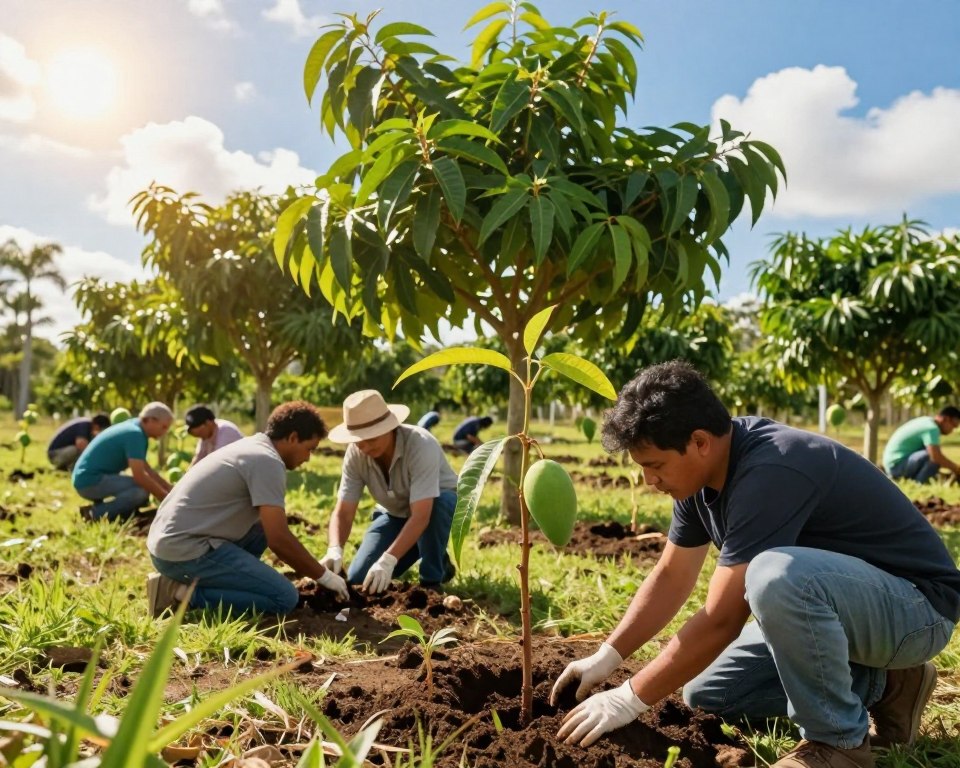
- Confirm a sunny, high site with good drainage and measure the root ball.
- Dig a hole roughly twice the root ball width to encourage outward root growth.
- Set the tree at the nursery soil line; backfill without packing and water in thoroughly.
- Keep the root ball intact; gently correct circling roots but avoid heavy root disturbance.
Spacing and container guidance
Standard spacing is 25–30 feet between trees for full canopy development. Crowding reduces airflow and raises disease risk.
For small yards, plan pruning for size control while giving the plant enough room and sunlight now.
Nursery selection: pick a vigorous, not-rootbound specimen in a 3- or 7-gallon container for faster establishment.
Seed-starting is optional: germinate in a paper towel, pot after sprouting, and expect variable fruit quality.
Ongoing mango tree care for Florida heat, rain, and dry spells
Ongoing care balances water, nutrients, and sun so a backyard fruit tree copes with Florida weather. Simple, seasonal steps keep young and older specimens healthy and productive.
Watering schedule: young versus established
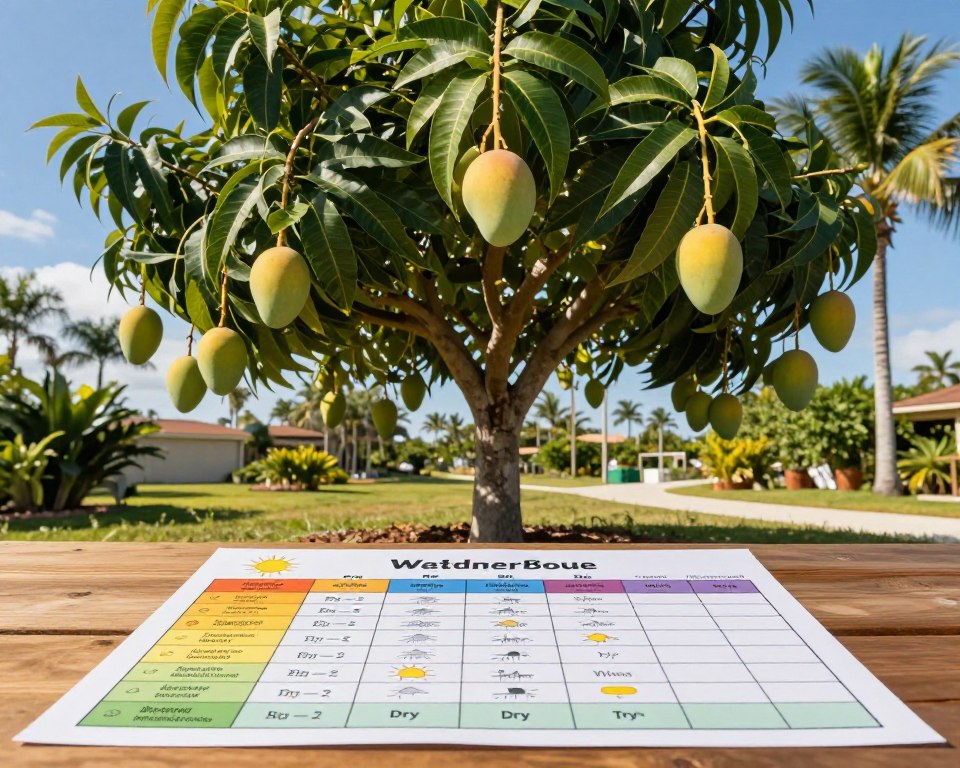
- Young trees: water lightly but frequently the first 12–24 months. Aim for moist soil around the root ball, not soggy, and check weekly.
- Established trees: switch to deeper, less frequent watering. Soak the drip line every 10–14 days during normal weather; extend after heavy rains.
When to water more
- Dry spells and hot summer stretches—raise watering frequency on sandy sites.
- Flowering and early fruit set—consistent moisture reduces drop and improves fruiting.
- Fruit sizing—keep soil evenly moist while fruits develop for better quality.
Signs of drought stress and quick fixes
- Wilting leaves or curled margins—these are early warning signs.
- Action: water deeply at the root zone, then check soil several inches down before watering again.
Fertilizing plan and sunlight needs
Feed with a balanced, fruiting-formulated fertilizer three times per year: early spring, early summer, and late summer. Use label rates for tree size and spread evenly beneath the canopy.
Sun: give plants at least six hours of direct sun daily for reliable fruit production. Good airflow and clean ground beneath the tree cut disease risk.
Pruning and size control to keep mango trees productive and storm-ready
Pruning keeps a backyard canopy manageable while improving harvest access and storm resilience. A smaller profile makes pest checks and fruit picking easier. It also reduces wind leverage on limbs during storms.
Why a compact tree helps
- Smaller trees are easier to protect and harvest.
- Better airflow and light lower disease pressure and improve fruit quality.
- Compact crowns suffer less wind damage in heavy weather.
Tipping and shaping young trees
Remove the central leader tip in the first year to prompt lateral branching. Make cuts just above a healthy bud. Aim for a low scaffold of 3–4 strong limbs that are evenly spaced.
Annual pruning checklist
- Remove dead or broken wood and any diseased branches.
- Thin interior growth to open the canopy and boost light.
- Shorten long shoots to keep a target height near 8–10 feet.
- Use clean, sharp tools and clear debris from beneath the tree.
| Action | Best times | Purpose | Tools |
|---|---|---|---|
| Tipping young leader | After establishing year | Encourages lateral growth | Pruners, loppers |
| Thin interior branches | Between fruiting cycles | Improve airflow and light | Hand saw, pruners |
| Remove dead/diseased wood | Any safe time | Reduce pests and disease | Disinfectant, pruners |
| Height control cuts | After harvest or between flowering | Maintain 8–10 ft canopy | Loppers, pole saw |
Conclusion
Conclusion
Good siting, correct planting, and simple seasonal care set the stage for success. Choose a Florida-suitable mango and place it where sun and well-draining soil meet.
At planting day, double-check spacing, dig a wide hole, and follow a watering plan that helps establishment without saturating roots. These few actions protect the young tree and speed early growth.
Keep a steady routine: adjust watering after rains, feed three times per year, and prune for an open canopy. Size control makes harvest easier and reduces storm damage while still producing quality fruit and multiple fruits over time.
Next steps this week: confirm sun exposure, evaluate drainage, pick a nursery specimen, and mark where the canopy will fit as it matures.
FAQ
What mango cultivars perform best in Florida gardens?
How should a variety be chosen for flavor, growth habit, and disease resistance?
When do early-, mid-, and late-season fruit varieties ripen?
Where do these trees grow best around a Florida home?
When is the best time to plant a mango tree in Florida?
What soil conditions are ideal for these trees?
What are the basic planting steps to help roots establish?
How far apart should mango trees be spaced for long-term growth?
Can mango trees be grown in containers and what should buyers look for at the nursery?
What watering schedule is best for young versus established trees?
When should watering be increased for better fruit set and growth?
What signs indicate drought stress in mango leaves?
How should mango trees be fertilized to support growth and fruiting?
What are good seasonal timing guidelines for feeding?
How much sunlight is needed for consistent fruit production?
Why is keeping a mango tree compact beneficial?
What is tipping and how does it encourage branching?
What are the annual pruning basics for a healthy tree?
What target size is practical for backyard mango canopies?


