
 0
0
 0
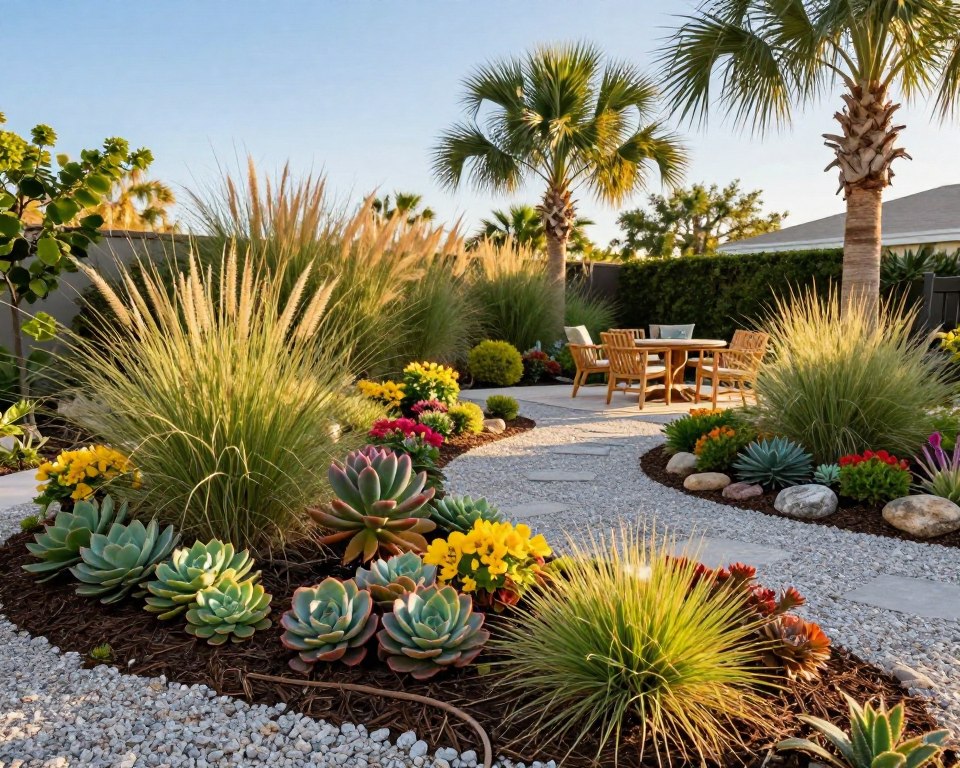
0 florida xeriscape landscaping ideas start with choosing drought-tolerant plants and grouping them by water need so irrigation is precise and minimal.
Xeriscape means a low-water approach that uses smart plant placement, mulch, efficient irrigation, and hardscape to cut routine watering. This method fits many yards but still needs planning and care during establishment.
In the subtropical climate, heat, humidity, and sudden downpours create special challenges. Heavy rain can cause standing water that stresses drought-tolerant species, so good drainage and runoff control are essential.
Expect better water efficiency and simpler upkeep, not a no-work yard. Practical goals include reducing water use while keeping curb appeal by mixing plants and hardscape for texture, color, and year-round structure.
Later sections cover planning, hydrozones, mulches, hardscape, plant options, and rain-smart watering that suit local conditions. Combine xeriscape zones with a rain garden or detention area so stormwater soaks in where it falls.
Key Takeaways
- Define xeriscape: low-water planting, mulch, grouping, and efficient irrigation.
- Expect lower water use but still plan for establishment and occasional care.
- Address drainage and runoff to protect drought-tolerant plants from downpours.
- Mix hardscape and plants for curb appeal and year-round structure.
- Plan by site factors — sun, shade, soil drainage, exposure, and runoff paths.
How xeriscaping works in Florida’s heat, humidity, and unpredictable rain
In hot, humid climates with sudden storms, a smart planting and irrigation plan keeps yards resilient through both dry spells and heavy downpours.
What “reduce water” really means for local yards
Reduce water does not mean no watering. It means fewer irrigation cycles, shorter run times, and targeted watering once plants are established.
Expect shorter, focused watering for new plantings, then much less frequent top-ups. Grouping plants with similar needs cuts overall water usage and keeps schedules simple.
Designing for dry spells and heavy rainfall
Heat plus humidity can be misleading. Humid air does not replace root-zone moisture, and hot sun speeds evaporation from bare soil.
- Plan where water moves—downspouts, slopes, and natural drains—and decide which spots stay dry and which can accept extra rain.
- Avoid planting drought-tolerant species in low or compacted areas that hold water after storms; that often causes root failure.
- Fewer soggy patches mean simpler maintenance and fewer fungus and weed problems.
Practical tips: use mulch to slow evaporation and set separate irrigation zones so water goes only where it’s needed. These choices make yards easier to care for under variable conditions.
florida xeriscape landscaping ideas that start with smart planning
Good yard design begins with a clear map of sunlight, shade, and how water moves across the property.
Map sun, shade, and existing features before you plant
Walk the site at different times and note sunny vs shady areas, roof runoff, patios, and AC lines.
- Sketch the yard and mark hours of sun for each zone.
- Note where water pools after storms and downspout outlets.
- Label trees and hard features that cast shade or block rain.
Check soil conditions and favor well-drained spots
Test soil by digging a small hole and watching how long water stays. Sandy soil drains fast; clay stays soggy.
- If soil stays wet 24+ hours, treat as a low spot—avoid succulents there.
- For compacted areas, loosen soil or build raised beds to improve drainage.
Mix xeriscape zones with other features when needed
Keep dry, rock-mulched beds on high, sunny space. Put a rain garden in low spots to catch runoff.
Group plants with plants similar light and drainage needs so each bed performs predictably.
Group plants by water needs to cut water usage
Grouping plants by how much moisture they need makes irrigation more efficient and predictable.
Set up “hydrozones” so irrigation targets only what needs watering
Hydrozones are sections where plants share similar moisture requirements. Each zone gets its own schedule or system so plants receive the right amount without waste.
- Map your sunny, moderate, and wet areas.
- Place drought-resistant plants on higher, well-drained beds so storms don’t soak their roots.
- Keep moisture-loving plants in small pockets where water naturally collects.
Keep drought-resistant plants together and separate moisture-loving areas
Targeted irrigation cuts overall water usage because dry zones are not overwatered to suit thirstier species.
- Use a separate drip line or timer per zone to avoid one-schedule watering across the whole landscape.
- Match native plants to the right zone — they handle heat and short dry spells when placed correctly.
- Watering new plants until established is fine; then reduce frequency to the zone’s routine.
Mulch and ground covers that reduce evaporation and weed growth
Using the right mulch slows water loss and creates a cleaner, lower-maintenance garden bed.
When organic mulch is the best fit for planting beds
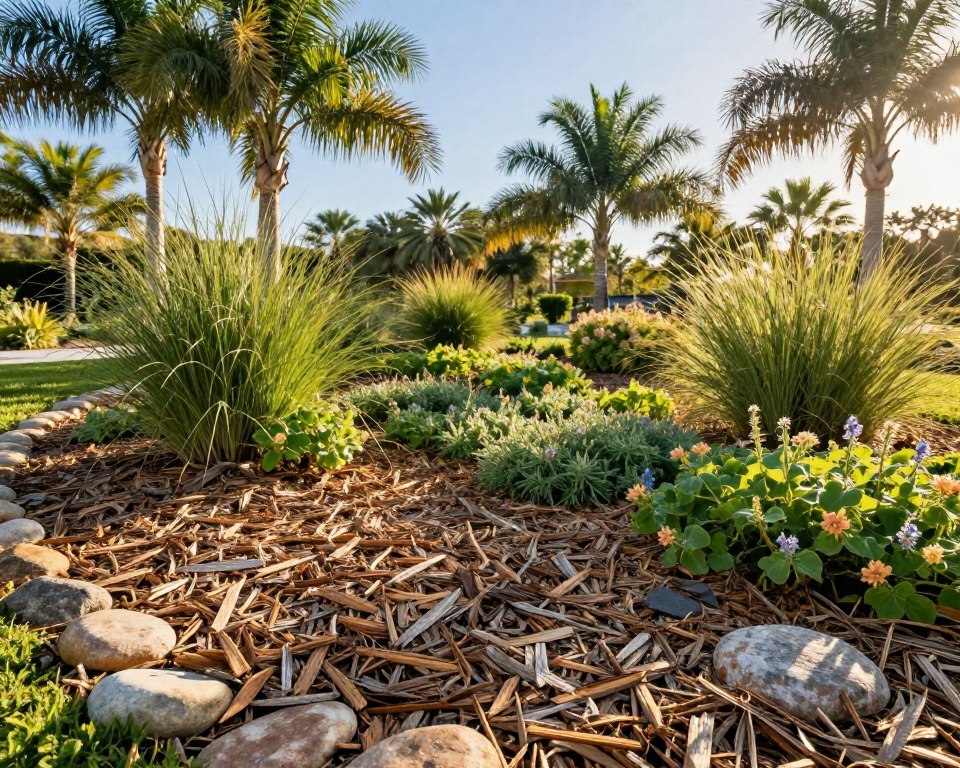
Organic mulch (bark, wood chips, leaf compost) suits most planting beds. It shades soil, lowers evaporation, and adds organic matter as it breaks down.
Choose organic mulch around shrubs and perennials where soil improvement and cooler roots matter. Keep mulch pulled a few inches from stems to avoid rot in humid climates.
Using gravel, pebbles, and rock mulch for a desert-inspired look
Gravel and small rocks fit spots that need fast drainage and a clean, low-maintenance surface.
Use rock mulch around agave, cacti, and other drought-tolerant plants that prefer dry crowns and quick runoff after storms.
How mulch helps retain soil moisture and keeps the landscape tidy
Mulch reduces evaporation and limits weed growth by blocking light to seeds. It also evens out moisture swings after heavy rain.
- Expect reduced weeds, not zero — hand-pull seedlings after storms.
- Rock mulch shines where drainage and a desert look are priorities.
- Organic mulch is best where soil health and moisture retention are goals.
- Rake mulch back after storms to restore depth.
- Top off thin areas once a year to keep a consistent 2–3″ depth.
- Keep mulch away from plant crowns and trunks to prevent rot.
| Mulch Type | Best Use | Evaporation Control | Maintenance Notes |
|---|---|---|---|
| Organic (bark, compost) | Shrubs, perennials, beds that need soil improvement | High | Replenish yearly; keep off stems |
| Gravel / pebbles | Dry-tolerant plants, rock gardens, pathways | Moderate | Weed barrier recommended; occasional raking |
| Coquina / decorative rocks | Accent zones, around agave and cacti | Moderate; sheds water quickly | Low decay; clean debris after storms |
Hardscape ideas that add texture and visual interest with less watering
Paths, borders, and focal pieces made from natural materials can make a garden feel complete with fewer plants.
Coquina rock for paths, borders, and simple rock features
Coquina rock works well for stable borders, informal stepping paths, and small rock garden features. Its shell-rich limestone suits coastal and inland yards and blends with native soils.
The stone is porous, so it can hold a little moisture. That helps nearby plant pockets during dry spells without adding irrigation needs.
Driftwood as focal points and natural “mulch”
Use one large piece of driftwood as a sculptural focal point in a bed. Scatter smaller pieces to create a natural-looking mulch that complements drought-tolerant plants.
- How hardscape helps: more nonliving surface area reduces planted zones that need regular watering while keeping the landscape usable.
- Pair rocks and gravel with planting pockets for agave, grasses, or mangave. Leave planting holes so roots get space.
- Plan drainage, avoid directing runoff into succulent crowns, and add edging so gravel stays put after heavy rain.
| Material | Best Use | Benefit |
|---|---|---|
| Coquina rock | Paths, borders, rock garden features | Porous, stable, holds slight moisture |
| Gravel | Transitions, walkways, bed surface | Clean lines, low upkeep, good drainage |
| Driftwood | Focal points, natural mulch | Texture, low-cost visual interest |
Drought-tolerant plants and native plants that thrive with minimal watering
Build planting beds around a few reliable drought-tolerant plants so each zone has predictable water needs and function.
Structural anchors: Agave and century plant
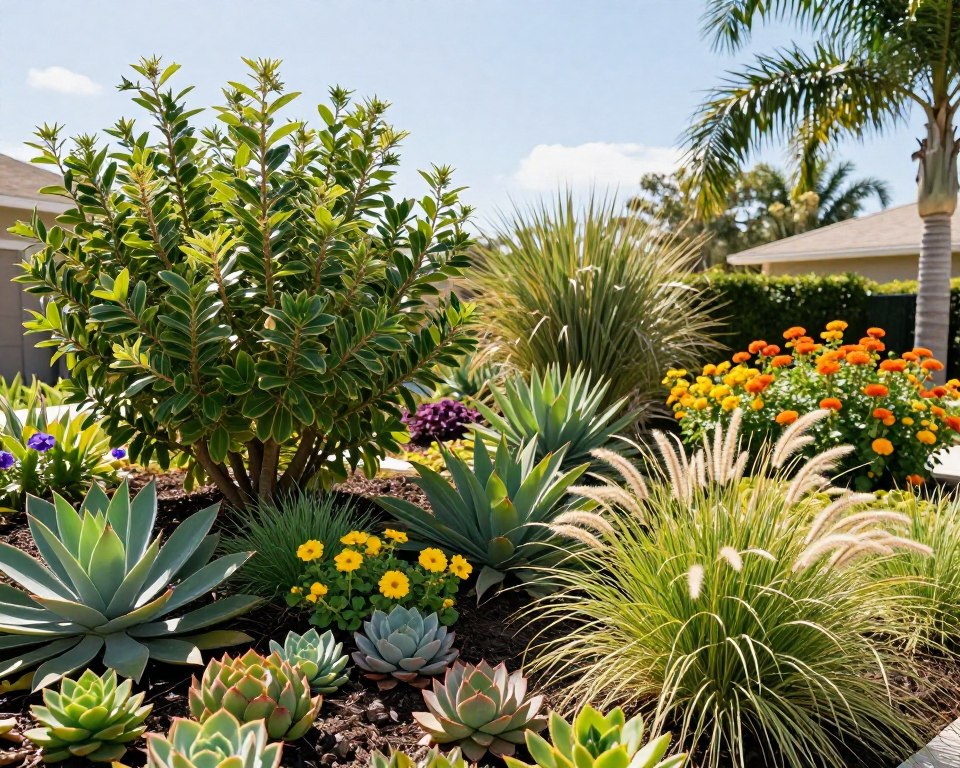
Agave prefers full sun, very well-drained soil, and at least six hours of sun. Place it away from walkways; many types have sharp spines.
Century plant (Agave americana) grows large, lives 10–30 years, and sends a tall flowering stalk late in life. It declines after flowering but makes pups you can replant.
Family-friendly rosette: Mangave
Mangave offers the same rosette form with fewer sharp spines. Use it near paths and play areas in dry, well-drained beds.
Long-season color: Firewheel and beach sunflower
These native plants add bright blooms through the season. Match them to sunny, sandy pockets so they need minimal extra watering once settled.
Groundcover and spreader: Railroad vine
Railroad vine likes sandy, sunny spots and spreads fast. Give it room or edging to keep it contained.
Softening movement: Ornamental grasses like muhly grass
Ornamental grasses add motion and soften rock beds. Muhly grass prefers full sun and rocky or sandy sites and needs little water after establishment.
- Design tip: Frame beds with anchors, color, groundcover, and grasses for function and form.
- Water new plants until established, then cut back to reduce disease and rot.
Succulents, cacti, and yucca for a Florida-friendly desert look
Succulents, cacti, and yucca offer strong form and low upkeep when placed in well-drained spots. Use them as focal points with gravel and rock mulch for a tidy, low-water layout.
Succulents that store water in their leaves
Succulents store moisture in thick leaves, which helps them tolerate dry periods. Examples include sedum, echeveria, and aloe — all good choices for sunny, drained beds.
Avoid soggy ground. Raised beds, slopes, or amended soil that sheds rain reduce root rot risk.
Cacti options, including prickly pear
Cacti need very little water and suit exposed, fast-draining pockets. Prickly pear is a native option and performs well when kept out of high-traffic zones.
Place spiny species away from play areas and paths and allow room for growth and safe maintenance.
Yucca for vertical interest in poor soil
Yucca adds upright structure and texture. It tolerates poor, sandy soil where many other plants struggle.
Keep crowns clear of piled mulch and remove dead leaves to prevent trapped moisture after storms.
- Drainage rule: succulents and cacti fail in soggy soil — use raised or amended beds that dry quickly.
- Space plants to allow airflow and easy debris removal after heavy rain.
- Use rock mulch, gravel, and a few anchor species for a clean xeriscape design.
| Species | Best spot | Maintenance note |
|---|---|---|
| Sedum / Echeveria | Sunny, well-drained bed | Light watering until settled; avoid wet crowns |
| Prickly pear | Open, fast-draining area | Keep away from play paths; minimal water |
| Yucca | Poor or sandy soil, background | Vertical accent; remove dead leaves; low water |
Efficient irrigation and rain-smart features to manage moisture and runoff
A rain-smart yard routes heavy downspouts into dedicated areas so the rest of the garden stays drier and simpler to care for. Targeted systems cut wasted water and reduce the chance of overwatering drought-tolerant beds.
Drip systems for targeted, low-loss delivery
Drip irrigation uses low-volume emitters to place water at the root zone. This reduces spray to sidewalks and lowers evaporation compared with overhead systems.
Simple setup steps:
- Divide beds into zones by plant water need.
- Place emitters at each plant base and run accessible lines for quick checks.
- Use a timer or smart controller to avoid fixed schedules during frequent rain.
Watering establishment, then scaling back
New plants need steady moisture until roots spread. After establishment, switch to deeper, less-frequent cycles to encourage strong roots and reduce overall water usage.
Rain garden basics for runoff control
Place a rain garden in a low area away from foundations to accept roof or yard flow. Size it to handle expected runoff and use native, moisture-tolerant species so stormwater soaks in without flooding beds.
After a storm: check for clogged emitters, displaced mulch or gravel, and new low spots where water pools. For further watering guidance, see how long to water grass.
| Feature | Benefit | Quick action |
|---|---|---|
| Drip irrigation | Reduced waste, precise delivery | Install emitters at roots |
| Rain garden | Captures runoff, prevents erosion | Place in natural low spot |
| Zone timers | Match schedules to plant need | Separate timers per hydrozone |
Conclusion
A clear plan that follows sun, soil, and water flow makes small changes add up quickly.
Start by mapping the yard, fixing drainage trouble, and picking a single test bed. Use hydrozones, the right mulch, and targeted irrigation to reduce water use while keeping the garden attractive.
Choose the right plants for the right spot—drought-tolerant species in well-drained soil and moisture-loving pockets where runoff collects. Pair dry beds with a rain-smart area to handle heavy storms without harming roots.
Expect light maintenance: occasional weeding, mulch touch-ups after storms, and seasonal timer adjustments rather than weekly watering. Work gradually—expand what succeeds and the landscape will stay resilient through the local climate.
FAQ
What does “reduce water” really mean for a Florida yard?
How does this approach work in a hot, humid climate with unpredictable rain?
How should homeowners map sun, shade, and existing features before planting?
Why is checking soil and prioritizing well-drained areas important?
What are hydrozones and how do they cut water usage?
When should organic mulch be used versus rock or gravel?
How does mulch help retain moisture and reduce weeds?
What hardscape materials add visual interest without extra watering?
Which drought-tolerant and native plants perform well with minimal watering?
Are succulents, cacti, and yucca suitable for residential yards here?
How does drip irrigation conserve water compared with sprinklers?
How long should new plants be watered before reducing irrigation?
What is a rain garden and how does it help manage stormwater?
Can ornamental grasses thrive with low water and add seasonal interest?
How do rock mulches and gravel affect soil temperature and moisture?


