
 0
0
 0
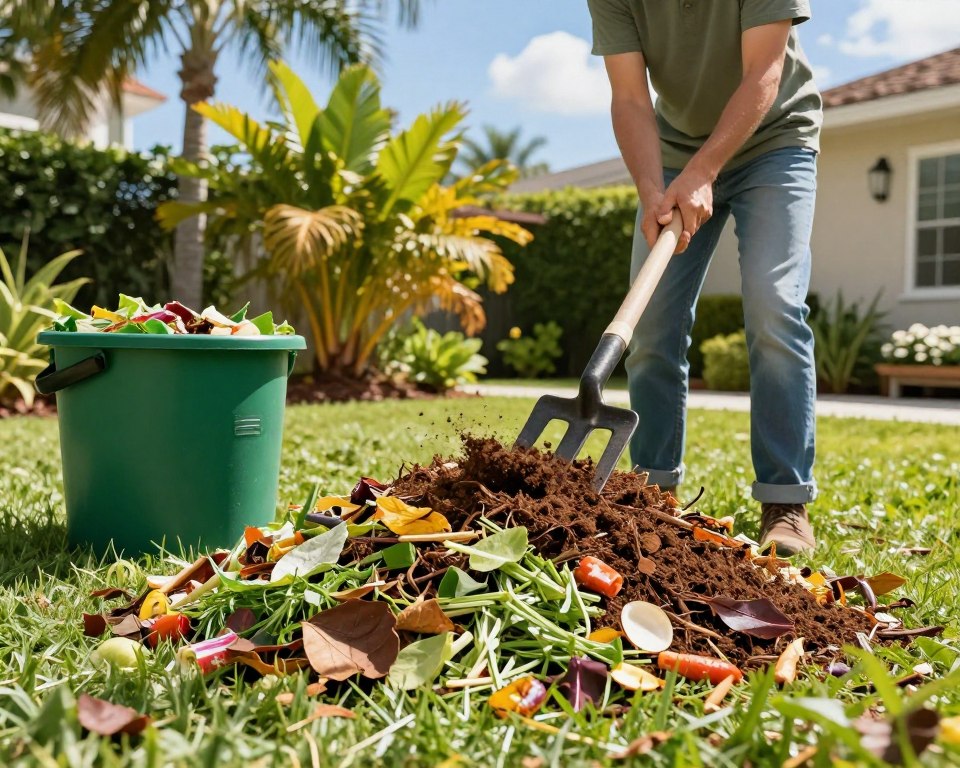
0 Composting rules in florida yards often surprise homeowners who assume permits are needed for a small pile.
The smell of damp leaves and fresh mulch is familiar across warm seasons, and most households can manage a low-impact setup without state permitting when the activity stays personal and small.
County offices hold core solid waste duties under F.S. 403.706, so local codes or HOAs may add limits or nuisance standards that affect how a backyard system is handled.
Practical focus here will cover what qualifies as “yard trash,” how yard trimmings differ from other organics, and when a hobby pile may start to resemble regulated waste handling.
Start smart: ID your materials, check county guidance for yard trash, and pick a goal—mulch, partly broken-down material, or finished compost—so you avoid odor, pests, runoff, and neighbor complaints.
Key Takeaways
- Most home systems stay personal and low-impact, avoiding state permits.
- Counties enforce solid waste; local codes or HOAs can be stricter.
- Know the difference between yard trimmings and other organic waste.
- Avoid odor, pests, and runoff to reduce enforcement risk.
- Identify materials, confirm county guidance, and set a clear end product.
What Florida calls “yard trash” and other organic materials
Home gardens produce a steady flow of plant debris that most people can handle at home without special permits. A simple yard pile usually contains clean plant material and is treated differently by local solid waste programs than food or animal waste.
Common yard inputs that fit the yard trash concept
- Leaves, small branches, grass clippings (in moderation)
- Palm fronds, non-treated wood chips, twigs
- Garden prunings and table-top plant trimmings
Organics that trigger different handling expectations
- Food scraps and kitchen waste — odor and pests increase risk
- Manure and animal byproducts — often require special controls
- Heavily treated wood or glossy waste paper — avoid these
Climate and woody debris
Warm, wet weather speeds decay for soft plant matter, while large woody debris breaks down slowly. Residents often end up with mulch-like material unless they chip or reduce particle size.
| Material | Typical Handling | Best Purpose |
|---|---|---|
| Leaves & grass | Place in yard pile or county collection | Mulch or soil amendment |
| Small branches & chips | Chip locally; may require longer retention | Pathways, slow mulch |
| Food scraps / manure | Keep separate; higher odor control needed | Specialized processing or hot systems |
| Paper & waste paper | Use clean, uncoated paper sparingly | Bulk carbon for piles |
Composting rules in florida yards: what’s typically allowed vs. what can become regulated
A backyard pile that is small, well-managed, and used on-site usually looks like routine yard care rather than a regulated operation.
When backyard activity stays a home task
Typical safe zone: material generated on the same property, kept tidy, and applied back to the yard for personal use. This generally avoids being treated as a solid waste operation.
When scale, odors, vectors, or off-site material cause concern
- Accepting material from other households or charging fees can change the activity’s legal status.
- Persistent odors, visible runoff, or repeated neighbor complaints draw attention from waste management or public health staff.
- Vectors — flies, rodents, raccoons — or unmanaged food waste are practical red flags for enforcement.
What to check locally and how to stay within personal use
Counties may adopt stricter ordinances under F.S. 403.706(14) and control disposal at county facilities per F.S. 403.706(1). Check city nuisance codes, county solid waste programs, HOA rules, and setbacks near water or storm drains.
| Situation | How officials view it | How to keep it personal |
|---|---|---|
| Small, on-site yard trimming | Low priority for enforcement | Contain and use on the property |
| Taking outside loads or selling product | May be treated as a facility | Avoid off-site receipts or commerce |
| Odor, runoff, vectors | Likely cause for complaints and inspections | Manage moisture, cover, and keep food out |
Regulated status often hinges on scale and impact, not intent. Use these points to decide whether your setup looks like normal home care or a waste management site. The next section explains county roles and local programs for collected organic material.
County and city roles in solid waste management, recycling, and yard trash programs
County governments run the backbone of solid waste systems, while municipalities usually manage curbside pickup and transport to county sites.
Who does what
- County: plans and operates disposal facilities, sets recycling program goals, and may charge reasonable fees.
- Municipalities: collect local municipal solid waste and move loads to county facilities.
- Local governments: can adopt stricter standards than the state for nuisance, collection, or site limits.
Designated facilities and practical details
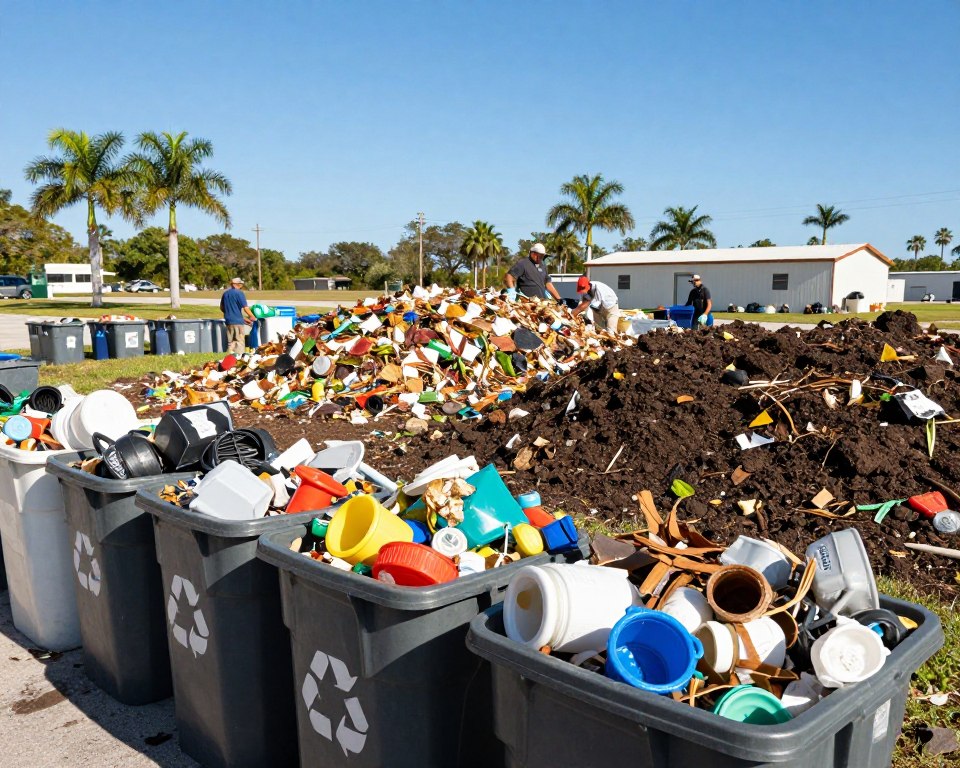
Designated facilities accept brush, yard trimmings, and other loads so counties can track recycled materials and disposal amounts.
| What counties track | Why it matters | Resident takeaway |
|---|---|---|
| Disposal and recycled tonnage | Shows progress toward recycling goals | Use correct drop-offs to help totals |
| Yard trash handled and participation percent | Influences program changes year to year | Check county pages for pickup rules |
| Fees and facility use | Funds operations and private partnerships | Expect tipping fees, tags, or limits |
Quick actions for residents: find your county solid waste page, confirm collection and bundling rules, check for mulch/compost giveaways, and note any fees before you drop off material.
State composting regulations that matter when you move beyond a backyard pile
Operators hit state oversight when their activity looks more like a processing facility than a small home project.
When the state typically applies
- Triggers: accepting off-site material, handling animal byproducts or manure, or running larger-scale operations.
- Scope: the rule covers facilities that compost vegetative waste, animal byproducts, or manure, whether mixed with yard trimmings or soil.
Key requirements at a glance
- Feedstock blend: blended materials must have a carbon:nitrogen ratio greater than 20 to reduce odor and pests.
- Pile height: piles for vegetative waste, animal byproducts, or manure may not exceed 12 feet.
- Storage time: all accepted material must be removed within 18 months unless a permitted site documents on-site use.
- Disinfection: required unless the compost uses only pre-consumer vegetative waste (with or without yard trimmings).
- Vector controls: meet temperature/time standards (14 days; minimum 40°C; average >45°C) or achieve SOUR ≤1.5 mg O₂/hr/g at 20°C.
| Requirement | Why it exists | When it applies |
|---|---|---|
| Carbon:N ratio >20 | Limits odors and pathogen growth | Facilities blending feedstocks |
| 12-foot pile cap | Reduces unmanaged mass and fire/vector risk | Sites handling manure or animal byproducts |
| 18-month removal | Prevents indefinite accumulation | All permitted facilities |
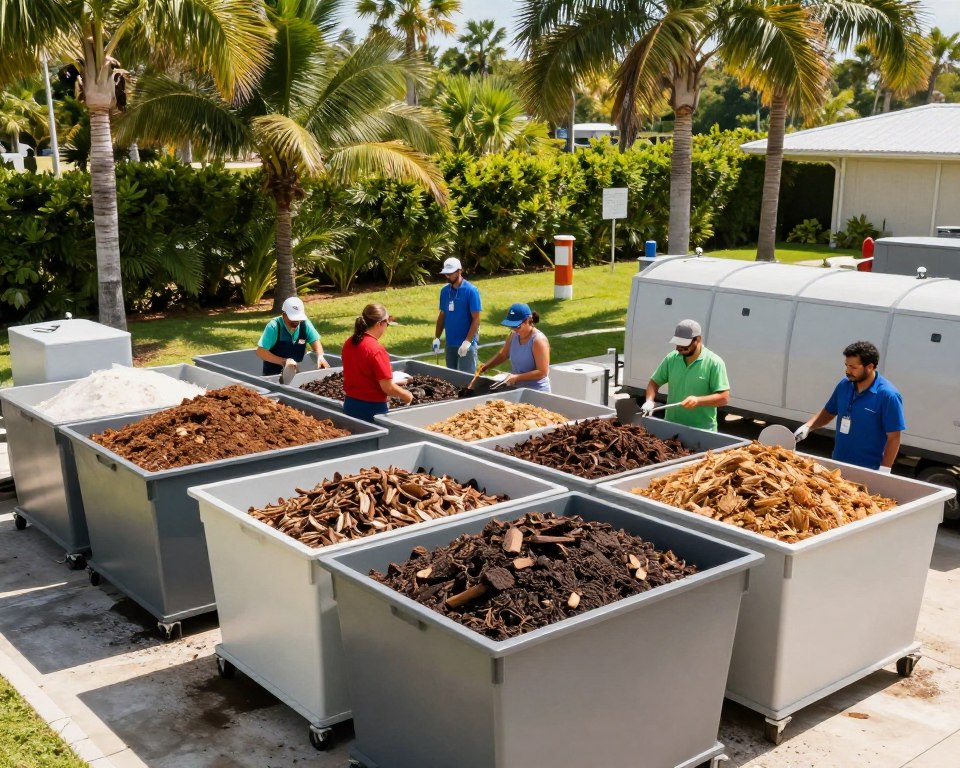
Reader takeaway: homeowners rarely need lab testing or SOUR reports. These requirements explain why commercial facilities have stricter controls than a backyard bin.
How Florida’s composting and processing industry has worked in practice
After storms and routine pruning, many Florida communities rely on heavy equipment to shred large piles and move material fast.
Processing commonly means chipping or grinding to make mulch or wood products. This reduces volume quickly and creates a usable product with low retention time.
Full composting requires longer storage, mixing, and monitoring to make a stable soil amendment. The subtropical climate and high volumes of woody trimmings make that approach slower and more costly.
Operational and economic drivers
- Storm debris spikes push counties to favor grinding so streets and properties clear fast.
- Low disposal tip fees and uneven enforcement have weakened the financial viability of higher-control operations.
- Adding source-separated food creates stricter requirements and higher costs for a facility that wants to accept nitrogen-rich material.
| Option | Typical output | Why operators choose it |
|---|---|---|
| Chipping/grinding | Mulch, wood chips | Fast volume reduction; meets post-storm needs |
| Full composting | Mature soil amendment | Long retention; higher management and costs |
| Source-separated food programs | Mixed compost or processed feedstock | Requires permits, odor and vector controls |
Residents should check whether local facilities accept source organics beyond yard trimmings and whether county programs offer mulch or finished product recovery.
Composting in your Florida yard without creating a waste management problem
Simple site choices and routine care will keep a home pile productive and free from nuisance issues.
Set up your pile to avoid pests, runoff, and complaints
Checklist:
- Choose a contained area on stable ground, away from drains and low spots.
- Keep the pile tidy and edged so material does not spill into public space.
- Manage moisture: cover during heavy rain and add dry browns when soggy.
- Avoid meat, dairy, or oily scraps; bury small food bits if used at all.
- Use a bin with a lid or a covered heap to deter raccoons and flies.
- Turn material as needed and respond quickly to neighbor concerns.
Use finished compost responsibly
Finished compost is dark, crumbly, and earthy. It should not smell sour.
Use it to top-dress ornamentals, mix into garden beds, or improve sandy soil. Avoid spreading large, loose layers that can wash away in storms.
| What it looks like | Where to use | When to change plans |
|---|---|---|
| Dark, crumbly, earthy | Beds, potted soil, soil amendment | When household waste exceeds on-site use |
| No strong odors | Light lawn top-dress, garden mix | If pests or runoff become frequent |
If volume grows beyond personal use, use county recycling or a permitted facility rather than expanding on-site. That keeps the activity clearly within normal solid waste management expectations.
Conclusion
A clear home action plan ties what you can handle at the property to the county’s disposal and recycling services.
Final homeowner checklist:
– Identify whether your materials are routine yard trash or higher-risk organic waste and keep higher-risk items separate.
– Check the county solid waste section of the local website for current set-out, drop-off, and seasonal storm guidance.
– Read the annual report (due April 1) to see what the county tracks: disposal amounts, recycled materials, and percent participation; the state posts rates by July 1 each year.
– Note reasonable fees at county facilities and confirm any stricter limits from local governments before expanding your setup.
Do this next: keep material use on-site when possible, use the county program for bulky debris, and fix persistent odor, runoff, or pest problems promptly. For disposal guidance on hazardous household items, see this short page: paint disposal guidance.
FAQ
What does Florida legally consider “yard trash” and other organic materials?
Which common yard inputs are typically acceptable for local collection or drop-off?
What organic materials can trigger different handling or regulatory requirements?
How does Florida’s climate affect how woody debris and vegetative material break down?
When does backyard organic processing remain a private, unregulated activity?
What backyard practices can trigger compliance or enforcement actions?
Can local ordinances be stricter than state requirements?
What are counties and cities responsible for regarding solid waste and yard trash?
How do recycling and yard trash programs work together?
Why do counties partner with private operators to compost or mulch organics?
Are there fees or designated facilities for yard waste disposal?
How do counties track disposal, recycling and participation over time?
When do state regulations apply to a processing site rather than a backyard pile?
What scope do state facility rules typically cover?
Are there blending or feedstock requirements for operational facilities?
What operating limits affect site design, such as pile height?
Are there time limits for keeping material on-site?
What about disinfection and exceptions for pre-consumer vegetative waste?
What are vector attraction reduction (VAR) options for facilities?
Why have chipping and grinding operations dominated over full processing plants?
How do low disposal costs and uneven enforcement affect facility viability?
Why has adding source-separated food waste been challenging under traditional permitting?
How can homeowners set up a pile to avoid pests, runoff and complaints?
How should finished material be used responsibly on lawns and beds?


