
 0
0
 0
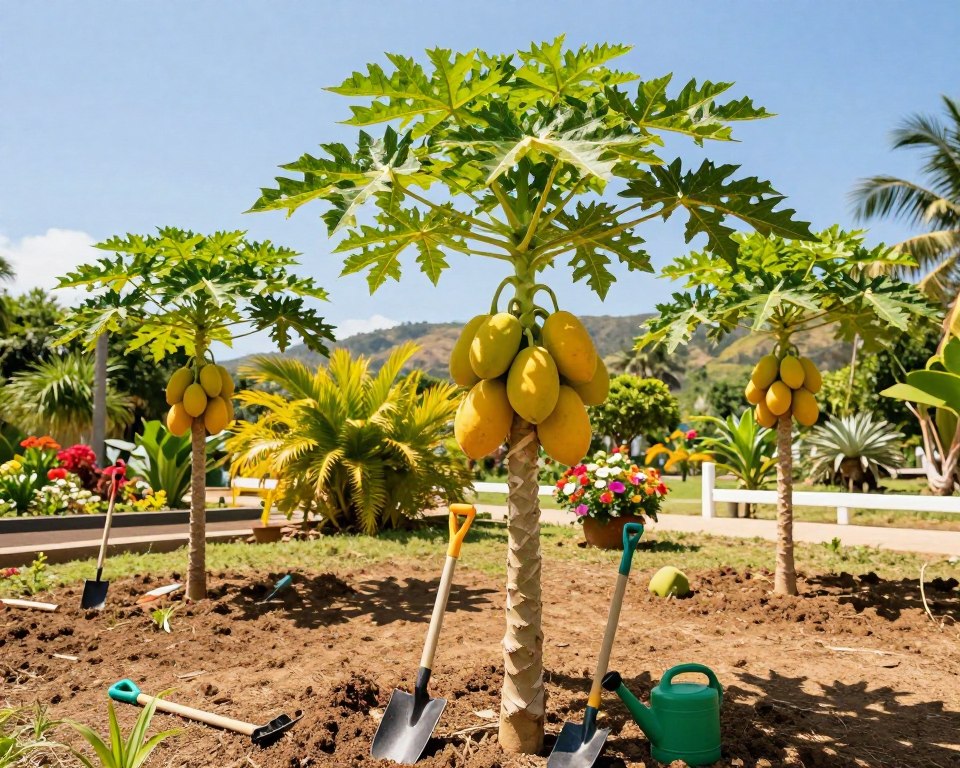
0 The first warm breeze in South Florida can wake fast-growing plants into a rush of green and early fruit. Gardeners see quick stems, flowers within months, and harvests that may arrive the first year under steady sun and moisture.
Expect rapid growth and early cropping, but accept a shorter lifespan than many orchard trees. The soft, non-woody trunk means staking and wind protection help stability and long-term survival.
Key factors for success are clear: warmth, full sun, excellent drainage, consistent moisture, and active pest and disease checks. Variety choice and plant sex matter; some plants never set fruit without the right pollination or cultivar.
Florida challenges include cold snaps, strong coastal wind, seasonal flooding, and papaya ringspot virus. This guide follows a logical path for readers: conditions, variety and sex selection, planting, seed starting, ongoing care, pest and disease steps, and harvest timing.
Key Takeaways
- Plants grow fast and often fruit within the first year with good care.
- Soft trunks need staking and windbreaks for better durability.
- Warmth, sun, drainage, steady moisture, and pest checks are essential.
- Variety and sex determine whether a yard gets fruiting trees.
- Watch for cold snaps, wind damage, flooding, and ringspot virus.
Florida papaya growing conditions that make or break success
Site climate and microclimates often decide whether a backyard papaya yields well or struggles.
Temperature sweet spot: Aim for daytime temperatures around 70–90°F (21–32°C). Nighttime warmth helps fruit set. Temperatures below ~59°F hinder flowering and can produce misshapen fruit. Soil below ~60°F slows root growth and early season development.
Cold planning (Zones 9B–11): In zone terms, brief dips near 59°F reduce blooms; sustained freezes near 31°F cause major damage or death. Use frost cloths, microclimate planting, or container moving in marginal spots.
- Sun: Provide at least 6 hours of direct sun; shade lowers leaves, reduces flowering, and cuts final fruit quality.
- Wind and salt: Soft trunks can snap or tip when fruit-laden. Put plants in sheltered yard spots or behind windbreaks to limit salt spray and toppling risk.
- Moisture extremes: Drought causes leaf and flower drop. Flooding raises root disease risk and can kill plants.
Quick conditions checklist: 70–90°F days, warm nights, 6+ hours sun, well-drained soil, sheltered site, and reliable water access. If most items match your home site, success is likely within the first years.
Choosing papaya plants and varieties for Florida yards
Variety and source shape how reliably a yard will produce ripe fruit and resist local threats. Pick a cultivar known for good performance in warm, coastal gardens. That gives a better chance of steady harvests and fewer surprises.
Common reliable varieties
- Red Lady: Fast-bearing and common in home yards.
- Maradol: Large fruit and good flavor for warm sites.
- Tainung No. 1: Vigorous and productive in sunny spots.
Solo-types and disease risk
“Solo-type” refers to certain cultivars often sold for home gardens. These can be more vulnerable to ringspot virus. In areas with known outbreaks, favor resistant or tested stock.
Plant sex and pollination basics
There are male, female, and bisexual plants. Males make pollen, females make fruit, and bisexual plants can self-pollinate.
For a reliable yard, choose bisexual or confirmed fruiting nursery stock. If planting from seed, expect mixed sexes; sow several seeds to improve odds. Gardeners usually check flowers later to confirm sex when genetic tests aren’t available.
Seed-grown vs nursery stock
- Nursery plants: faster fruiting and easier for beginners; may be labeled as female or hermaphrodite.
- Seed-grown: cheaper but unpredictable; plant multiple seedlings for a fruiting tree.
Planting papaya in Florida: site selection, soil prep, and spacing
Good placement and drainage matter more than fancy soil amendments for most backyard sites. Pick a full-sun spot that sheds water quickly and sits out of low, wet hollows.
Site-picking checklist
- Full sun: six hours or more, clear of heavy shade.
- Fast drainage: avoid low areas that stay wet after rain.
- Wind protection: shelter from steady gusts that topple trunks.
- Avoid sprinkler heads and tight corners where debris or salt collects.
Soil, drainage, and planting notes
Papaya tolerates sand, loam, and rocky ground over a wide pH range. Drainage is the priority: saturated soil kills roots and invites disease.
If native soil is heavy, dig and backfill with a coarse mix or build a raised mound about 12–18 inches high. Mounds lift the root zone above standing water and speed warming.
| Soil Type | Drainage | Planting Tip |
|---|---|---|
| Sand | Fast | Backfill normally; add organic matter if very poor |
| Loam | Good | Use native soil, firm lightly, water in |
| Rockland/rocky | Quick but shallow | Dig larger hole and add finer mix for roots |
Spacing and container guidance
Place trees about 7–10 feet from structures and other plants. This allows airflow, leaf drying, and room to work around the trunk.
In cooler parts, start plants in a container and move them outdoors when nights stay warm. Water in immediately after planting and do not bury the trunk deeper than it was in the pot.
Starting papaya from seed and transplanting seedlings without setbacks
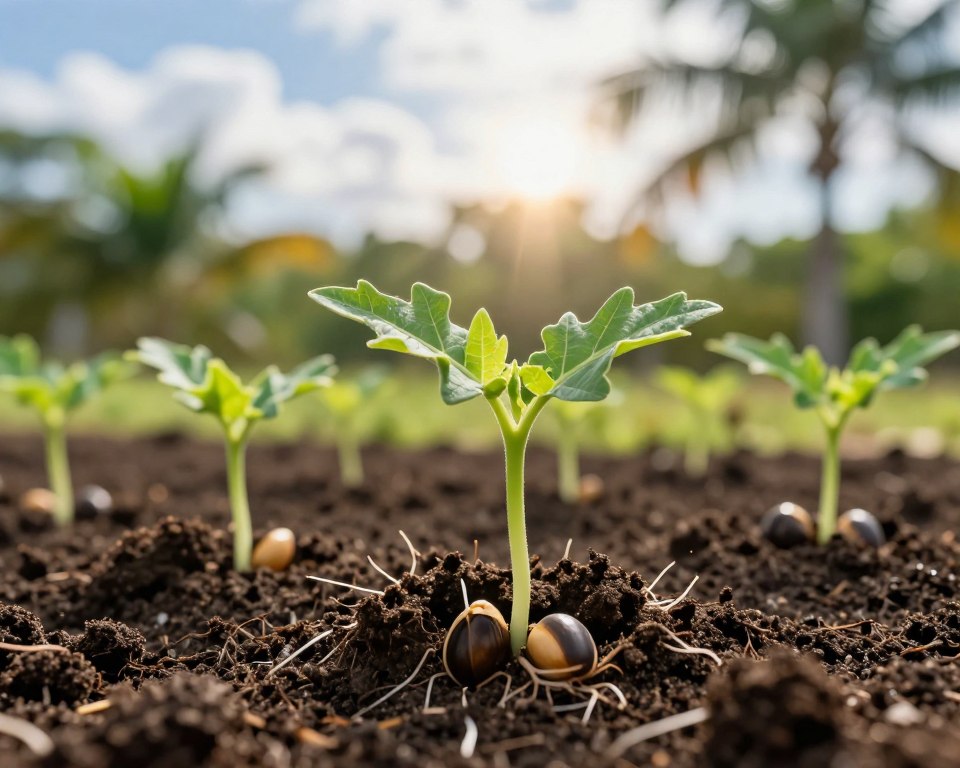
Good seed handling and a warm, sterile mix set the stage for steady seedling growth and fewer setbacks.
Choosing and preparing seeds
Select seeds from fully ripe fruit. Rub off the gel-like coating, rinse well, and allow seeds to dry briefly so they handle cleanly.
Germination setup
- Use a sterile seed-starting mix and sow about 1/2 inch deep.
- Keep the tray warm (70–85°F) and maintain even moisture—damp but not soggy—until sprouting, usually 2–4 weeks.
- Too much water slows germination and causes rot; aim for even dampness with no standing water.
Early seedling care and timing
After sprout, give bright light and gentle air flow. Water when the top inch feels dry.
Begin light feeding once true leaves appear, using a balanced, diluted fertilizer on a regular cadence.
Transplant cues and containers
Move seedlings when they reach 6–12 inches with several true leaves and a compact root ball. Support the root ball—do not pull the stem.
| Option | Benefit | Note |
|---|---|---|
| In-ground | Faster growth and larger final size | Best in warm, well-drained sites |
| Container | Mobility, nematode and cold protection | Use 5-gallon minimum, good drainage holes |
Plant multiple seedlings per spot to improve odds of having fruiting plants; thin once flowers reveal sex. Gentle handling and correct timing reduce transplant shock and support steady growth.
Ongoing papaya tree care for steady growth and better fruit quality
Consistent attention during summer rains and winter dry spells preserves fruit quality. A simple routine of checks and light work keeps trees healthy without heavy effort.
Watering and common moisture mistakes
Provide even soil moisture. Increase water during dry spells and cut back during rainy weeks. Never let roots sit in standing water.
- Avoid daily sprinklers on heavy soil; they cause shallow roots and rot.
- Signs of poor moisture: leaf drop, flower loss, or split fruit.
Fertilizer and nutrient rhythm
Use small, frequent fertilizer applications. Choose a complete N-P-K mix with magnesium typical for local programs.
- Feed monthly while active; reduce in cool months.
- Light applications protect soil biology and steady growth.
Mulch, trunk care, and shoots
Apply 2–3 inches of organic mulch, widen the ring as the trunk grows, and keep mulch pulled back from the trunk.
Decide on single-trunk or allow 1–2 side shoots. Remove extra shoots cleanly at their base to prevent ragged wounds.
Leaf cleanup, buffers, and staking
Remove dead leaves for better airflow, faster drying after rain, and less fruit scarring.
Create a no-mow buffer around the trunk, avoid heavy turf fertilizer nearby, and stake young trees in windy sites to prevent toppling.
Routine checklist (weekly/monthly):
- Weekly: soil moisture check, remove dead leaves.
- Monthly: light fertilizer, widen mulch as needed.
- Seasonal: inspect shoots and stake before storm season.
Preventing and managing pests and diseases in Florida papaya plantings
A brisk, regular inspection habit makes pest and disease problems easier to catch before they spread.
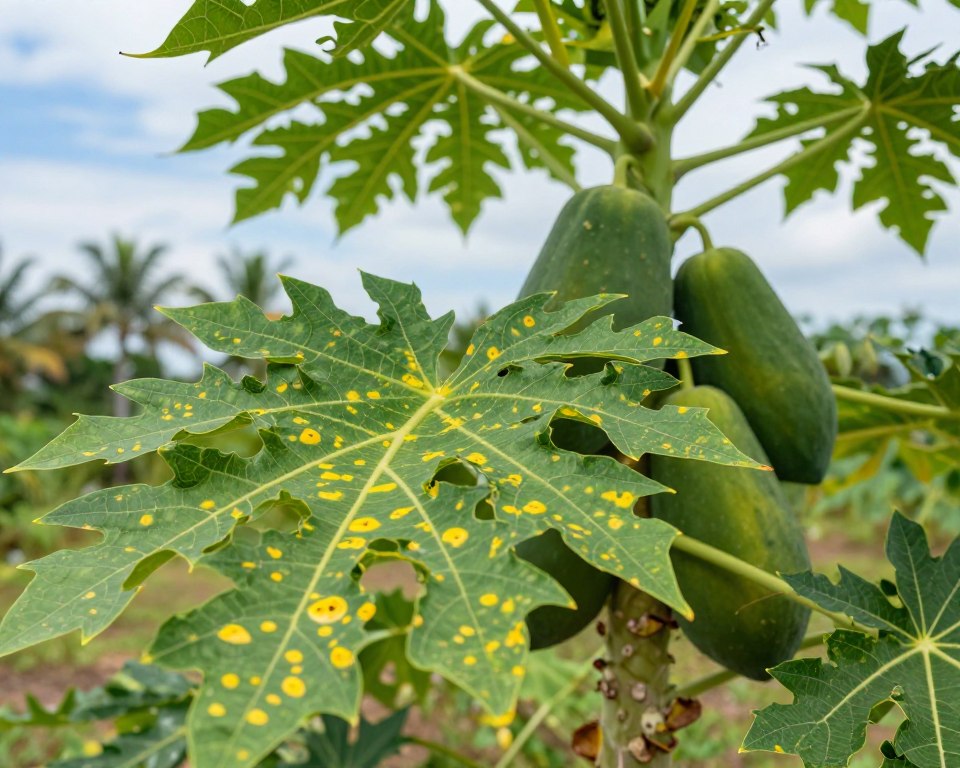
Common pests to watch: fruit fly, whitefly, webworm, mites, scales, and mealybugs. Look for chewed fruit, sticky leaves from honeydew, webbing, yellowing, and distorted new growth. Early signs on leaves, stems, or fruit mean simpler control options.
Weekly inspection routine
- Check undersides of leaves, developing fruit, and new shoots once a week.
- Note any sticky residue, tiny moving insects, or small round spots on fruit.
- Record locations and act quickly when multiple leaves show damage.
Low-impact controls
Start with a strong rinse from the hose to knock off insects. Prune and remove heavily infested parts and dispose of them away from the garden.
If pests persist, use insecticidal soaps or neem following label directions. These are lower-impact options that help preserve beneficial insects when used carefully.
Papaya ringspot virus basics
Papaya ringspot virus causes rings, mottling, and distorted fruit and leaves. The virus spreads mainly by sap-feeding insects and contaminated tools.
Once symptoms are clear and widespread, replacement is often the realistic choice because infected plants rarely recover fully.
Other diseases and nematodes
Humid yards can see anthracnose, powdery mildew, phytophthora blight, and various leaf spots. Good airflow, proper drainage, and sanitation cut disease pressure.
Nematodes harm roots and are hard to fix in-ground; container growing with clean potting mix is a practical option where nematodes are known.
| Pest/Disease | Damage Signs | Low-impact Control |
|---|---|---|
| Fruit fly | Spots and premature fruit drop | Sanitation, baiting, harvest timing |
| Whitefly / mealybug | Sticky leaves, sooty mold | Hosing, soaps, neem |
| Ringspot virus | Rings on fruit, distorted leaves | Remove infected plants, consult experts |
Sanitation: Remove fallen fruit, clear diseased leaves, and avoid working plants when wet.
For diagnosis and current, county-specific recommendations, contact your local UF/IFAS Extension office. They provide lab testing and up-to-date control guidance for local outbreaks.
Harvest timing, ripening, and storage for homegrown papaya fruit
A small color shift often signals the best moment to harvest.
Look for the peel to move from deep green toward yellow or orange. This color break is a safer cue than waiting for full softness on the branch.
Picking and ripening on the counter
Pick gently: Support the fruit with one hand and cut the stem with clean shears. Do not pull or twist; that stresses the soft trunk and bruises fruit.
Place slightly colored fruit on the counter at room temperature. Leave it a few days until it gives slightly to gentle pressure and smells sweet.
Refrigeration window and green fruit use
- Ripe storage: Refrigerate ripe fruit for about 4–7 days. Eat sooner for best flavor and texture.
- Green fruit: Harvested early, green papaya works as a vegetable. Peel, shred, or cook it in stews and salads.
- Quality tip: Gentle handling reduces bruises and keeps eating quality higher.
- Timing note: Fruit development can take several months and varies with weather and temperature swings.
| Stage | Sign | Action |
|---|---|---|
| Color break | Green → yellow edge | Pick and ripen on counter 2–4 days |
| Ripe | Softens slightly; fragrant | Refrigerate; use within 4–7 days |
| Green (vegetable) | Firm; no color change | Harvest early; cook or shred for salads |
| Overripe | Very soft or leaking | Use immediately or discard if fermented |
Conclusion
Success with a backyard papaya often comes down to a short list of reliable actions.
Choose a warm, sunny site with fast-draining soil and a plan for cold snaps or storms. Plant more than one seedling or select nursery stock labeled for fruit to improve odds of a productive tree.
Keep a steady care rhythm: even moisture without waterlogging, small frequent feeding, mulch for moisture retention, and routine leaf cleanup. Watch risk signals closely—persistently wet roots, sudden decline after cold, heavy pest pressure, or ringspot virus signs require quick steps.
Realistic timeline: fruit can appear within months, but productive years are often limited. Next step: evaluate your yard, pick a suitable variety, and plant when nights stay reliably warm.
FAQ
What temperature range gives the best growth and fruit set for papaya in Florida?
At what cold threshold should Florida gardeners protect or avoid planting papaya?
How much sun does a papaya tree need and what happens if it’s in shade?
How do wind, drought, flooding, and salt spray affect papaya in home landscapes?
Which papaya varieties are commonly recommended for Florida yards?
Why are solo‑type papayas often more susceptible to papaya ringspot virus?
How does papaya sex affect fruiting and what are the differences among male, female and bisexual plants?
Do papaya plants self‑pollinate or need a nearby male plant?
What are the pros and cons of seed‑grown versus nursery papaya plants?
How should I pick a site and prepare soil for planting papaya?
What soil types and pH do papaya tolerate in Florida landscapes?
When is the right time to plant outdoors or start papaya in containers in cooler parts of Florida?
What spacing is recommended for airflow and trunk access around papaya trees?
Should I plant papaya on a raised mound in flood‑prone areas?
How do I choose and prepare seed from ripe fruit for sowing?
What germination setup gives the best seed sprouting rates?
How should seedlings be cared for after sprouting?
When is the right time to transplant seedlings into the ground?
What are the container size recommendations for papaya if not planted in ground?
Is planting multiple seedlings per site useful for improving fruiting odds?
How often should papaya be watered for steady growth without root problems?
What is the recommended fertilizing approach and key nutrients for Florida trees?
How does mulching help papaya and how should the trunk be protected?
Should side shoots be removed or managed for single‑ or multi‑trunk growth?
What leaf cleanup and airflow practices reduce scarring and disease pressure?
How can the trunk be protected from lawn equipment and over‑fertilized turf nearby?
What pests should Florida papaya owners watch for?
What low‑impact pest controls are effective for backyard plantings?
What are the signs of papaya ringspot virus and when should infected plants be replaced?
What other diseases commonly affect papaya in Florida gardens?
When are nematodes a concern and when is container growing preferable?
When should gardeners contact their local UF/IFAS Extension office?
How do you determine the right harvest time and ripen papaya at home?
How long can ripe papaya be stored in the refrigerator and can green papaya be used as a vegetable?


