
 0
0
 0
0 The guide on controlling fire ants in florida lawns begins with clear, practical steps you can use today to reduce stings and new mounds.
Florida’s warmth keeps colonies active year-round, so the aim is steady reduction, not instant elimination. Start by learning to spot true mounds, keep kids and pets clear while you work, and plan a bait-first strategy followed by targeted mound treatments.
Random sprays or poking a nest often backfire, pushing colonies to split. This plan emphasizes calm, safety-focused steps that protect play areas and equipment before any product goes down.
What to expect: fewer new mounds after rain, reduced foraging, fewer sting incidents, and a simple maintenance routine that fits ordinary yard care.
Key Takeaways
- Match baiting with spot treatments for the most reliable ant control.
- Protect people and pets first; clear play zones before treatments.
- Avoid disturbing mounds; it can make the problem worse.
- Success shows as fewer mounds, less activity, and fewer stings over time.
- Ongoing prevention and follow-up keep yards usable in warm climates.
Spot Fire Ants Early by Reading Your Lawn and Fire Ant Mounds
A quick scan of turf and edges reveals most problem mounds before they spread. Learn simple signs you can check from a safe distance. These tips help you spot active colonies and decide when to act.
What they look like and how they behave
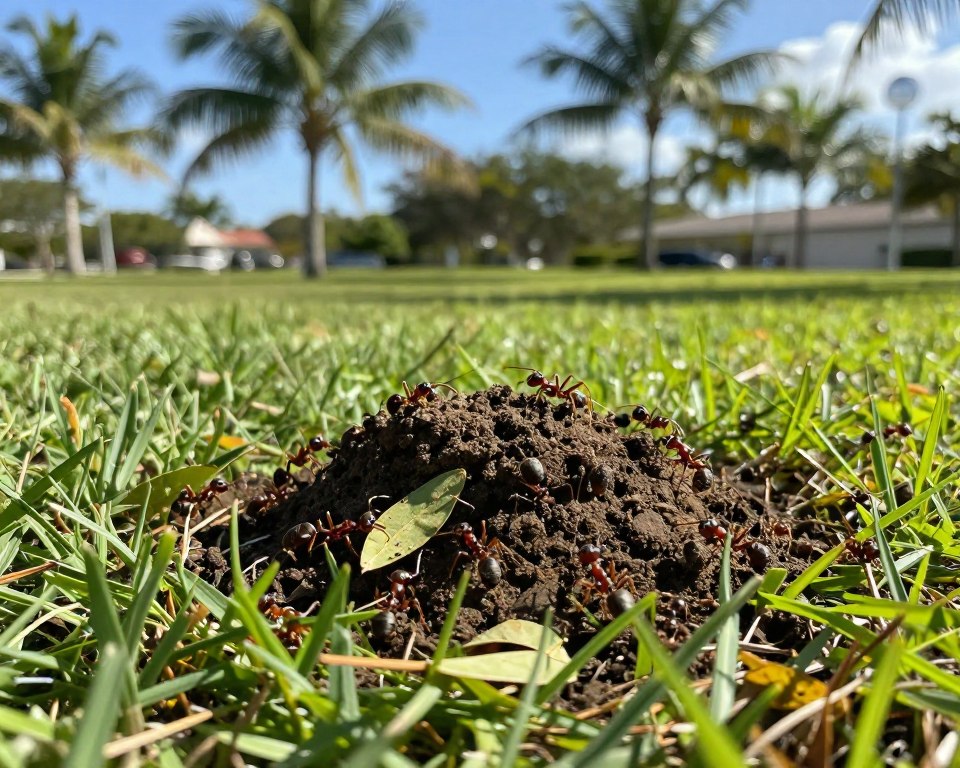
Workers are often reddish-brown and vary in size within one colony. Not every ant will match the same look.
Safe behavior test
From a few feet away, tap the outer edge lightly with a stick. Watch for fast, aggressive swarming toward the disturbance. That response signals true colonies.
How to recognize mounds
True ant mounds are dome-shaped with loose soil and may lack a visible top hole. Mounds can appear overnight after heavy rain as colonies rebuild moved soil.
When a problem is an infestation
- Repeated new mounds across open turf
- Aggressive swarms during mowing
- Frequent stings or pet encounters
| Sign | What to look for | Action |
|---|---|---|
| Dome shape | Rounded, loose soil; no clear top hole | Map location on phone |
| Rapid swarming | Workers rush the disturbance | Avoid direct contact; note size |
| Post-rain flare-up | New mounds appear overnight | Inspect sunny, open areas first |
Why Fire Ants Keep Coming Back in Florida Yards
Warm days and quick storms create a repeatable cycle that favors ant colonies across many yards. Heat keeps workers active longer. Rain and sun together let colonies rebuild mounds and move soil upward.
https://www.youtube.com/watch?v=xb0BIHVOPKQ
Climate, soil, and habitat factors
Warmth and sun speed colony growth in open, sunny areas. These spots heat soil and encourage foraging.
Moisture after storms softens loose soil, making it easy for nests to expand and for workers to push up fresh soil.
Common attractants and prevention habits
- Pet bowls left outside and fallen fruit draw foragers looking for food.
- Open trash and dead insects also attract workers to a yard or home edge.
- Reducing food sources helps but does not replace direct control methods.
| Factor | Why it helps colonies | Simple prevention |
|---|---|---|
| Warm, sunny areas | Speed activity and mound building | Increase shade or plant cover |
| Loose, moist soil | Easier nest excavation and rebuilding | Improve drainage, fill holes |
| Yard food sources | Steady foraging draws multiple nests | Remove fallen fruit, store pet food indoors |
More than one nest may exist across different areas, so broad coverage often beats treating a single mound. Because colonies defend their nest aggressively, plan safety measures before any treatment steps.
Protect People, Pets, and Equipment Before You Start Fire Ant Control
Before any work begins, secure people, pets, and outdoor equipment to reduce the chance of stings and surprise encounters. A short preparation step keeps the yard safer while baiting and treatments take effect.
What stings look like and when to seek care
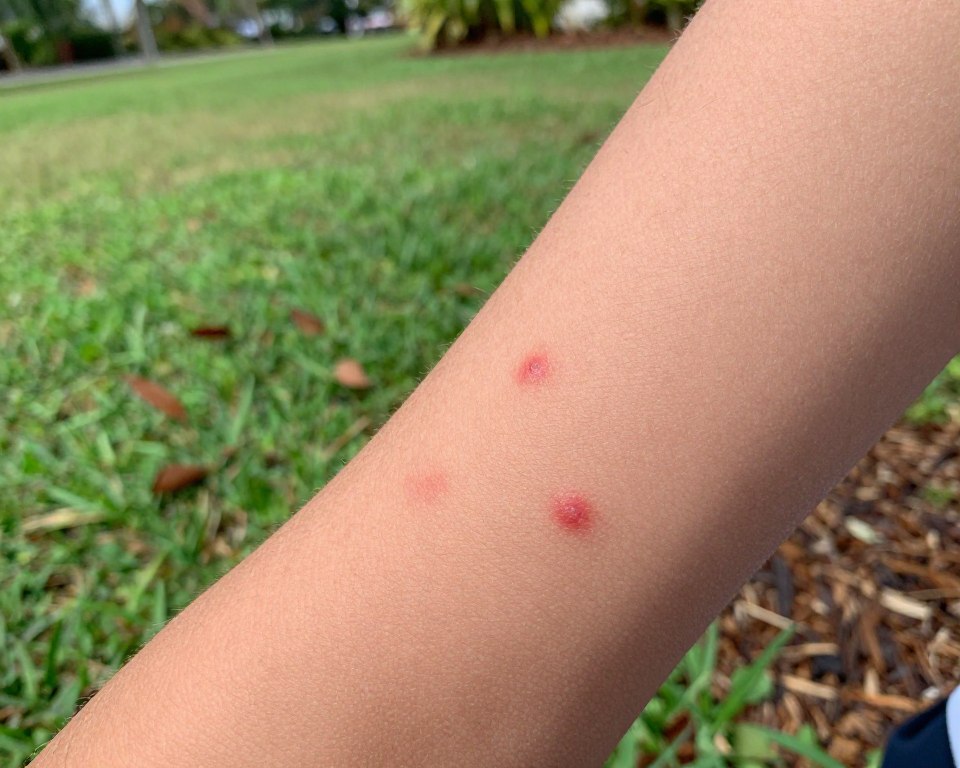
Fire ant bites hold the skin while a sting injects venom. Typical reactions include burning pain and clustered bumps that may become white pustules within about 24 hours.
- Typical pattern: burning, clusters of raised bumps, then pustules; do not scratch to reduce infection risk.
- Seek urgent help if there is trouble breathing, facial or throat swelling, widespread hives, fainting, or a known severe allergy.
Reduce risk around play zones, paths, and equipment
Give extra caution to children, older adults, and pets; they can get multiple stings near active mounds and may not move away quickly.
- Keep kids and pets indoors while treating.
- Mark active mounds with flags and avoid mowing over them.
- Check areas near sprinkler heads, A/C pads, and electrical boxes before using tools or water.
| Zone | Risk | Prep action |
|---|---|---|
| Play sets / trampolines | High—frequent use, close contact | Clear area, keep people away, flag mounds |
| Lawn edges & paths | Moderate—stepping off pavement | Inspect and treat before heavy use |
| Sprinklers & water fixtures | Moderate—mounds near water sources | Check heads, avoid running systems during work |
| Equipment pads (A/C, mailbox) | High—equipment can hide mounds | Survey before service; move gear after marking |
Simple first aid: wash with soap and water, apply a cold compress, and use OTC itch relief as labeled. These steps help minor stings while you complete a safe, effective pest strategy.
Controlling fire ants in florida lawns with proven treatment methods
A layered treatment plan helps reduce colonies across a yard while giving quick knockdown at high-risk spots.

Broadcast bait for colony-level control
How it works: Worker ants collect bait, carry it into the nest, and share it until the active ingredient reaches the queen. That pathway is needed to collapse a colony.
Best use: Apply on dry ground, follow label rates, and avoid baiting before rain.
Direct mound treatments and granular options
- Mound treatments: Fast knockdown for play areas or paths. Use them where immediate safety is needed, while baits work across the property.
- Granular insecticides: Good for wide coverage of open, sunny areas; water in if the label requires activation.
Lower-tox and DIY methods
Diatomaceous earth kills by contact but loses effect when wet. Reapply after irrigation or rain.
Boiling water can kill surface workers but often fails to reach the queen or deep tunnels and can harm turf.
| Method | Best use | Limitations |
|---|---|---|
| Bait (broadcast) | Property-level reduction | Needs dry conditions; not instant |
| Mound treatment | Fast local control | May miss parts of multi-queen colonies |
| Diatomaceous earth / DIY | Small, dry zones | Contact-only; reapply after wetting |
Two-track approach: broadcast bait to lower colony numbers, then apply direct treatments where safety and speed matter. Example products include Advion Fire Ant Bait or Amdro-type baits for broadcast use and labeled mound treatments like Ortho Orthene per label directions.
How to Apply Treatments Without Making Fire Ant Infestations Worse
Proper timing and gentle handling stop common mistakes that scatter colonies across a yard.
Why disturbing a mound can backfire and the hands-off rule
Disturbing a single mound often causes a colony to split, creating multiple new mounds across turf. This worsens ant infestations and raises sting risk.
Hands-off first: do not kick, rake, or mow over a mound. Avoid flooding a mound unless a label-approved drench is used.
Timing: after rain and during peak activity
- Wait until the lawn surface is dry before broadcast baits so ants will forage and accept the bait.
- Expect fresh mounds as soil dries after heavy water events; schedule follow-up checks.
- Inspect early morning or late afternoon when foraging activity is higher and treatment uptake is best.
Yard maintenance that supports long-term control
Measure products, follow label rates, and work outward from play zones to reduce sting risk. Apply treatments calmly and evenly.
- Mow regularly without scalping and remove brush piles that hide activity.
- Fix sprinkler heads, reduce overwatering, and improve drainage where water pools.
- Edge hardscapes and inspect before service to catch hidden mounds early.
| Risk | Do | Avoid |
|---|---|---|
| Active mound | Flag and bait from a distance | Kick, dig, or flood without label guidance |
| After heavy rain | Wait until soil and grass dry for baiting | Treat during downpours or right after sprinkling |
| Soggy spots | Repair drainage and adjust irrigation | Ignore pooling that invites repeat mounds |
Good pest control shows as fewer new mounds, fewer surprise swarms, and a steady schedule of treatment and maintenance rather than constant emergency work.
What to Do When Fire Ant Colonies Return After Treatment
When treated colonies reappear, a quick diagnostic check helps decide the next step. Start by watching bait uptake and nearby foraging to see if granules are being carried into nests.
Spot bait refusal and adjust
Bait refusal looks like untouched granules while ants feed on other foods, or brief inspections without carrying bait away. If this happens:
- Confirm bait is fresh and dry and was applied during active foraging time.
- Avoid baiting before rain and consider switching bait type or attractant per label guidance.
- Reapply only where activity persists after the label’s control window.
Combine bait with targeted treatments
Use broadcast bait to reduce colony numbers across the yard, and follow with mound treatments at high-risk spots. This paired approach makes overall fire ant control more reliable and faster at protecting people and pets.
When recurrence means broader coverage
Multiple new mounds in separate sunny areas or rapid reappearance after treatment often signals several ant colonies or multi-queen nests. In those cases, treat the whole yard per label and keep monitoring.
| Sign | Likely cause | Next step |
|---|---|---|
| Untouched bait | Bait refusal / wrong attractant | Switch bait; confirm dry conditions |
| New mounds across yard | Multiple colonies / multi-queen | Broad baiting + targeted mound treatments |
| Persisting mounds after correct use | Resistant or missed nests | Call a pro for detailed inspection |
If recurrence continues despite correct timing and products, or if many mounds appear near play areas, consider professional help or consult this regional resource for related pest issues: local pest guidance.
Conclusion
Use a steady plan—identify active mounds safely, protect people and pets, apply broad bait when dry, then spot-treat problem mounds—to get measurable results.
Expect repeated pressure from warm weather. Success comes from repeat actions, not a single event. Inspect the yard weekly during warm, wet periods and mark where mounds appear.
Reduce attractants: pick up pet food, remove fallen fruit, and keep outdoor trash sealed. Wear closed-toe shoes, keep children away from flagged spots, and avoid mowing over suspect mounds while treatments take effect.
Progress looks like fewer new mounds after rain, less aggressive swarming, and fewer surprise encounters on paths and play areas. If colonies return despite correct timing and methods, contact a licensed pest professional for a property-wide assessment.
FAQ
What do fire ants look like in Florida yards and how do they behave when disturbed?
How can I recognize dome-shaped ant mounds and why do they appear after rain?
When does normal ant activity become an infestation?
Why do these colonies keep coming back in Florida yards?
What yard features attract ants around the home?
What do ant stings look like and when should I seek medical care?
How can I protect people, pets, and equipment before treating mounds?
How do broadcast baits control colonies and why do they target the queen?
When is bait most effective on a real lawn?
When are direct mound treatments appropriate and what do they do?
How do granular insecticides work for wide coverage?
What natural or lower-toxicity options are available and when do they help?
Can boiling water or DIY remedies eliminate nests?
Why should I avoid disturbing mounds before treatment?
When is the best time to treat after heavy rain or during peak activity?
What yard maintenance supports long-term ant control?
How can I tell if ants are refusing bait and what should I do?
Why combine bait with mound treatments for the best control?
When recurring mounds indicate multiple colonies or multi-queen infestations?


