
 0
0
 0
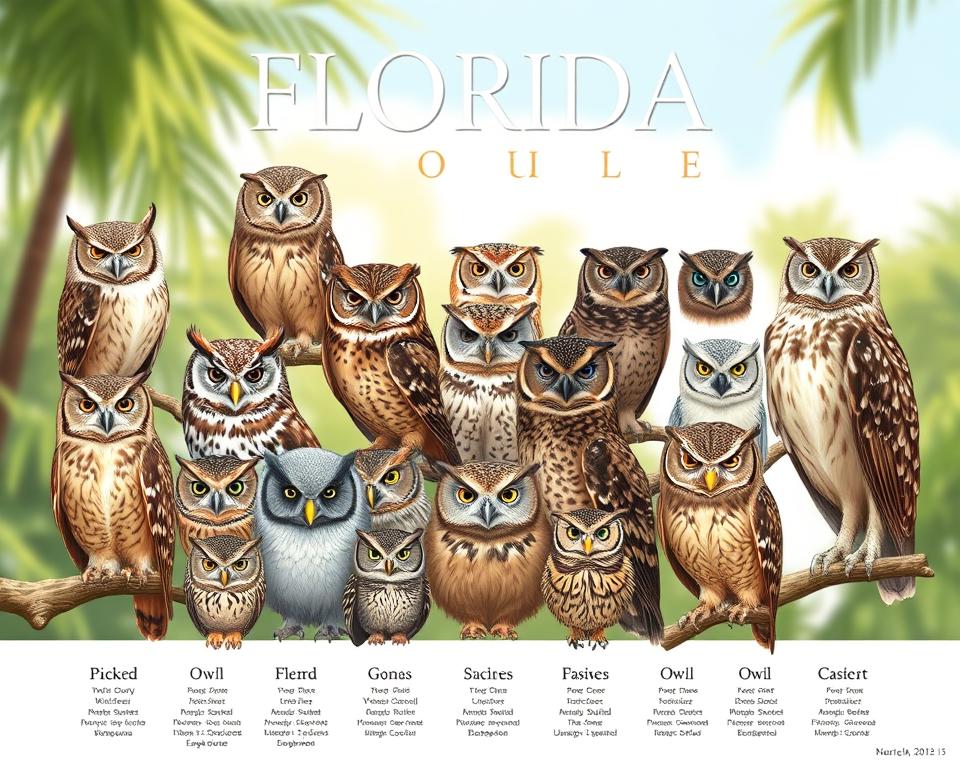
0 florida owl species guide puts clear, practical tips in your hands so you can spot night calls and eye-shine on a humid dusk walk. Feel the air shift near a marsh, listen for a barred two-note hoot, and know what to look for when a shadow drops to a low branch.
Florida hosts over 500 birds, and several owls live across wetlands, hardwood hammocks, and coastal refuges. Use the hotspots—Everglades, Corkscrew, Merritt Island, and others—to focus your search.
Learn quick ID cues: eye color, ear tufts, facial disk shape, mottling, and size. These markers help you separate similar-looking owl species fast.
Practical tips: listen before you walk, watch likely perches at dawn and dusk, and read signs like pellets. I’ll show safe ways to approach roosts and what seasonal notes mean so you spend time where sightings are most likely.
Key Takeaways
- Use this guide to match calls and looks quickly.
- Target top hotspots for better chances of sightings.
- Focus on eye color, tufts, disk shape, and size for ID.
- Hear-before-you-see tips increase success at night.
- Follow ethics and simple conservation steps while watching.
What to expect when owling in Florida right now
Evening walks often bring the first clues—calls, silhouettes, and sudden eye-shine along wetland edges. Expect most activity at night and at dawn or dusk; you may also hear multiple birds calling when you can’t see them.
Many local owls are nocturnal or crepuscular, but some forage by day. In open places, watch for long-legged birds on fence posts or low perches. Winter brings a higher chance of short-eared visitors quartering fields near sunset.
Wind and rain often suppress calling. Calm, clear evenings are best for listening and scanning silhouettes along edges. In woods, listen first, then sweep mid-canopy and snags slowly.
Bring red-filtered lights and keep beams low. Be patient—these birds often sit tight; repeated scans reveal subtle posture shifts. Note locations so you can return under similar conditions when detection rates are higher.
- Quick tip: Prioritize common residents first to learn calls and build confidence.
- Fieldcraft: Watch for mobbing behavior at first light—other birds often betray a roost.
| Setting | What to look for | Best time |
|---|---|---|
| Wooded edges | Calls from mid-canopy, snags, and shaded perches | Dawn & dusk |
| Open fields | Low perches, quartering flights, daytime burrow-watch | Sunset; daytime for burrowing birds |
| Marshes & wetlands | Silhouettes along shorelines, repeated hoots | Night & crepuscular hours |
How to identify Florida’s owls by sight and sound
Use simple sight and sound markers to tell similar night hunters apart on a dusk walk. Start with eyes, head shape, and voice. Those three clues narrow choices fast.
Eyes, facial disks, and ear tufts
Eyes and disks: Barred shows dark eyes and a round facial disk. Most others show yellow eyes that flash briefly in low light.
Tufts vs. horns: Great Horned has large ear tufts that look like horns but are just feathers. Screech-owls have small tufts. Barred and Barn lack tufts entirely.
Plumage cues and body shape
Plumage often tells species: mottled brown backs blend to bark, barred chests mark Barred, and a pale “ghost” underpart signals Barn. Look for heavy leg feathers on larger birds.
Size and posture: Compare nearby perches or a crow for scale. Great Horned is bulky; screech-owls are compact. Burrowing owls show long legs and upright posture.
Calls and quick sound ID
- Great Horned: deep hoots
- Barred: “who cooks for you”
- Eastern Screech: trills or whinnies
- Barn: sharp screech; Saw-whet: steady toot
| Feature | Key sign | Species examples | Quick ID tip |
|---|---|---|---|
| Eyes | Yellow vs. dark | Eastern Screech, Barred | Note eye color first in dim light |
| Tufts | Prominent or absent | Great Horned, Screech | Tufts change silhouette at perch |
| Plumage | Barred vs. pale | Barred, Barn | Check chest barring and face shape |
| Flight & posture | Floppy vs. powerful | Short-eared, Great Horned | Watch wingbeats and leg length |
Field note: Write the species name and short notes immediately after a detection. Calls fade and memory slips fast at night.
Where owls live in Florida: habitats and reliable hotspots
Start by mapping forests, marshes, and open fields to match likely perches and prey. That makes trip planning simple and productive. I’ll point to exact areas and what to scan at each.
Forests and swamps
Seek mature woods near water. Barred and screech owls favor large cavity-bearing tree stands. Top parks include Everglades NP, Corkscrew Swamp Sanctuary, and stops along the Great Florida Birding Trail.
Open country and coasts
Burrowing owls use prairies, airport berms, and golf course edges. Short-eared hunters show up in winter fields and marsh rims. Scan low posts, sandy ground, and flat berms at dusk.
Parks, suburbs, and seasonal notes
Neighborhood trees, orchards, and quiet greenspaces often host screech and great horned adults. In winter, watch broad fields for short-eared arrivals and be ready for rare irruptions after northern prey drops.
- Tactic: Target big trees with nearby water for Barred odds.
- Ground features: Prioritize sandy, low-vegetation ground for burrowing targets.
- Plan: Use the statewide Birding Trail maps to match habitat to likely owls.
| Hotspot | Main habitat | Likely owls | Best time |
|---|---|---|---|
| Everglades NP | Wet hammock & forests | Barred, Great Horned | Dusk & night |
| Corkscrew Sanctuary | Swamp forest | Barred, Screech | Dawn & dusk |
| Merritt Island NWR | Marsh edges & flats | Short-eared (winter), Coastal migrants | First light & dusk |
| Dry Tortugas & coastal refuges | Coastal flats & islands | Seasonal migrants; rare visitors | Morning low tide |
Core resident species: great horned, barred, and eastern screech owls
Three regular residents make up the backbone of local nocturnal birdlife: a bulky hunter, a shaded-woodland sitter, and a tiny triller. Learn quick visual and sound cues so you spot them without confusion.
Great Horned Owl (Bubo virginianus)
Identification: Bulky body, prominent ear tufts, and a white throat patch. The great horned owl gives deep, rhythmic hoots that carry from edges and fields.
Where to look: Year-round in forests, orchards, parks, and quiet neighborhoods with tall trees. Scan fence posts and tree lines at dusk.
Barred Owl (Strix varia)
Identification: Rich barring, a rounded head, and dark eyes. The barred owl’s classic “who cooks for you” series is unmistakable in dim woods.
Where to look: Mature, swampy forests and cypress strands near standing water. Listen after sunset for steady replies from shaded perches.
Eastern Screech-Owl (Megascops asio)
Identification: Small and stocky, gray or rufous morphs, with bright yellow eyes and intricate patterning. Calls are soft trills and whinnies.
Where to look: Suburbs, parks, and yard trees—check cavities and dense foliage at night.
- Field tip: Learn each species’ call; you’ll detect residents faster than by searching visually alone.
- Respectful approach: Keep distance at nests and use low-intensity light when needed.
| Species | Key mark | Best time & place |
|---|---|---|
| Great Horned | Ear tufts, deep hoots | Dusk along edges and open ground |
| Barred Owl | Dark eyes, barred chest | Night in mature swamp forests |
| Eastern Screech | Small, yellow eyes, trills | Night in parks and neighborhood trees |
Open-country and ground-dwelling owls you can find
Out in open habitat you’ll spot birds that hunt low, perch on fence posts, and even nest on the ground. These are the ground-oriented residents and winter visitors that favor prairies, airfields, and farm edges.
Burrowing Owl (Athene cunicularia)
Where to look: Scan airports, golf-course edges, and sandy prairies for fresh burrow spoil and low perches.
Behavior & ID: Long legs, upright posture, and daytime activity. Watch for quick ground sprints and a soft dual-note call. Give active burrows a wide berth.
Short-eared Owl (Asio flammeus)
Where to look: Large, open fields at dusk in winter months.
Behavior & ID: Moth-like, floppy wingbeats, bright yellow eyes, and low quartering flights. Mostly quiet; sometimes a raspy bark.
Barn Owl (Tyto alba)
Where to look: Older barns, silos, and large cavities near fields.
Behavior & ID: Pale, heart-shaped face that shows as a ghostly silhouette at night. Hunts low over grass and gives a piercing screech.
- Size cues: Compare wing length and body bulk against fence posts or tall grass to separate similar birds.
- Search tips: Park off-road, use a low beam, and scan quietly at dawn and dusk. Avoid approaching burrows or flushing resting birds.
- Photo tip: Use high ISO at dusk to limit bright lights that disturb these birds.
| Species | Typical habitat | Activity | Key field cue |
|---|---|---|---|
| Burrowing Owl | Prairies, airports, golf-course edges | Diurnal; year-round | Long legs, upright stance, two-note call |
| Short-eared Owl | Large open fields | Winter dusk flights | Floppy wingbeats, low quartering |
| Barn Owl | Barns, silos, field edges | Nocturnal, hunts low | Heart-shaped face, pale silhouette, screech |
Rare and irruptive visitors to watch for
Occasional irruptions bring tiny, secretive birds and large white hunters into view for a short window. Set modest expectations: these visitors are uncommon and often brief. If you find one, document carefully and leave it undisturbed.
Northern Saw-whet (Aegolius acadicus)
When to listen: Calm winter nights in mixed woods are best. The saw-whet gives a steady, metronomic toot that carries through dense cover.
Where to look: Check low, thick roosts in conifers mixed with hardwoods in the northern tier. The bird is tiny and easy to miss by sight.
How to document: Record an audio clip, note time and precise location, and avoid close approaches to roosts.
Snowy (Bubo scandiacus)
Timing & behavior: Very rare irruptions may also bring this mostly white hunter south. Scan open coasts, dunes, and fields by day; Snowy hunts in daylight and sometimes at night.
ID cues & concerns: Mostly white with varying dark spots, large and daytime-active. Give wide space—collisions and population declines are concerns for this vulnerable bird.
- Reporting: Submit photos and audio to eBird or local records committees for verification.
- Gear tip: Use a scope for distant coastal scans to avoid disturbing resting birds.
- Ethics: Never bait or flush rare birds for photos; crowding or chase can be fatal in winter.
| Visitor | Key ID | Best search habitat | Documentation tip |
|---|---|---|---|
| Northern Saw-whet | Tiny; repetitive whistled “toot” | Mixed conifer-hardwood stands; dense low roosts | Record audio; note exact time/location; minimal disturbance |
| Snowy | Large, mostly white with dark spots; daytime hunter | Open coasts, dunes, fields, posts and pilings | Scope distant birds; photos and location for reports; keep crowds away |
| General guidance | Unpredictable timing; brief stays | Coastal and northern-tier habitats depending on species | Report to eBird; avoid baiting, flushing, or close approaches |
Fieldcraft for success: listening, spotlight discipline, and signs
A few simple habits—call practice, daylight scouting, and strict light discipline—boost success fast. Start with learning local sounds and marking likely areas before you go. That saves time and helps you listen more than you walk.
Learn local species and calls before you go
- Practice the Great Horned hoots, Barred “who cooks for you,” Screech trills, Barn screech, and Saw-whet toots.
- Recordings and short sessions at home help you match a single call in the field.
When to look: night, dawn, dusk, and daytime chances
Plan short outings 30–60 minutes around dusk and dawn when calling peaks.
Scout by day to map big cavity trees, edges, and quiet groves. Burrowing birds may be active in open fields by day—glass slowly from the road.
Reading signs and ethical viewing
- Look for pellets beneath a tree, whitewash on trunks or posts, and feather piles near perches.
- Use red filters, keep beams low and brief, and never bait or flush birds for photos.
- If a bird reacts—stares, bobs, or flushes—back away and give more space.
| Focus | Key sign | Best action |
|---|---|---|
| Timing | Dawn/dusk calling | Listen, then scan quietly |
| Day scouting | Large cavity tree or burrow | Mark location; return at dusk |
| Ethics | Pellets, whitewash | Observe from distance; log data |
florida owl species guide for habitats, behaviors, and breeding
From cavities in large trees to shallow ground bowls, nesting choices shape breeding success. I’ll walk you through common strategies and how prey shifts change hunting through the year.
Nesting strategies: tree cavities, old nests, barns, and ground scrapes
Tree cavities and nest boxes: Barred and screech favor deep hollows in mature forests near water. Larger cavities and nearby foraging habitat increase breeding success.
Reuse and old nests: Great Horned often takes over old stick nests or large cavities. That flexibility helps them breed early in late winter.
Barns and cavities: Barn Owls prefer barns, silos, and heavy cavities near open fields. Nest boxes work well where natural sites are scarce.
Ground and burrow nesting: Short-eared lay shallow bowls on open ground. Burrowing birds use mammal burrows or excavated holes. Give these sites wide space.
Diet and hunting: rodents, birds, insects, and seasonal shifts
Prey focus: Rodents dominate most diets, but many also take birds, reptiles, amphibians, and large insects when available.
Hunting styles: Many perch-and-pounce along edges. Barn and Short-eared prefer low, coursing flights over fields. Some hunt by day when prey is active.
Seasonal shifts: In winter, birds concentrate where prey is abundant. Listen for pairing calls in late winter as breeding territories form.
- Practical tip: Map barns, marsh edges, and rodent-rich fields to predict nesting and hunting use.
| Nesting type | Typical habitat | Common breeders | Key prey |
|---|---|---|---|
| Tree cavities / boxes | Mature forests, water edges | Barred, Screech | Rodents, small birds |
| Reused nests / cavities | Mixed woodlands, edges | Great Horned | Large rodents, rabbits |
| Barns & silos | Field edges, farms | Barn Owl | Field rodents, insects |
| Ground / burrows | Open prairies, berms | Short-eared, Burrowing | Voles, mice, large insects |
Conservation and how you can help
Simple actions make a real difference. Loss of habitat and roadside risks have pushed local population numbers down. Secondary poisoning from rodenticides also harms predators that feed on small prey.
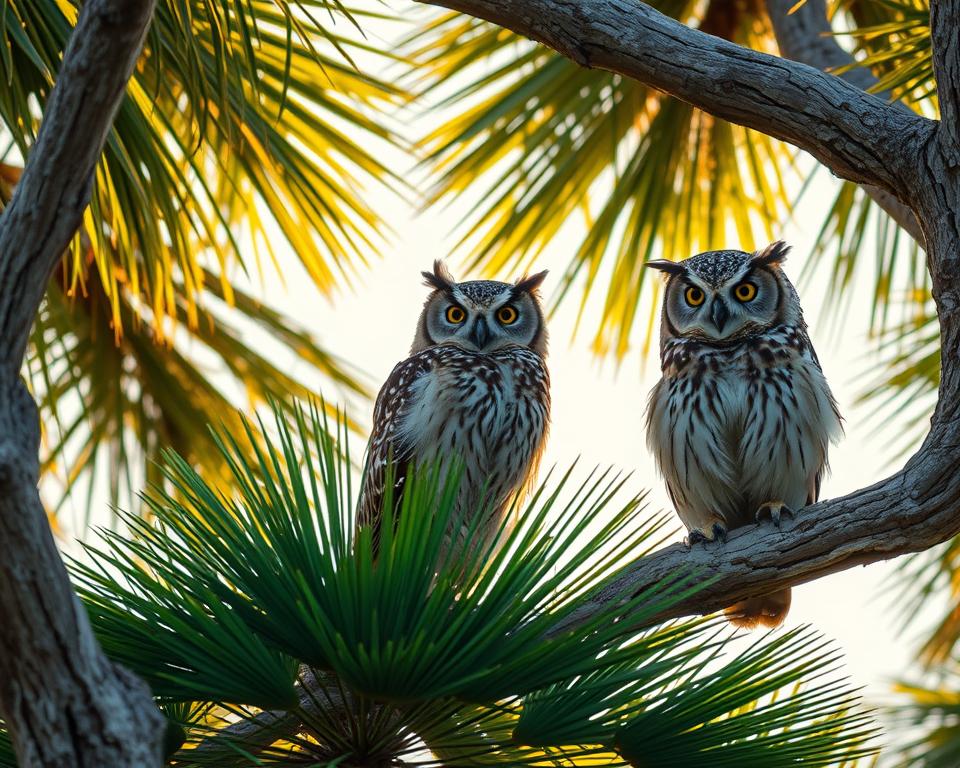
Threats: habitat loss, vehicle strikes, and secondary poisoning
Habitat fragmentation reduces nesting and hunting areas. Roads near open fields raise vehicle strikes for low-flying owls.
Rodenticides pass up the food chain. A poisoned rodent can kill a hunting bird and hit population health fast.
Action steps: nest boxes, pesticide-free yards, and responsible reporting
- Use exclusion, sealed snap traps, and sanitation instead of toxic baits to protect prey and predators.
- Keep brushy edges and native plantings to sustain small mammals that support owl diets.
- Install predator-resistant nest boxes near open fields; a single owl nest can boost local population counts.
- Reduce and shield outdoor lighting; drive slowly at night along rural roads and fence lines.
- Report sightings with photos to eBird and local Audubon chapters; quality data helps protect species across areas.
| Threat | Action | Impact |
|---|---|---|
| Habitat loss | Restore native edges | Improves nesting and prey |
| Secondary poisoning | Stop rodenticide use | Reduces mortality |
| Vehicle strikes | Slow night speeds | Fewer collisions |
Conclusion
Conclude each outing by noting a few repeatable cues: eyes, ear tufts, size, and a single clear call. A short log helps you separate great horned from other horned birds and match each name to the right habitat.
In woods and swamps, look for a barred owl with dark eyes and rich barring. In open country, expect burrowing owls on the ground by day and short-eared owls at dusk. Pale, heart-faced barn owls often glide low over fields after sunset.
Record nesting signs, feathers, and prey remains. Your ethical choices—protecting nesting sites, cutting rodenticide use, and driving carefully at night—support local birds and stabilize population trends. With practice, you’ll turn single sightings into lasting knowledge across owls florida hotspots.
FAQ
What are the easiest ways to tell a great horned from a barred or barn owl?
Where should I go for reliable sightings right now?
When is the best time to look and what time of night are calls loudest?
How do I tell yellow eyes from dark eyes and why does that matter?
What field signs indicate a nearby nest or roost?
Are burrowing owls active during the day and how do I spot them?
How can I learn calls before heading out so I can identify birds by sound?
What should I do if I find an injured or grounded bird at night?
Which species are most likely to show up as rare visitors or irruptions?
How can I watch responsibly without disturbing birds or nesting sites?
What threats should I be aware of and how can I help locally?
How do plumage differences like mottled brown or pale “ghost” underparts aid identification?
Can I expect to see owls in suburban areas and what attracts them?


