
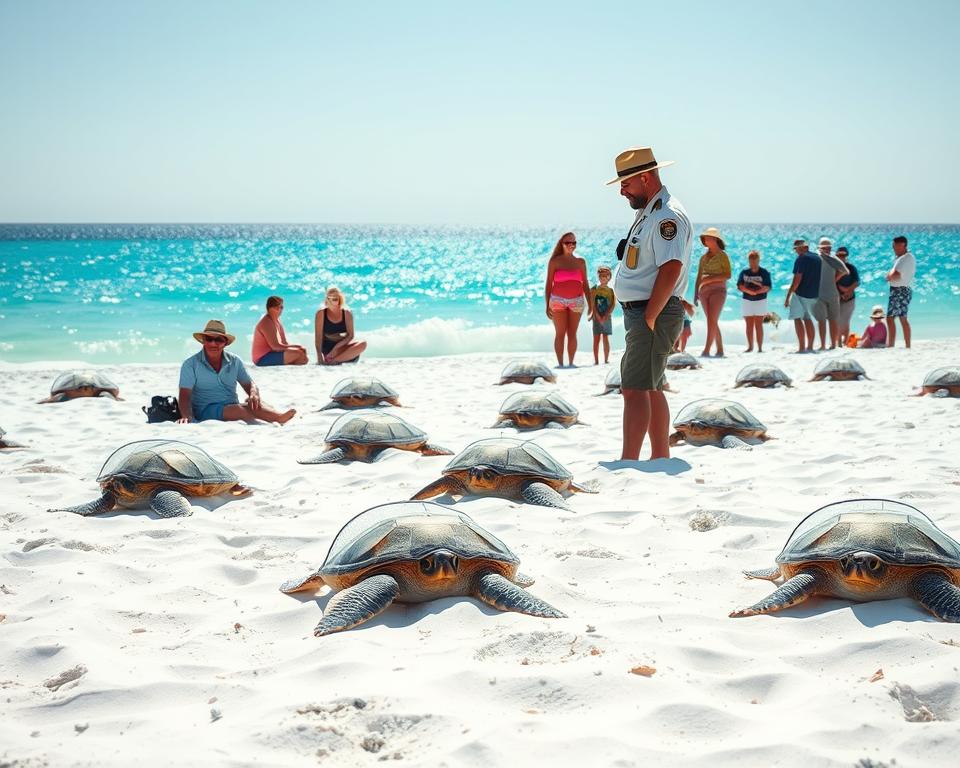
 0
0
 0
0 protecting sea turtle nests in florida starts with a few simple habits you can do tonight on the beach. Walk softly on damp sand, switch off or shield porch lights, and keep the shoreline flat so hatchlings can find the water.
Loggerhead and green sea turtles come ashore from March through October, with most activity from May to August. Artificial light at night confuses nesting females and tiny hatchlings. Turn off or block lights, close curtains, and avoid phone flashlights when you visit after dark.
Give animals space and follow marked areas. Park staff and volunteers patrol popular beaches and mark protected spots. If you see a crawl, a marked nest, or an animal in trouble, report it to local authorities right away.
Key Takeaways
- Lights out: Shield or turn off lights at night.
- Keep the sand flat and free of holes or gear.
- Give nesting animals distance and avoid marked zones.
- Report crawls, stranded animals, or damage to staff.
- Follow local patrols and volunteer guidance to help with protection.
Nesting season in Florida: March through October and what it means right now
Many beaches see regular nesting season activity from March through October, with the busiest months typically May to August.
Where it happens: About 100 miles of state park beaches serve as prime nesting areas. Sites like John D. MacArthur Beach State Park and Cayo Costa welcome multiple species and get routine patrols.
Peak months and where turtles nest on Florida beaches
Expect the most crawls and marked sites from late spring into mid-summer. Early mornings often show fresh tracks from overnight nesting.
How nesting activity is monitored in parks and refuges
- Park staff and trained volunteers locate crawls, log locations, and try to identify species.
- High-traffic areas are roped or signed; nests are marked to prevent accidental disturbance.
- Teams patrol daily, report stranded or injured animals, and collect data used across the year.
Quick tips for visitors: Walk near the waterline, avoid roped areas, keep pets off sensitive zones, and report any unmarked crawls to park staff so they can check for a potential nest.
Beach lighting at night: simple fixes that prevent disorientation
Bright lights near shore can pull nesting females and hatchlings away from the ocean. Make a few simple changes tonight and you reduce harm. These steps come from conservation groups working along the coast.
- Turn off exterior lights visible from the beach at night during nesting season. If lights remain needed, add shields or install turtle-friendly bulbs.
- Close curtains and blinds after dark so interior light does not spill onto sand and confuse a sea turtle leaving the water.
- Skip flashlights, phone lights, and camera flashes on the sand. Any bright beam can pull hatchlings inland instead of toward the ocean.
- Choose low-wavelength, low-intensity red or amber options and aim fixtures downward when lighting is unavoidable.
- If you see disoriented hatchlings near buildings, turn off nearby fixtures and contact local responders rather than handling animals yourself.
Outcome: Less glare means more hatchlings reach the water and nesting females find quiet, dark beaches. Teach your group the “no lights on the beach” rule before you go and help protect sea wildlife tonight.
Keep the beach clean and flat so hatchlings reach the ocean
A smooth, obstacle-free stretch of sand gives newborn hatchlings the best shot at reaching the ocean. Small steps you take each day reduce barriers and lower the risk of entanglement or predator attraction.
- Before you leave, fill in all holes and knock down sandcastles so the sand stays flat for emerging hatchlings.
- Carry out chairs, umbrellas, tents, and boards; left-behind obstacles can block nesting turtles and trap newly emerged animals.
- Pack out every scrap—food, wrappers, plastics, fishing line, and netting—so litter does not attract predators or cause entanglement.
- Walk the tide line to spot stray lines and loops that can snag flippers, and remove them safely or report them to staff.
Give marked nests extra space and keep the surrounding beach smooth—no digging or sand walls nearby. If you run an event, assign a cleanup lead and do a final sweep. Think “leave no obstacles behind”—those small habits create a clear runway for hatchlings to reach the water.
Stay off dunes and use designated walkways to protect nesting habitat
Boardwalks and marked paths protect fragile dunes and the nesting habitat behind them. Use the official access points to cross dunes. Those routes are placed to limit erosion and disturbance.
Dunes and their vegetation anchor the sand. Foot traffic crushes plants and weakens the structure that supports nests and wildlife.
Florida State Parks ask visitors to avoid dune areas and to stay on walkovers. Small choices add up and keep beaches healthy for everyone.
- Use boardwalks and marked paths—vegetation anchors sand and supports safe, elevated habitat.
- Keep off roped or posted areas; footprints and tents destabilize fragile zones.
- Teach kids to treat dunes as “no-go” zones and place towels on the open beach instead.
- Leash pets near dune lines and avoid letting them dig or run through fenced areas.
- Report damaged fencing or signage to park staff and support local conservation projects that restore dunes.
Why it matters: Staying on walkways reduces erosion, protects key areas used by nesting animals, and helps state efforts to conserve our coast.
Give nesting turtles and hatchlings space—look, don’t touch
Watch quietly and stay back. If a nesting animal pauses or turns, you are too close. Step away slowly and give her room to continue.
Follow simple habits that keep beach activity low and safe at night. Small moves protect the animal and the nest from stress and predators.
- Watch from a distance and remain still; move away if the animal hesitates.
- Stay low and quiet; don’t block the path between the nest and the surf.
- Never touch or pick up hatchlings; handling can disorient them and increase stress.
- Avoid shining lights; even dim beams can confuse a sea turtle or hatchlings at night.
- Pack out food so odors don’t attract predators that raid a nest.
- Keep groups small and take photos without flash from a respectful distance.
| Action | Do | Don’t |
|---|---|---|
| Observe | Stay quiet, watch from 10+ feet | Crowd the animal or make noise |
| Lighting | Turn off beach-facing lights at night | Use flash or bright beams near the shore |
| Food & waste | Pack out all food and trash | Leave scraps that attract predators |
Share the moment safely. Respectful observation helps turtles complete nesting and gives hatchlings the best chance to reach the water.
protecting sea turtle nests in florida: what to do when you find a crawl, nest, or stranded turtle
When you find fresh tracks or a marked site on the shore, your calm actions make a big difference. Stay back, observe, and call trained staff so the area stays undisturbed.
Recognize crawls and marked sites without disturbing them
Look for alternating or symmetrical flipper tracks from surf to higher sand. Do not walk on or smooth those tracks.
If stakes, rope, or signs mark a nest, keep clear of the boundary and do not touch tags or markers.
When and how to report sightings or injured/dead animals
- Note time, exact location, and any posted tag numbers. Do not move anything.
- For injured, stranded, or deceased animals, call park staff or a wildlife hotline immediately; do not attempt a rescue yourself.
- Stay nearby at a respectful distance if it is safe. Keep kids and pets back and avoid lights or loud noise.
Who to contact: local parks, conservation groups, and state wildlife
| Situation | Contact | What to report |
|---|---|---|
| Active nesting or hatchlings | On-duty lifeguard / park staff | Location, time, crowd size |
| Injured or stranded | State wildlife hotline / local conservation group | Condition, exact access point, phone number |
| Marked site concerns | Park patrol or florida fish wildlife coordinator | Tag IDs, visible threats (lights, predators) |
Your quick call helps protect sea life and gives monitoring teams the data they need to track species and manage nests. I appreciate you watching and reporting—it really helps wildlife and the beach community.
Boating near shore during nesting season: slow zones that save turtles
During the season, boaters should expect more surface activity close to shore and adjust how they run their vessels. Slow, steady transit gives you time to spot animals and avoid strikes.
The Palm Beach County voluntary Protection Zone runs March 1–October 31. It covers about 45 miles of shoreline and extends to one mile offshore. Boaters are asked to minimize time inside that band and to operate at the lowest speed needed for safe navigation.
Palm Beach County Sea Turtle Protection Zone basics (March 1–October 31)
- Expect more sea turtle activity near the surface from March through October—scan ahead continuously.
- Within one mile offshore, run at minimum safe speed and avoid rapid throttle changes.
- Plot routes that cut time inside the one-mile zone and use marked channels when possible.
- Assign a dedicated spotter, especially at dawn, dusk, and calm water.
Safe navigation practices within one mile offshore
| Speed | When | Action |
|---|---|---|
| Minimum safe | Nearshore transit | Reduce wake, steady throttle |
| Slow early | Approaching inlets | Scan and avoid surfacing animals |
| Outside zone | Personal watercraft | Operate beyond one mile during peak months |
Report any strikes or entanglements with exact GPS coordinates and keep deck gear secure so lines don’t snag. Brief your guests on the voluntary rules before you go so everyone watches for turtles in the sea and keeps the ocean safe for wildlife.
Community actions that strengthen protection year-round
Communities can boost protection year-round by joining small local efforts that add up fast. You don’t need special skills to help—just time and a willingness to learn.
Join park patrols, cleanups, and volunteer monitoring
Volunteers help state parks patrol beaches, log crawls, and educate visitors. Sign up for a morning shift or a one-time cleanup.
- Morning patrols that document crawls and check markers.
- Beach cleanups to remove debris and keep sand clear for hatchlings.
- Workshops and guided walks to learn monitoring basics.
Support conservation lands and turtle-friendly policies
Land trusts and groups reduce light and development near key beaches. The Conservation Fund has protected parcels near Archie Carr, lowering threats from new construction.
- Donate to or volunteer with conservation organizations that buy shoreline parcels.
- Advocate for local lighting ordinances and turtle-friendly fixtures.
- Ask rental managers and businesses to store beach furniture nightly.
Florida’s turtle license plate: how it funds protection
Choosing the specialty license plate is an easy, long-term way to give. Fees support research, rescue, and outreach each year.
| Time | What you can do | Impact |
|---|---|---|
| 1–3 hours | Join a cleanup or guided walk | Immediate reduction in debris and hazards |
| Monthly | Volunteer patrol shifts or sponsor gear | Better monitoring and safer beaches |
| No time | Buy the specialty license plate and share tips | Steady funding for research and outreach |
Small actions—from signing up for a patrol to choosing the license plate—create measurable benefits. Join a group, or spread the word to neighbors and renters. Every bit helps the beaches you love.
How Florida agencies and partners safeguard key beaches
You’ll often see stakes, ropes, and volunteers on busy shorelines. These marks show where teams have found crawls and checked for nests. They keep people off fragile spots so eggs stay undisturbed.
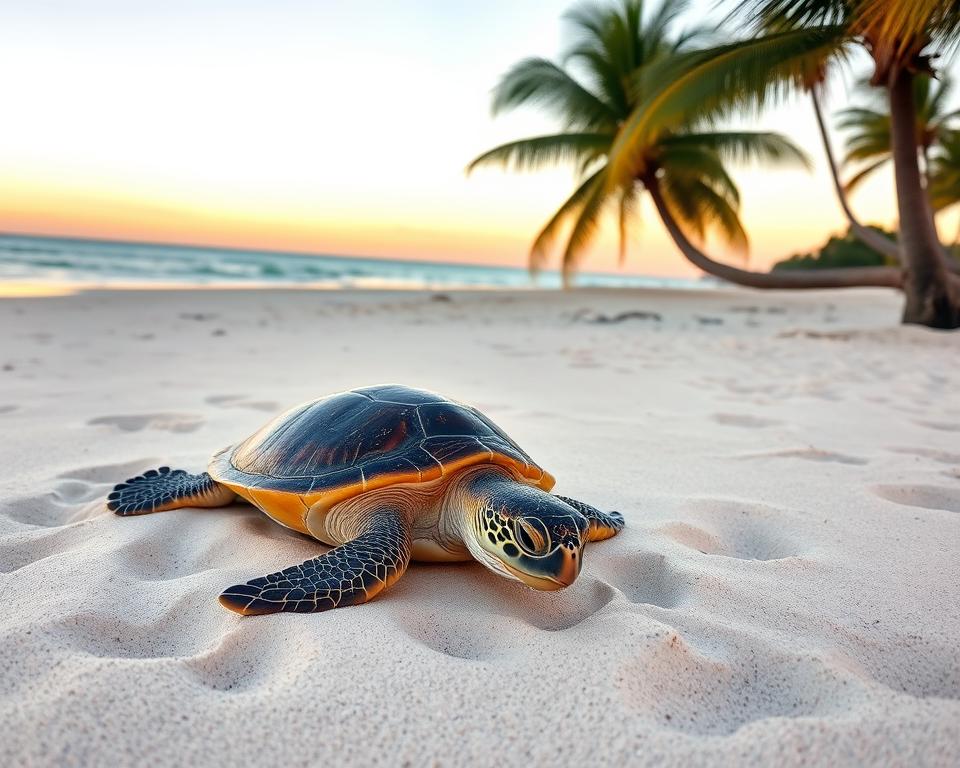
State Parks staff and volunteers log crawl locations, note species when possible, and patrol high-traffic beaches daily. Their work deters disturbance and gives visitors clear guidance.
State parks’ monitoring and nest marking
On crowded beaches, expect posted stakes and roped areas around marked nests. Those signs prevent sand compaction over eggs and reduce accidental damage.
Refuges and land conservation that reduce light and development impacts
The Conservation Fund, with the U.S. Fish and Wildlife Service and the State, has protected 75 properties totaling 237 acres near Archie Carr. These land buys limit new development and curb problem lighting along prime habitat.
- What you’ll notice: patrols, clear signs, and advice about lights during nesting months.
- Volunteers and staff collect data that guides where temporary protections go up.
- Agencies coordinate so teams can respond fast if storms expose eggs or a stranded animal needs help.
| Action | Visible result | Why it matters |
|---|---|---|
| Monitoring | Posted stakes and patrols | Prevents trampling and compaction |
| Land acquisition | Less nearby development | Reduces lights and disturbance |
| Response teams | Quick nest stabilization | Better survival for eggs and hatchlings |
When you follow posted guidance and dim or shield your lights, you support the same on-the-ground teams who mark nests and keep walkways clear. That simple cooperation lets agencies spend more time protecting wildlife and less time fixing avoidable problems.
Conclusion
One clear rule guides most of the best actions: keep beaches dark, clean, and calm at night. Tonight, dim or shield bright lights so sea turtles and hatchlings orient to the horizon glow and head to the ocean.
After any beach visit, flatten disturbed sand, fill holes, and remove obstacles. Watch quietly from a distance and never touch a turtle, a nest, or hatchlings. If you see fresh tracks or a new mound, step back and report it so trained teams can protect eggs and nests.
Boat slow near shore during the nesting season and scan the sea surface. Support local groups and the florida fish specialty plate to fund monitoring and habitat work. Small, steady actions keep habitat safer for turtles and wildlife every season.
FAQ
What are the basic nesting rules on Florida beaches?
When is nesting season and what does it mean right now?
Which months are peak nesting and where do turtles nest on beaches?
How is nesting activity monitored in parks and refuges?
How can I fix beach lighting to prevent disorientation at night?
Should I use flashlights, phone lights, or camera flash on the beach?
Why do hatchlings and nesting females follow moonlight?
How can I keep the beach flat and clear so hatchlings reach the ocean?
What items should I remove from the beach to protect hatchlings?
Why should I stay off dunes and use designated walkways?
How close should I stay to nesting turtles and hatchlings?
How do I recognize a crawl or a marked nest without disturbing it?
When and how should I report sightings or injured/dead turtles?
Who do I contact for help or to report a turtle emergency?
What are the boating rules near shore during nesting season?
What are safe navigation practices within one mile offshore?
How can my community help year-round protection efforts?
How does the turtle license plate help conservation?
How do state agencies protect key beaches?
What actions do parks take in high-traffic areas?
How do refuges and land conservation reduce light and development impacts?


