
 0
0
 0
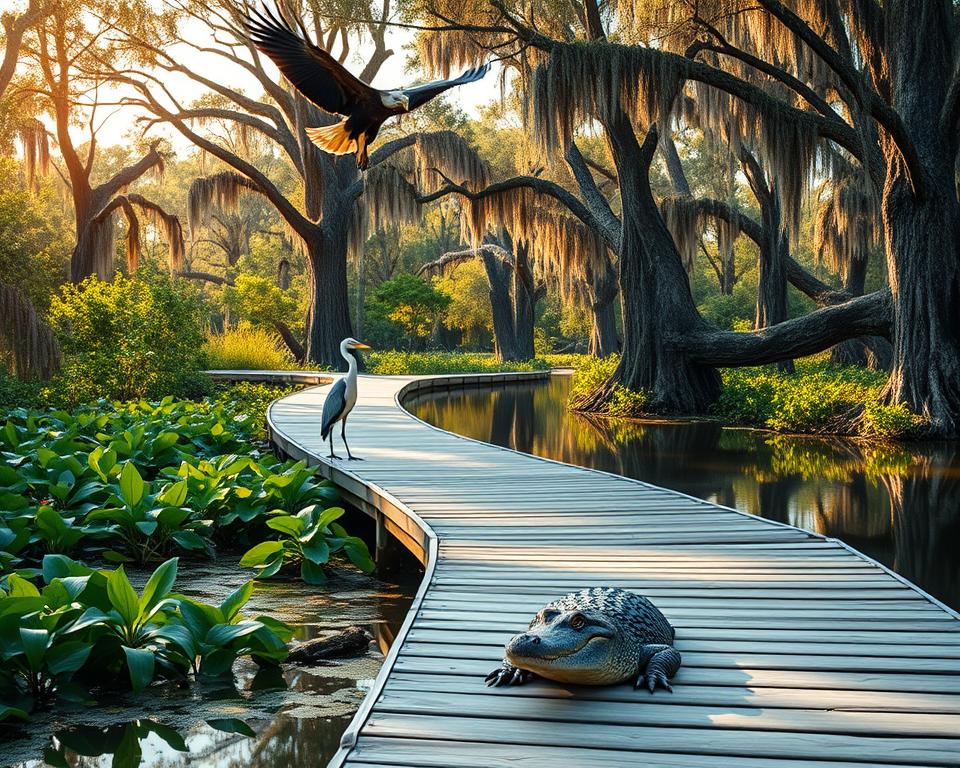
0 Safe wildlife viewing Florida starts with planning where and when to go so you see more and disturb less.
Pack a simple checklist: learn site rules, keep a respectful buffer, secure food, and bring binoculars or a camera with zoom. These steps protect animals and boost your enjoyment.
Choose established sites such as Merritt Island National Wildlife Refuge, Myakka River State Park, and Archie Carr National Wildlife Refuge for structured paths and guided programs. Time trips for peak activity—May for alligators, May–October for sea turtle nesting, and winter for manatees—to increase sightings without pressure on species.
Keep expectations flexible. Wild animals move on their own schedule. Give them space, follow staff directions, and leave no trace so the state’s diverse birds, mammals, and others remain abundant for years.
Key Takeaways
- Plan by location and peak season to maximize your experience.
- Follow site rules, keep distance, and use optics to avoid disturbance.
- Visit established parks to reduce impact and get reliable sightings.
- Secure food and pack light to prevent animals from associating people with snacks.
- Move on if animals show stress to protect their long-term well-being.
Start with a safety-first mindset for Florida’s diverse habitats
Begin each trip by assessing the setting. Take a quick look at the map, the trailhead kiosk, and the sky. This helps you plan gear, timing, and how close visitors can get.
Know your setting: beaches, forests, swamps, rivers, and marine sanctuaries
Size up the habitat before you move. Coastlines, forests, swamps, and rivers each demand different awareness and offer different wildlife.
- Stick to marked routes, boardwalks, and platforms to protect habitats and see animals without harm.
- Read kiosk signs at trailheads and refuge gates for current advisories and closures.
- Avoid dense vegetation and water’s edge at dawn and dusk—those are peak activity times.
- On beaches and riverbanks, detour around resting birds and marine life instead of walking through them.
Use binoculars and zoom lenses to keep a safe distance
Pack optics and practice using them before you arrive. A good lens lets you study behavior without changing animal routines.
- Keep voices low; sound carries in swamps and forests and can alert or startle wild animals.
- Watch for subtle cues—head turns or freezes can mean you’re too close; back away slowly.
- If crowds or conditions block a clear view, move to another spot or return at a quieter time.
safe wildlife viewing florida guidelines and core rules to follow
Begin with a simple pact: keep distance, secure snacks, and cap your time at one spot. These core rules help protect animals and make outings better for everyone.
Never feed wild animals — secure food and dispose of trash properly. Feeding causes dangerous conditioning and, for marine mammals, is a prohibited “take” under federal law. Store food in tight-lidded containers, use animal-proof bins, and carry a small trash bag so nothing blows away.
Keep pets leashed and away from water
Keep pets on a leash and well away from the water’s edge. Leashed pets reduce conflict risks and protect dogs from predators like alligators. If you see signs of stress in nearby animals, move farther back.
Limit stops and respect distance
Limit your time to 30 minutes per animal or group. Thirty minutes or less lowers disturbance and keeps spots open for other visitors. If an animal turns toward you, freezes, or stops feeding, step back — that distance is its space, not yours.
- Do not feed animals; double-bag scraps and use provided bins.
- Model calm behavior: walk slowly, speak softly, avoid sudden moves.
- Teach kids why trash and food are not part of an animal’s home.
- During busy seasons, plan multiple stops so you don’t linger at one site.
Understand the law: protections that shape your behavior
Laws shape how you behave around animals; knowing them keeps encounters legal and respectful.
Federal statutes protect many species and places. Learn the basics so you know what to avoid and why it matters.
- Marine Mammal Protection Act: It forbids take of all marine mammals. Harassing, disturbing, or feeding mammals counts as a prohibited take.
- Endangered Species Act: This bars take of listed species. Do not chase, harm, or otherwise pursue threatened or endangered animals.
- Migratory Bird Treaty Act: Taking, capturing, killing, selling, or moving migratory birds, their nests, or eggs is illegal.
- National Marine Sanctuaries Act: Sanctuary managers can set site rules and restrict activities that harm resources; follow posted site rules.
For you and other humans, that means keep distance, never feed or touch animals, and avoid blocking travel routes.
| Law | What it prohibits | What you should do |
|---|---|---|
| Marine Mammal Protection Act | Harass, disturb, feed, injure, or kill marine mammals | Use optics; never approach or offer food |
| Endangered Species Act | Take of threatened or endangered species | Keep clear distance; do not pursue or handle |
| Migratory Bird Treaty Act | Take, capture, sell, or collect birds, nests, eggs, or parts | Avoid nests; do not collect feathers or eggs |
| National Marine Sanctuaries Act | Unauthorized actions that harm sanctuary resources | Check sanctuary rules; follow seasonal restrictions |
Recognize wildlife behavior and safe distance signals
Watch for quick changes in posture and movement. Those small signs tell you when animals feel disturbed. Learn to spot them and act right away.
If you see fidgeting, fleeing, freezing, or protective postures, you’re too close. Increase distance until normal behavior resumes.
- Birds: head-bobbing, louder calls, or adults leaving a nest mean step back immediately.
- Marine animals: sudden speed changes, longer dives, tail slaps, or chuffing signal disturbance—give them room.
- Sea turtles: rapid retreat, nest abandonment, or hatchlings moving toward lights require you to move back and darken the area.
- If an animal freezes, treat that as distress and add space.
| Cue type | What to watch for | What it means | Action to take |
|---|---|---|---|
| Universal | Fidgeting, fleeing, freezing | Disturbance or sensing threat | Increase distance; remain quiet |
| Birds | Head-bobbing, louder calls, leaving nest | Stress or protective behavior | Step back; avoid nest area |
| Marine mammals | Rapid speed shifts, prolonged dives, tail slaps | Avoidance or agitation | Move parallel to their path; give wide berth |
| Turtles | Nesting abandonment, hatchlings toward lights | Interruption of nesting or disorientation | Turn off lights, retreat until normal movement resumes |
Keep observations short. Limit time at any animal or group to 30 minutes or less and stay at a safe distance that does not change their routine. When in doubt, take several generous steps away; your goal is to watch without altering others’ behavior.
Alligator safety near freshwater, swamps, and riverbanks
Keep a clear buffer at shorelines—alligators use banks and shallow flats to hunt. Give extra room near ponds, swamps, and riverbanks. Alligators are most active at dawn and dusk, so stay especially vigilant then.
Stay back from the water’s edge, especially at dawn and dusk
Avoid the water’s edge and low-visibility margins. If an animal freezes, moves toward you, or hisses, back away slowly and give space.
Swim only in designated areas; keep pets leashed and away from waters
Only enter posted swim zones. Never swim in canals or unknown water where wild animals may lurk.
Keep pets on a short leash and well away from shorelines. A short leash helps you react quickly if conditions change.
Where to see gators responsibly: Myakka River and Merritt Island
Observe from boardwalks and platforms at Myakka River State Park and Merritt Island National Wildlife Refuge. These places offer reliable sightings and lower risk for visitors and animals.
- Do not leave fish scraps or picnic trash; food draws animals to shore.
- Remember gators can surge with surprising speed over short distances.
- In May expect more alligator activity; give extra distance and avoid crowding a spot.
- If a gator blocks a trail or launch, wait it out or choose another route.
| Risk | Action | Why it matters |
|---|---|---|
| Edge approach | Step back 15–30 ft | Reduces chance of a sudden lunge |
| Unmarked water | Avoid swimming | Hidden animals and currents present |
| Leftover food | Pack out trash | Prevents attraction and habituation |
Sea turtles on Florida beaches: respectful viewing
Choose nights with organized walks to watch turtles without changing their behavior.
Sea turtles nest from May through October, with many public turtle walks in June and July. Archie Carr National Wildlife Refuge sees dense nesting; join refuge-led programs to learn and observe responsibly.
Follow clear, short actions on the beach. These steps protect nesting females and hatchlings and keep your experience meaningful.
- Plan trips: join guided turtle walks in June–July to learn local rules and reduce disturbance.
- Keep beaches dark and quiet: no phone lights or flash; use red-filtered light only if allowed and speak softly.
- Give space: stay well back from the dune line and never block a turtle’s path between sea and nest.
- Watch for signs: nesting abandonment or hatchlings moving toward lights mean you must retreat immediately.
- Pack out trash and fill holes: debris and deep footprints trap hatchlings; remove all trash and level holes before you leave.
- Limit pets: keep pets off nesting beaches or under strict control; their scent and prints can deter turtles.
- Choose sanctuary programs: support refuge-led nights like those at Archie Carr NWR to protect turtles and learn from experts.
| Action | Why it matters | When to do it |
|---|---|---|
| Join guided walks | Reduces disturbance and provides expert context | June–July nesting peak |
| Dark, quiet beaches | Prevents hatchling disorientation | Nighttime nesting and hatching hours |
| Pack out trash & fill holes | Removes obstacles and hidden hazards | Before leaving the beach |
Manatees and dolphins: slow, lawful, and observant encounters
Cold months draw manatees into warm springs. See them at Blue Spring State Park, Three Sisters Springs, and Homosassa Springs Wildlife State Park where clear waters and boardwalks support responsible viewing.
Lawful conduct and behavior cues
Never feed or chase dolphins or manatees. Federal law treats feeding marine mammals as a prohibited take. That action harms animals and puts humans at risk.
Watch for disturbance signals: rapid changes in movements, long dives, tail slaps, or a mother shielding a calf. If you see these, increase your distance immediately.
Practical do / don’t actions
- Do use boardwalks and stay quiet; opt for tours that cut engines and keep distance.
- Don’t pursue, touch, or feed; never advertise tours that promise contact.
- Boaters: respect idle-speed and no-wake zones to protect mammals and other species.
- Paddlers: avoid circling animals, keep parallel approaches, and leave a clear exit route.
| Situation | Action | Why it matters |
|---|---|---|
| Mother with calf | Move farther away | Prevents separation or defensive behavior |
| Rapid dives or tail slaps | Stop approach; give space | Shows stress or avoidance |
| Boat near spring run | Idle-speed; cut engine near groups | Reduces collision and noise disturbance |
Birding with care in sanctuaries, forests, and along waters
Bring a quiet lens and patience; good bird time often comes in short windows at dawn or dusk. Head to Pelican Island NWR, J.N. “Ding” Darling NWR, or Sebastian Inlet State Park for dependable sightings in managed places with boardwalks and blinds.
Keep to marked trails and platforms. Stepping off-trail can crush plants and disturb a nest. Limit your time at any one spot and use long lenses for photos.
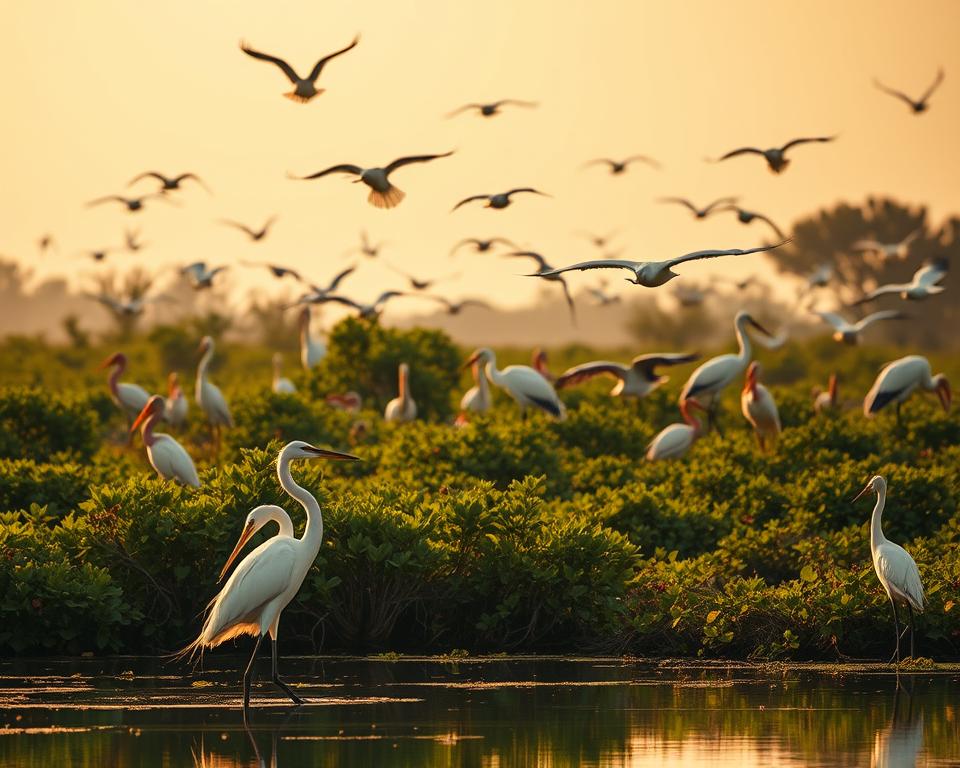
- If a bird raises its head often or calls more, you are too close — back off and stay quiet.
- Plan sessions around dawn and dusk when Great Blue Herons and other species are active, but keep extra distance during peak feeding time.
- Brown pelicans are present year-round; American white pelicans arrive in winter. Match your targets to the season.
- Pack in, pack out: trash attracts predators and harms nests.
- Be a considerate visitor—yield spots, share blinds, and move on if birds shift perches to avoid you.
- At home, plant native shrubs and keep outdoor cats indoors to help local bird populations thrive.
| Place | Best time | Key species |
|---|---|---|
| Pelican Island NWR | Dawn & dusk | Brown pelicans, herons, shorebirds |
| J.N. “Ding” Darling NWR | Early morning | Wading birds, migratory gulls |
| Sebastian Inlet State Park | Sunrise & late afternoon | Sea and shore birds, pelicans |
Black bear awareness in forests and on trails
Bears often use the same corridors hikers do, so a few clear habits cut risk and stress for both of you. Make routine choices that reduce surprise encounters and help animals move away on their own.
Make noise, carry spray, and secure food
Hike in forests while talking, clapping, or singing so bears hear you before you reach them. A steady sound prevents startling an animal at close range.
Carry bear spray where legal and practice drawing it. Quick, confident use is a proven safety tool when an animal closes the gap.
Store food in vehicles or bear-resistant containers and never leave packs unattended at trailheads or camps. Strong cooking odors attract animals for years if not managed.
If a bear approaches: hold ground and stay calm
If a bear comes near, stand your ground. Wave your arms to look larger and speak firmly. Do not run; running can trigger a chase response.
- Keep dogs on a leash so they do not chase or lead a bear back to you.
- Teach kids to stay close, stay calm, and follow adult directions.
- Manage cooking odors and clean thoroughly after meals to reduce nighttime visits.
| Risk | Prevention | Action if approached |
|---|---|---|
| Surprise encounter | Make steady noise on trails | Hold ground, wave arms, speak firmly |
| Food attraction | Secure food; use bear-resistant storage | Back away slowly if bear is sniffing area |
| Dog triggered | Keep pets leashed | Recall dog and place yourself between it and the bear |
If an animal approaches, is sick, or seems orphaned
If an animal moves toward you, stay calm and back away slowly while facing it. Keep your eyes on the creature and avoid sudden moves that might trigger a chase or panic.
Use soft speech and give the animal room to pass. If you can, position yourself behind a natural barrier such as a tree or a bluff. Do not turn your back or run.
Watch for clear signs of illness or injury
Signs to note include lethargy, odd gait, loss of fear or unprovoked aggression, repeated movements, foaming at the mouth, excessive discharge, and visible wounds. Treat these cues seriously.
What to do — step-by-step
- Remain facing the animal and back away slowly to re-establish distance.
- Speak softly and move behind cover if available; keep pets and other humans back.
- Do not touch, feed, or try to capture the animal—zero handling is the rule.
- If safe, photograph the scene from a distance and note landmarks or GPS coordinates.
- Report the situation to trained responders or local authorities rather than attempting a rescue yourself.
| Situation | Immediate action | Who to contact |
|---|---|---|
| Approaching animal | Face it, back away slowly | Park staff or local rangers |
| Sick or injured land animal | Keep humans and pets away; document from afar | State wildlife agency or rehab center |
| Stranded marine mammal | Do not touch; record location and signs | Use the Dolphin and Whale 911 app or call responders |
Remember one simple number in practice: zero handling. Let experts take over—trained responders protect people and animals alike.
Plan your timing and places for a safe, memorable experience
A brief calendar helps you match places and timing to the species you most want to see. Map the year around clear seasonal peaks so each trip is efficient and low-impact.
Seasonal highlights and quick site plan
- Alligators peak in May — choose rivers and swamps with boardwalks and keep a generous buffer.
- Sea turtles nest May–October; book guided turtle walks in June–July and arrive early for parking and briefings.
- Manatees concentrate in winter at Blue Spring, Three Sisters Springs, and Homosassa Springs; use boardwalks for clearer waters and defined routes.
- Black bears are most often seen in May, June, August, and September — pick forests with marked trails and make noise on approach.
- Great Blue Herons and many shore birds are busiest just before dawn and at dusk; plan to be on platforms during those windows.
Practical timing tips
Book experiences early in the day and check park updates the day before. Weather and water levels shift by year, so stay flexible.
| Season | Peak months | Recommended places |
|---|---|---|
| Spring | May | Swamps, river boardwalks (gators) |
| Summer | May–Oct | Beaches for sea turtles; guided nights in June–July |
| Winter | Dec–Feb | Blue Spring, Three Sisters, Homosassa (manatees) |
Conclusion
Conclusion
Close your visit by noting small wins: did you keep distance and leave no trace? Plan your next trip around seasons and places so each outing fits the species and the time of year.
Enjoy wild animals by following a few clear steps. Limit observations to 30 minutes and use optics so you do not approach. Keep trash secure and never feed or touch wildlife.
If an animal comes near, stay calm, face it, and back away slowly. If a marine mammal is stranded, report it to responders via Dolphin and Whale 911—let the experts handle rescues.
With smart timing, respect for simple guidelines, and a light footprint, your next trip will be a great experience for you and the animals.
FAQ
What should I do before visiting beaches, forests, swamps, rivers, or marine sanctuaries?
How close can I get to animals when using binoculars or a camera?
Is it ever okay to feed animals or leave food out?
What rules apply to pets near water and wildlife areas?
Why limit viewing time to 30 minutes?
What laws protect marine mammals, sea turtles, and birds?
What behaviors indicate an animal is stressed or might be dangerous?
How should I behave around sea turtles on nesting beaches?
Where can I responsibly see alligators?
What should I know about manatees and dolphins while boating or snorkeling?
Where are good birding spots and how do I avoid disturbing birds?
How do I stay safe if I encounter a black bear on a trail?
What should I do if an animal appears sick, injured, or orphaned?
When are the best times and places to plan wildlife trips for different species?


