
 0
0
 0
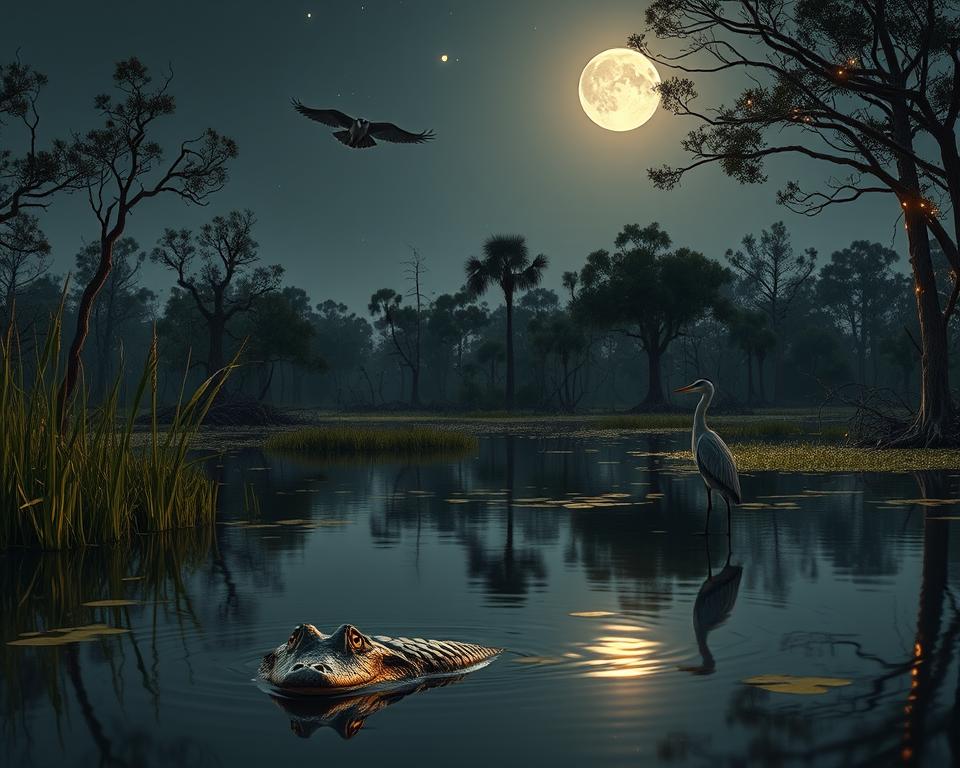
0 The phrase “what animals come out at night in florida” points you to a lively, often unseen world beyond porch lights. I want to help you spot real behaviors and hear the calls that define local species after sunset.
Across wetlands, yards, and forest edges, creatures shift their routines when day cools. Listen first — owls, nighthawks, and frogs often give away a scene before you see it.
Expect bats near streetlamps, raccoons by trash, and herons at pond edges. Heat, humidity, and human activity shape each habitat and influence when animals move.
I’ll share practical tips you can use tonight: where to look, how to listen, and how to reduce disturbance while enjoying nocturnal animals up close.
Key Takeaways
- Use sound to detect species before you see them.
- Focus on water, forest edges, and low-light skies for the best views.
- Cooler hours increase activity; adjust your timing accordingly.
- Dim, shielded lights improve viewing and help wildlife.
- Observe from a distance, don’t feed, and secure attractants.
Why Florida Comes Alive After Dark
Warm nights shift Florida wildlife into motion, revealing habits unseen during the day. Heat and humidity push many species to cooler hours. They hunt, mate, and avoid daytime stress.
High temperatures raise water loss and energy use. Moving after sunset helps animals conserve both. Wetlands, hammocks, and suburban edges offer shade, cover, and moist microclimates that favor nocturnal movement.
Dusk to dawn: peak time windows and season tips
Dusk and dawn are prime time for crepuscular species like deer. Spring breeding fills evenings with frog and bird calls. Summer insect peaks fuel bats and nighthawks. Windy nights slow activity; calm, humid nights boost it.
- Start 30 minutes before dusk and stay an hour into darkness for best chances.
- Use moon phase and local weather to plan outings; darker, warm nights often show more life.
- Keep lights low—artificial light disrupts vision and timing for light-sensitive species, and it can expose animals to predators.
| Habitat | Peak Time | Notable Night Activity |
|---|---|---|
| Wetlands & ponds | Dusk to late night | Amphibian choruses, herons, and bat feeding |
| Forest edges & hammocks | Dusk to dawn | Owls, deer movement, and small mammal foraging |
| Suburbs & edges | Late evening | Raccoons, foxes, coyotes using quiet streets |
Owls You’re Most Likely to Hear or See
Listen closely after dusk and you can distinguish a chorus of hoots, trills, and calls that mark three common species. Below are easy signs to help you identify each bird by sound and silhouette, plus tips for respectful listening.
Great Horned Owl
Identification: Large, with tall “ear” tufts and booming low hoots that carry far. Scan tall trees, park edges, and golf courses for an upright silhouette.
Barred Owl
Identification: Mottled brown and white plumage with dark eyes and a clear, rhythmic “Who cooks for you?” phrase. Check swampy forests, cypress stands, and shaded hammocks along creeks.
Eastern Screech-Owl
Identification: Small, gray or red morphs, well camouflaged against bark. Pairs often use a soft tremolo; look in wooded neighborhoods with mature canopy.
- Learn cadence: slow deep hoots (Great Horned), distinct phrase (Barred), and trill (Screech) to ID by ear.
- Watch for eye-shine and upright posture on limbs; forward-facing eyes and still silhouettes are classic cues.
- Use a red-filtered light sparingly. Stay quiet and avoid flushing birds while you listen for prey rustles below the canopy.
- Record short audio clips to compare calls later instead of approaching nests.
Night-Flying Birds Beyond Owls
As light fades, a different set of flyers takes over ponds, parking lots, and open fields. These birds hunt on the wing or stalk shallow edges while most diurnal species rest.
Look for a camouflaged bird with a pale white patch on each wing. It gives a sharp “peent” as it picks off flying insects while looping low near lights.
Males add a dramatic booming rush during steep display dives. Check ballfields and lit parking lots on warm evenings for the best views.
Black-crowned Night Heron
This stocky, hunchbacked heron hides by day and feeds at dusk and into the night along water margins. It often waits while other waders leave, then snaps up small fish and other prey.
The abrupt “quawk” when flushed helps confirm an ID near ponds and shorelines. Move slowly and keep a respectful distance so foraging is not disturbed.
| Species | Key ID | Where to Look | Sounds/Behavior |
|---|---|---|---|
| Common Nighthawk | Camouflaged, white wing patches | Parking lots, ballfields, open skies | Sharp “peent”; male booming dive |
| Black-crowned Night Heron | Stocky, black cap and back | Pond margins, marsh edges, shorelines | Barking “quawk”; patient shallow-water hunting |
- Scan silhouettes against dusk; movement is easier to spot than fine detail.
- If you hear splashes, pause—herons may be striking prey at the waterline.
Bats Over Water and Neighborhood Lights
Low summer light turns ponds and streetlamps into feeding corridors where bats carve quick arcs.
Where and when to watch: Stand by ponds at sunset or 10–20 feet from a lamp. Watch the dim edge of the light for looping silhouettes. Bats often sip water on the wing, so repeated low passes mean quick drinks between feeding.
Big Brown Bat
Often roosting in buildings, this species eats beetles and helps farms by cutting pest numbers. They forage near lights where insects cluster. Some individuals show limited rabies immunity, but avoid handling grounded animals.
Eastern Red Bat
Tree-roosting and russet-colored, this bat folds into leaves by day. It hunts moths and can be vulnerable to turbines. Look for emergence from tree canopy edges.
Mexican Free-tailed Bat
Fast and narrow-winged, it hunts high and swift. Scan above ballfields and parking lots when insect swarms rise.
- Peak feeding follows insect hatches or light-attracted swarms.
- To view safely, use warm, shielded lighting and keep pets indoors at dusk.
- Install a bat box 12–20 feet high near water and open flight paths to boost occupancy across their range.
| Species | Typical Roost | Primary Food | Best Spot to Watch |
|---|---|---|---|
| Big Brown Bat | Buildings, attics | Beetles | Suburban lights, farm edges |
| Eastern Red Bat | Tree foliage | Moths | Woodlot edges, tree canopies |
| Mexican Free-tailed Bat | Cliffs, large roosts | Various flying insects | Open fields, high above parking lots |
Backyard Mammals After Dark
Even small yards become active places after dusk, with several mammals searching for easy meals. You can watch safely from indoors and still enjoy authentic behavior without creating dependency.
Raccoons
Identification: Clever foragers with dexterous paws that open loose lids and inspect containers. Raccoons often hunt near water and will target unsecured trash and pet food left outside.
Virginia Opossum
Role: A gentle, tick-eating marsupial that benefits yards by reducing tick loads. Opossums groom constantly and rarely pose danger; let them pass through rather than chase them off.
Striped Skunk
Behavior: Skunks flip for grubs and beetles. They warn with foot-stomps or raised tails. Give space—sprays can reach up to 20 feet, and startling them often causes defensive responses.
- Feed pets indoors and remove bowls after dark to avoid nightly visits.
- Secure trash with tight lids or wildlife-proof cans; add bungees only if lids remain safe.
- Close crawlspaces and repair lattice to prevent denning under porches.
- Use motion-activated, warm-colored, shielded lights to deter rummaging without harming wildlife.
- Observe quietly from a window—this protects your pets and keeps wild residents wild.
| Species | Common Food | Key Sign |
|---|---|---|
| Raccoon | Leftover food, trash | Finger-like paws, overturned lids |
| Opossum | Insects, carrion, ticks | Slow gait, low-slung posture |
| Skunk | Grubs, insects | Foot-stomping, raised tail |
Stealthy Predators on the Move
After dusk, smart hunters patrol edges, yards, and woodlines. You can learn simple signs to spot them and keep people and pets safe.
Red Foxes
Behavior cues: Red foxes cache food and listen with sharp ears to locate small prey. Watch for sudden, high-arched pounces in open patches near forests.
Tip: Secure fallen fruit and compost to avoid repeated visits. Fox prints are neat and oval; you may find food caches under brush.
Coyotes
Behavior cues: Coyotes vocalize with howls, yips, and barks across a wide range. Overlapping calls don’t always mean a pack—responses can echo across territory.
Tip: Keep chickens and small pets in reinforced coops. Leash dogs at dusk to reduce risky encounters on trails.
Bobcats
Behavior cues: Bobcats move low and quiet along brush lines. They stalk and sprint to catch prey, and can reach bursts of speed up to 30 mph.
Tip: Avoid rodenticides; poisoned prey harms these shy hunters. Soft tracks and scrapes are common signs—sightings are rare.
- Expect predators where rodents and rabbits are plentiful—bird feeders can attract prey and then predators.
- Learn prints: foxes leave oval toes, coyotes show longer strides, bobcats leave round pads without claw marks.
- Teach children to observe from a distance; predators usually move on if left unprovoked.
| Species | Key Sign | Common Habitat |
|---|---|---|
| Red Fox | Pounce marks, small caches | Edges, yards near forests |
| Coyote | Vocal choruses, long tracks | Open fields, suburban edges |
| Bobcat | Round prints, scrapes | Brush lines, dense forests |
Deer at Dusk and Dawn
If you want to watch deer, plan outings for the soft hours around dawn and dusk when they move from cover to feed.
Timing and behavior: White-tailed deer are crepuscular. They often appear near quiet greenbelts, park edges, and small suburban areas. Eyeshine shows up when headlights or a flashlight catch them, and their night vision outperforms ours.
- Drive slowly on neighborhood roads at dusk and dawn; deer cross in small groups and fawns may lag behind.
- Avoid high beams when an individual freezes near the road; dim lights reduce the chance they bolt into traffic.
- During rut, bucks move bolder and crossings become unpredictable—give plenty of space.
- Keep dogs leashed where deer browse and raise feeders with baffles to limit spilled seed.
| Tip | Why it helps | Where to use |
|---|---|---|
| Scan shoulders | Spot eyeshine early | Road edges and fence lines |
| Park quietly | Observe without disturbance | Greenbelt areas |
| Watch irrigated lawns | Deer gather during dry spells | Retention ponds, parks |
Tree Gliders You Rarely See
A quick, low glide and a soft chirp often mark the presence of a seldom-seen canopy dweller. These signs point to a creature that prefers mature cover and quiet yards.
Southern Flying Squirrel
The Southern Flying Squirrel is one of the region’s most secretive small mammals. It is nocturnal and favors deciduous forests and big-yard canopies. Large, glossy eyes and a white belly flash when it glides between trunks.
Simple, ethical ways to glimpse evidence:
- Look for quick, silent glides between mature trees soon after dusk.
- Mount a trail camera near a seed tray; they visit for sunflower seeds and peanuts when yards are quiet.
- Watch for reflected, glossy eyes near trunks—this is a classic sign.
- Use a red-filtered, low-output light to avoid startling them.
- Keep cats indoors and preserve connected canopy and safe cavity trees for roosts.
| Sign | How to Check | Why It Helps |
|---|---|---|
| Glide flash | Scan canopy line after dusk | Confirms movement between trees |
| Chirps | Pause and listen near feeders | Often precedes another glide |
| Camera visits | Place cam by feeder or nest box | Provides timing without disturbance |
Enjoy brief views and keep disturbance low. I recommend short sessions and careful observation to protect these fragile, rarely seen forest specialists.
Frogs You’ll Hear Before You See
A soft chorus of croaks and peeps often guides you to wetlands long before a flashlight reveals one frog. Listen first; sound pinpoints activity better than scanning with a beam.
American Bullfrog: heavyweight predator in ponds and lakes
These are the largest frogs here. They call with deep, bull-like booms that carry across open water. Check permanent ponds and lake edges after dusk for large ripples and the resonant “jug-o-rum” notes.
Spring Peeper
Spring Peeper: the classic spring chorus from forest edges
Tiny and marked with a dark “X,” peepers fill early season wetlands with a high, piercing chorus. Look to shallow, fish-free pools and vegetated puddles near woods for their climbs and calls.
- Use a dim headlamp low to the ground to catch eye-shine; soft angles reveal reflective eyes among reeds.
- Stand still between calls—movement silences delicate choruses and disturbs breeding areas.
- Keep hands off; avoid handling to protect permeable skin and prevent disease spread.
- After rain or on warm nights expect peak calling; record short audio clips to build your local calendar by season.
| Species | Habitat | Key Sign |
|---|---|---|
| American Bullfrog | Permanent water, lake margins | Deep booming calls, large ripples |
| Spring Peeper | Shallow, vegetated pools; forest edges | Piercing peeps, small X-mark on back |
| Notes | Best time | After rain; early spring for peepers |
Respect wetlands by staying on firm edges and wearing waterproof boots. I recommend listening quietly and recording brief clips rather than trampling sensitive areas. You’ll learn more by hearing than by chasing a view.
Coexisting With Nocturnal Animals Around Homes
Simple changes around your yard can cut conflicts and make evenings safer for both wildlife and people. Use practical steps to protect pets and reduce attractants. Most tips are low-effort and work for whole neighborhoods.
Protect pets and wildlife: secure trash, remove pet food, manage water sources
- Feed pets indoors and remove pet food by dusk. Unattended bowls are a top draw for raccoons, skunks, and opossums.
- Seal trash in wildlife-resistant cans and clean bins weekly to cut lingering odors.
- Bring water bowls inside at night; clustered water sources create hotspots near doorways.
- Close crawlspaces and attic entries with hardware cloth for long-term control of denning.
What attracts animals at night (and how to reduce conflicts)
- Use warm, shielded motion lights to protect dark-sky values and reduce disruption for both wildlife and humans.
- Store birdseed in sealed containers and sweep spills; spilled seed draws rodents, then larger predators.
- Trim low branches and remove easy routes to roofs to limit climbers like raccoons.
- Supervise small pets outdoors after dusk; leash use reduces risk in shared areas.
- If you meet wildlife, step back slowly. Most will leave if given space. Talk with neighbors to coordinate trash and lighting—community action works best.
| Problem | Attractant | Quick Fix |
|---|---|---|
| Raccoons rummaging | Loose trash, pet food | Seal cans; remove pet bowls at dusk |
| Skunk visits | Compost, grubs | Secure compost; avoid startling—back away |
| Opossum traffic | Water, seed spills | Bring in water bowls; clean spills |
Where and When to Look: Habitats and Hotspots
Start your evening near water and listen. Wet edges and slow rivers fill with calls and feeding flights right around dusk.
Wetlands, rivers, and lakes
These places host herons hunting fish, bullfrogs booming, and bats eating insects over open water.
Tip: Use a boardwalk for safe views and scan lit insect corridors where bats focus their prey.
Forests and parks
Mature forests hold owls on open limbs and flying squirrels near feeders and cavities.
Move quietly along trail edges and listen for calls from trees. A red-filter light helps preserves behavior.
Edges and suburbs
Where yards meet wild cover, raccoons, foxes, coyotes, and deer follow steady routes.
Stick to paths, pick calm humid evenings, and note landmarks so you return safely.
- Choose the first hour after sunset for highest activity.
- Keep distance, avoid bright lights, and never feed wildlife.
- Carry a small red-filter light and turn it off often so your eyes adjust.
| Habitat | Prime Time | Common Targets |
|---|---|---|
| Wetlands & lakes | Dusk to early night | Herons, frogs, bats hunting over fish |
| City parks & forests | Early evening | Owls, flying squirrels, small mammals |
| Suburban edges | Late evening | Raccoons, foxes, coyotes, deer |
Why Dark Skies Matter in Florida
When we flood the night with unshielded light, many local species lose the cues they rely on to survive.
Light pollution disrupts navigation, foraging, and reproduction
Bright glow confuses migrating birds, which use stars to orient. Urban lights cause circling and collisions. Sea turtle hatchlings also orient toward the brightest horizon and can head away from water.
Sea turtles, birds, amphibians: who is hardest hit
Amphibians sense tiny light levels—bright fixtures can mute choruses and lower breeding success. Mammals change routes and timing, and owls shift hunting zones when glare alters prey movement.
Humans feel it too: cool white LEDs suppress melatonin and raise cortisol, which hurts sleep and health.
Simple lighting fixes that help wildlife and save energy
- Use warm bulbs (2700K or lower) and fully shielded fixtures to aim light down.
- Add motion sensors and timers; turn lights off when not needed.
- Choose amber pathway lights, close curtains, and keep coastal lighting minimal near water.
- Work with neighbors or your HOA to adopt dark-sky standards for wider control.
| Problem | Impact | Easy Fix |
|---|---|---|
| Sea turtle disorientation | Hatchlings move inland | Shield lights; use low amber bulbs |
| Migrating birds circling | Collisions, energy loss | Turn off bright lights during migration |
| Quiet wetlands dimmed | Amphibian breeding reduced | Limit glare near ponds; use timers |
Conclusion
Even brief, quiet outings after sunset reveal a surprising range of creatures moving through yards and park edges.
Start close to home at dusk and listen first. Frogs tune up, insects buzz, and an owl or bat silhouette may cross the glow of a lamp. Use soft light and let your ears guide you; eyes take time to adapt.
Watch for red foxes and other hunters slipping toward hedgerows or forest edges. Many species keep distance; flying squirrels and bobcats are rarely seen but show up with patient, still observation near a tree line.
Protect wildlife and pets: bring companions indoors during peak activity and secure trash and pet food. Small changes—shielded warm lights and sealed bins—help habitats and improve viewing.
Stay curious and careful. The dusk-to-dawn window holds a lot to learn, and respectful watching keeps these nocturnal animals thriving for years to come.
FAQ
What kinds of wildlife are active after dusk across Florida?
How do heat, humidity, and habitat affect nocturnal behavior?
When are peak activity times and which seasons matter most?
Which owls are most commonly heard or seen around homes and wild areas?
Are there other night-flying birds besides owls I should listen for?
Which bats patrol waterways and streetlights in Florida?
What backyard mammals should I expect after dark?
Which predators move stealthily at night near suburban edges?
Why do deer often move at dusk and dawn?
What is notable about tree gliders and rarely seen canopy mammals?
Which frogs will I hear near ponds and wetlands?
How can I coexist with nocturnal wildlife and reduce conflicts?
What commonly attracts nocturnal species to yards and neighborhoods?
Where are the best places to observe night wildlife safely?
How does light pollution harm nocturnal species?
Are there easy lighting changes I can make to protect wildlife?


