

 0
0
 0
0 Start here: know what you can sell, how to label it, and where to sell it. I still remember the first batch I sold at a market — the warm smell, the nervous first customer, and the relief at clear, simple labeling that made the sale easy.
These laws let low-risk items be made in a home kitchen and sold directly to consumers without inspection, as long as you follow the requirements and stay under the $250,000 annual sales cap. You can sell in person, online, or by mail inside the state, but wholesale to stores or restaurants is not allowed.
Key Takeaways
- Confirm which products qualify as low-risk so your home bakery stays compliant.
- Track gross sales to avoid exceeding the $250,000 limit.
- Use the required label lines: ingredient order by weight, allergen info, and the cottage notice in 10-point font.
- Sell only direct-to-consumer channels; wholesale is prohibited.
- Follow FDACS guidance and meet tax obligations for a legal operation.
- Prepackage free samples in advance and keep simple records to reduce risk.
Who qualifies as a Florida cottage food home baker today
If you bake at home and sell directly to customers, qualification depends on a few clear limits. Meet these and you can operate without a state permit or inspection.
- Primary home production: Produce all items in your main kitchen. Commercial kitchens do not qualify under the regulations.
- Sales cap: Keep annual gross sales at or below $250,000 to retain cottage status in the state.
- Direct sales only: Sell straight to consumers; wholesale to stores, cafes, or restaurants is not allowed.
- No FDACS permit or inspection: You do not need a permit, but labeling and other requirements still apply.
- In‑state transactions: All sales must occur within the state; interstate shipping is prohibited by regulations.
- Local and tax obligations: Check zoning, business licensing, and tax duties with local authorities and the Department of Revenue.
- Track sales: Monitor income year‑round so you don’t exceed the cap and lose your status.
Follow these simple steps: make products at home, prepackage and label correctly, sell direct, and keep records. I found that clear tracking prevents surprises at year end.
What you can sell from your home kitchen under Florida cottage food
Many pantry-style treats and preserves qualify for sale from your home kitchen when they stay shelf-stable and are prepackaged. Below is a clear, practical list you can use to plan your menu under the cottage food laws.
Allowed baked goods and shelf-stable items
- Breads, rolls, and biscuits — shelf-stable loaves and rolls that need no refrigeration.
- Cakes, cookies, and pastries — only those without cream fillings or perishable frostings.
- Candies and confections like toffee, brittles, and caramels.
- Fruit-based jams, jellies, preserves, and fruit pies made from fruits and sealed properly.
- Dried fruits, cereals, granola, trail mix, and coated or uncoated nuts.
- Dry herbs, spice blends, vinegars, flavored vinegars, and honey.
- Homemade dry pasta, popcorn and popcorn balls, and nut butter.
Examples that work well at markets and online
These items ship and sell well at farmers markets and neighborhood markets. Pack them with clear labels, net weight, and allergen info.
Tip: Start with a few best-sellers, track demand, then expand products that consistently sell through local markets and in-state online orders.
Baked goods you cannot sell and common mistakes to avoid
Not every treat you love to bake fits within home-production limits—some items are explicitly prohibited.
Knowing what to avoid protects customers and keeps your operation legal. Below is a clear list of common prohibited items and risky choices that often cause trouble.
- Do not sell any bakery item that requires refrigeration, including cream pies, custard pies, meringue pies, or pastries with cream cheese icing.
- Avoid homemade dairy-based frostings and fillings; they violate regulations and create serious food safety hazards at room temperature.
- Skip savory, wet items like salsa, BBQ sauce, mustard, hummus, or garlic dip—those foods are outside home-producer allowances.
- Never offer home-canned low-acid products such as canned vegetables, chutneys, vegetable butters, flavored oils, or pickles without a proper permit.
- Exclude any meats, jerky, fish, shellfish, cut fresh fruits or vegetables, and juices—these require controls a home kitchen can’t provide.
- Don’t include hemp or CBD in any product; those ingredients are prohibited under current laws.
If you’re unsure about a product, ask one question: is it shelf-stable at room temperature? If not, reformulate toward a dry, shelf-stable product that fits cottage food limits and protects customers.
Where and how you can sell your cottage foods in Florida
Selling from home or at a local table takes planning—know exactly where your products are allowed and how to prepare them.
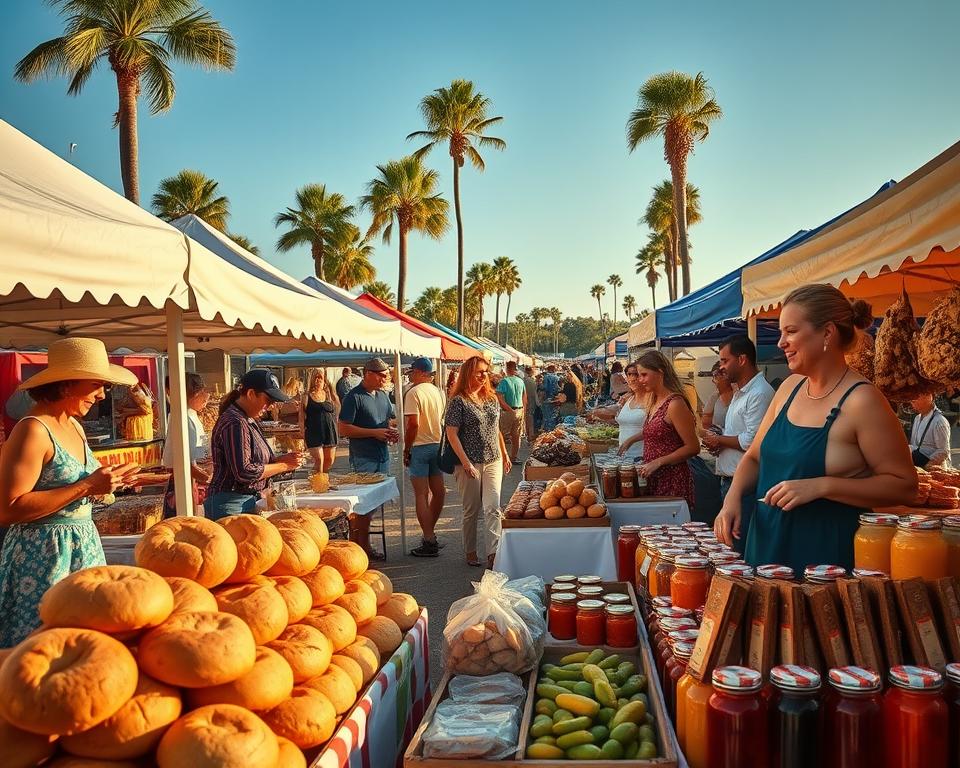
You may sell direct to consumers from your residence and at community venues. Typical channels include farmers markets, flea markets, roadside stands, and similar local markets.
In-state mail order and online preorders are allowed, but you must ship only within the state. This keeps your operation inside the limits set by florida cottage food laws.
- Allowed: home pickups, market stalls, flea and farmers markets, roadside stands, and in-state mail order.
- Not allowed: wholesale to stores, restaurants, caterers, or third-party retailers — those sales fall outside the cottage framework for a food operation.
- Keep booths free of non-permitted items that require a permit; mixed setups can prompt enforcement.
- Prepackage every product and include full labeling. Free samples must be prepackaged.
Plan for heat when transporting products and communicate clear pickup windows for online orders. Track sales by channel to see what works and protect your margins.
Florida cottage food labeling requirements for baked products
Good labels tell customers what they are buying and show your operation is transparent and compliant.
Every prepackaged product needs a clear, complete label. Follow these exact requirements so your package meets state regulations and federal allergen standards.
- Name and address: Print your business name and physical address on every package.
- Product name: Use the exact product name (for example, “Chocolate Chip Cookies”).
- Ingredients: List all ingredients in descending order by predominance by weight. Include sub-ingredients.
- Net weight/volume: Show net weight or net volume in U.S. customary units; metric is optional.
- Allergens: Declare major allergens per federal law (e.g., Contains: Wheat, Eggs, Milk, Tree Nuts).
- Nutrition: Include nutrition facts only if you make a nutrition claim.
- Cottage statement: Prominently place this statement in at least 10-point contrasting type: “Made in a cottage food operation that is not subject to Florida’s food safety regulations.”
- Legibility: Keep the label in English, easy to read, and consistent across products.
- Traceability: Use batch or lot codes to support recalls and quality control (recommended).
Review labels regularly as your product line grows. Meeting these labeling requirements protects customers and keeps your product compliant with cottage food law and related regulations.
Step-by-step: Start your home bakery and stay compliant
Ready to launch? Follow a simple sequence that keeps your operation legal and predictable. No state permit or inspection is needed to start, but planning matters.
Plan approved products and set up your home kitchen workflow
- Define your menu: pick only shelf-stable items allowed under cottage food and test each recipe for consistency.
- Map your kitchen workflow: assign clean prep zones, separate storage for ingredients and packaging, and label shelves.
- Source heat-resistant packaging that prints clearly and holds up during markets and mail order.
Package, label, and prepackage samples correctly
- Build compliant labels with name, address, product name, full ingredient list by weight, net weight, allergens, and the required statement.
- Prepackage every item and prepackage any samples before events; never offer open samples at booths or stands.
- Set prices and portions to cover costs for ingredients, packaging, and market fees while protecting margins.
Check local zoning, business licensing, and sales tax obligations
- Confirm local zoning and whether a city or county business license is required; keep approvals with your records.
- Call the Department of Revenue or consumer services to learn if you must collect sales tax for your food business.
- Choose sales channels: home pickup, local markets, or in-state online order and mail order. Post clear pickup and delivery rules.
- Create a simple recordkeeping system for batches, dates, and daily sales to support traceability and planning.
Quick tip: For broader business setup guidance, see this short guide on how to open a restaurant for related information: how to open a restaurant in.
Food safety, recordkeeping, and growth considerations
Keep your kitchen clean and records tidy to protect customers and grow confidently.
Clean operations: Keep work areas sanitized and separate storage for ingredients and packaging. Good lighting and intact screens help limit pests. Keep pets and sick people out of prep areas. Wash hands often and change gloves between tasks.
Standardize processes: Use written recipes and step lists so products stay consistent. Train helpers and label equipment for clear roles in the kitchen.
Track batches, ingredients, and sales as you scale
- Assign batch numbers and record production dates and ingredient lot numbers for quick tracing.
- Keep simple sales logs by channel to forecast demand and watch progress toward the annual cap.
- Store records in one place and review them monthly to spot trends or issues.
What to do if you approach the $250,000 sales cap
If your sales near the cap, plan a transition to a permitted food operation. That typically means using a commercial facility, following more regulations, and obtaining new licenses from the department agriculture or local agencies such as agriculture consumer services.
Consider liability insurance as volume grows and keep FDACS contact info handy for clarifications within the state.
| Area | Daily Action | Why it matters |
|---|---|---|
| Sanitation | Clean & sanitize surfaces before prep | Prevents contamination and maintains food safety |
| Traceability | Record batch code, date, ingredient lots | Speeds recall response and keeps customers safe |
| Sales tracking | Log channel and daily totals | Helps forecast and monitor cap status |
| Compliance | Review regulations and FDACS updates quarterly | Keeps your cottage food operation aligned with state expectations |
Conclusion
Keep your operation simple: sell shelf‑stable items, label them clearly, and use only approved direct channels like farmers markets, roadside stands, home pickup, or in‑state mail order.
Make every label list your name and address, full ingredients by weight, net contents, and allergen notices. Add the required cottage food statement in a readable font so customers see it at a glance.
Track sales to stay under the $250,000 cap and plan ahead if demand grows. Review cottage food laws and related food laws periodically and contact department agriculture consumer or consumer services with questions about any food product.
Prioritize sanitation, simple records, and consistent packaging. With a tight menu and clear labeling, your made cottage food operation can grow steadily and stay compliant.
FAQ
What are the basic rules for operating a home bakery under Florida cottage food laws?
Who qualifies as a home baker under these state provisions?
What are the key thresholds and limits I must meet?
Which baked items and shelf-stable products are allowed?
Can I sell frosted or cream-filled pastries from my home kitchen?
Where may I sell my packaged products?
Is mail order allowed for my home-baked items?
What must I include on every product label?
How should I disclose allergens and the cottage food statement?
What steps should I take to start and stay compliant with a home bakery?
How do I package, label, and handle samples correctly at markets?
What recordkeeping should I maintain as my home operation grows?
What happens if my annual sales approach the 0,000 cap for home operations?
Are there food-safety best practices I should follow even for low-risk items?
Do I need a permit from the Department of Agriculture and Consumer Services?
Can I sell to customers in other states?
Who enforces these regulations and where can I get official guidance?


