
 0
0
 0
0 To help you start an inflatable bounce house business florida, I’ll cut to what matters: costs, demand, and simple steps that protect your margins.
Commercial units cost more up front but last longer and carry warranties. Residential gear is cheaper, yet it wears out fast and can raise liability. Expect inventory costs from roughly $500 to $1,500 per unit, with bundle deals lowering per-item spend.
Plan for a delivery vehicle, storage, insurance, permits, and a basic website that converts local search into bookings. Water slides and combo units often drive the most rentals, while obstacle courses help secure school and corporate customers year-round.
Think logistics: Florida heat, storms, and traffic shape delivery windows and setup safety. Start lean, test prices, and reinvest profits into higher-margin units to scale with confidence.
Key Takeaways
- Budget for durable commercial gear and a reliable delivery vehicle to protect margins.
- Price conservatively at first; many markets book $150–$250 per event.
- Water slides boost bookings in warm months; combos and courses extend demand.
- Map your service area and set capacity limits before heavy marketing.
- Clear policies on weather and safety reduce disputes and improve reviews.
Validate Florida Demand and Map Your Service Area
You can validate market demand in under an hour with targeted searches. Focus on Google and Yelp for “party rental,” “water slide,” and “bounce house” plus your city. Record who ranks, what they stock, and posted prices.
Quick checklist:
- Scan listings for inventory types, daily rates ($100–$600), and delivery fees.
- Note review volume and complaints—late arrivals and dirty units are openings you can exploit.
- Map a 30–45 minute drive radius to keep fuel and labor predictable in heavy traffic.
Track seasonality: April–September peaks for water slides and obstacle courses. Year-round demand exists for birthdays and backyard events. Schools and churches book during the academic year; corporations prefer spring and fall.
| Unit Type | Typical Rate | High Demand Months |
|---|---|---|
| Water slide | $300–$600 | Apr–Sep |
| Basic bounce house | $100–$250 | Year-round |
| Obstacle course | $350–$600 | Spring–Fall |
Identify underserved zip codes by fewer listings or limited offerings. Call a few PTAs or event planners to confirm interest for obstacle courses. Use these findings to set competitive rental rates and define your primary service areas.
Write a Practical Business Plan for an Inflatable Rental Startup
Map capacity, pricing, and inventory so your calendar turns into predictable cash. Start by defining weekly booking capacity for one truck with a 30–45 minute delivery radius. Use Saturday throughput to set monthly revenue targets based on conservative rates: $100–$250 for basic bookings and $300–$600 for larger units.
Build a simple 12‑month projection that lists units, average daily rates, utilization goals, and seasonal adjustments for summer storms. Prioritize investment: one combo, one water slide, and one classic unit before adding courses.
- Segment customers: parents (birthdays), schools and churches (field days), and corporate/HOA events.
- Set pricing tiers, delivery fees, and add‑ons (generators, attendants). Require deposits and minimum orders for long trips.
- Document policies: weather, cancellations, cleaning fees, and refund rules tied to storm closures.
Pick a booking system that captures deposits and automates receipts. Create a marketing calendar aligned with school terms and summer demand. Register your company, secure tax accounts and COIs, and set milestones: 10 five-star reviews and 80% Saturday utilization before buying the next two inflatables.
Choose a Business Structure and Register Correctly
Choose the right legal structure early so your risks and taxes stay predictable. A simple decision now saves headaches later and protects your personal finances.
| Structure | Pros | Notes |
|---|---|---|
| Sole proprietorship | Cheap, easy to set up | No personal liability shield; good for testing market |
| LLC | Personal asset protection; trusted by banks | Costs ~ $149–$349 via services plus state fees; draft an operating agreement |
| Companies (other) | Scales for partners | Consider if you plan multiple owners or investors |
Practical steps:
- Pick a name and file with the state. Use an incorporation service or hire a clerk.
- Get an EIN from the IRS to open business bank accounts and run payroll.
- Register a Florida sales tax account to collect and remit tax on rentals.
- Check city/county requirements: local tax receipts, park vendor permits, and COI proof.
- Keep a dedicated bank account and ready contracts, waivers, and insurance copies in your vehicle.
Review filings and permits yearly as you add new counties or expand your service area.
Insurance and Safety Standards You Can’t Skip
Protect your crew, customers, and assets with the right insurance and safety routines. These coverages cut risk and help you win venue approvals fast.
Core policies to buy
- General liability: Size your policy to meet school and park requirements. Many venues ask for additional insured certificates.
- Commercial auto: Cover your delivery vehicle and gear in transit.
- Workers’ comp: Add coverage once you employ helpers, even seasonally. Premiums often run $2,000–$3,000 annually for party operators.
Operator training and equipment
- Use ASTM-compliant inflatables and follow manufacturer manuals for anchoring and occupancy limits.
- Train crews with SIOTO-style programs for setup, supervision, and emergency response.
- Standardize daily checks: seams, anchors, blowers, cords, GFCI, and wind limits before guests arrive.
- Keep incident and maintenance logs to support claims and improve quality.
Quick actions: issue COIs promptly, use high-visibility barriers, and run a pre-trip checklist. Good safety equals fewer claims, better reviews, and steadier bookings for your rental business and the wider industry.
start an inflatable bounce house business florida: Equipment and Inventory Strategy
Choose your core lineup with ROI, warranty, and service response in mind.
Commercial vs. residential: Commercial units cost about $1,500 and use thicker material. They often include 1–3 year warranties and handle heavy weekend use. Residential units ($500–$700) are cheaper. They wear faster and usually void warranty under rental use.
High-demand units and mix
- One combo unit for versatility and upsells.
- One water slide for summer months; higher daily rates justify the spend.
- One classic jumper for tight yards and budget customers.
- Add obstacle courses later to win schools and corporate events.
Essentials and maintenance
Stock matched equipment: paired blowers, heavy-duty extension cords with GFCI, a generator for parks, steel stakes and sandbags, plus a full cleaning kit.
| Item | Typical Cost | Daily Rate |
|---|---|---|
| Commercial inflatables | $1,500+ | $300–$600 |
| Residential units | $500–$700 | $100–$250 |
| Essential gear (blowers, cords) | $200–$800 | Included with rental |
Label products, use dry racks or pallets to avoid mildew, and keep a maintenance calendar. Carry a spare blower, patch kits, and spare stakes to reduce downtime. Track unit bookings and reinvest in items that show fast ROI while retiring low-demand houses.
Startup Costs, Budgeting, and Smart Financing
A clear budget keeps cash flowing through slow weeks and rainy weekends. Plan for fixed costs, variable costs, and a small repair reserve. This protects margins and helps you forecast revenue.
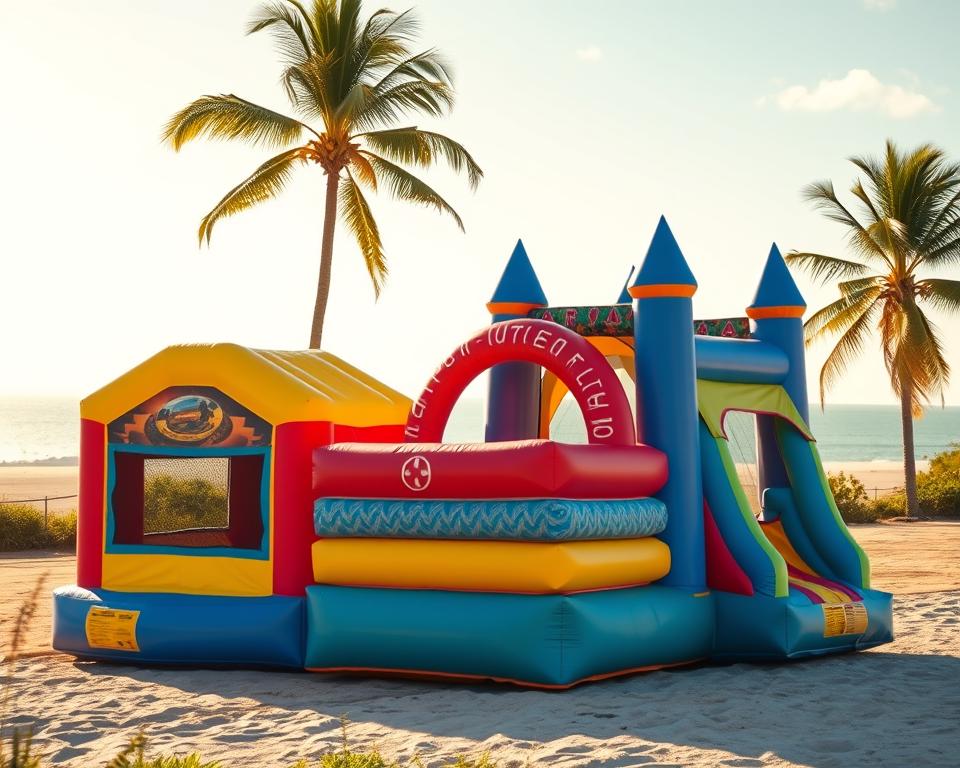
Typical investment ranges include inflatables ($2,000–$5,000 each; bundles about $5,699 for three), a delivery vehicle or trailer ($3,000–$30,000), storage ($3,000–$10,000), insurance ($2,000–$3,000/year), legal and permits ($500–$1,500), and marketing ($3,000–$10,000).
- Build a line-item budget: equipment, vehicle/trailer, storage, insurance, legal, website, and safety supplies.
- Compare single-unit buys to bundles to lower per-unit costs and speed positive cash flow.
- Model 90-day cash flow with conservative booking rates and a rainy-day buffer.
- Consider leasing some equipment or using unsecured loans; weigh interest and seasonal revenue.
| Category | Low | High | Notes |
|---|---|---|---|
| Inflatables / units | $4,000 | $15,000 | Bundles reduce per-unit costs |
| Vehicle / trailer | $3,000 | $30,000 | Used vans cut upfront; budget maintenance |
| Storage & insurance | $5,000 | $13,000 | Annual insurance + storage rental |
| Marketing & legal | $3,500 | $11,500 | Website, ads, permits, and setup fees |
Track ROI per unit. Count how many rentals clear the purchase cost for each house. Use bookkeeping software or an accountant to monitor margins and sales tax remittance. Negotiate storage and insurance annually to lower ongoing costs.
Operations: Delivery, Setup, Cleaning, and Maintenance
Efficient operations cut downtime and keep customers happy, week after week. Use clear routines so every delivery runs the same way. That builds trust and repeat bookings.
Standardize setup and safety checks
Use a pre-departure checklist so each load leaves with the right equipment, blower, cords, stakes, sandbags, and tarps.
On arrival, walk the site. Confirm space, power, and anchoring options. Adjust for shade and surface type.
- Setup flow: tarp, unfold, anchor corners, connect blower, inflate, add anchors, full safety inspection.
- Review rules with customers: supervision, capacity limits, no flips, and weather pauses for lightning or high winds.
Cleaning, repairs, and backup gear
Clean daily with approved solutions. Deep clean weekly to prevent mildew and keep units photo-ready.
Log minor repairs and schedule seam checks. Carry patch kits and spare blowers so rentals continue even if something fails on-site.
| Task | Frequency | Must-have Items |
|---|---|---|
| Pre-departure check | Every delivery | Checklist, blower, cords, stakes, straps |
| Onsite safety walk | Arrival | Site map, tape measure, anchor kit |
| Cleaning | Daily & weekly deep clean | Approved cleaner, towels, sanitizer |
| Repairs & backups | As needed | Patch kit, spare blower, spare cords |
Standardize photo documentation of setup and unit condition to reduce disputes and speed claims. Train helpers with ride-along checklists so growth doesn’t erode safety or service. Optimize routing with buffers for traffic and storms; on-time arrivals drive five-star reviews and long-term success.
Marketing That Drives Bookings in Florida
Make it easy for customers to find, trust, and book your gear online. Focus on conversions, reviews, and seasonal offers that match local demand.
Build a conversion-focused website and local SEO foundations
Launch a fast site with live inventory, clear daily rates, and a zip-code delivery checker. Add city and neighborhood pages to capture ready-to-book traffic.
Social media, reviews, and referral programs for steady demand
- Claim Google Business Profile and Yelp. Use pro photos and respond to reviews.
- Ask for reviews after every setup; send a QR on receipts or a thank-you text.
- Share short setup timelapses and cleaning clips on Instagram and TikTok.
- Offer referral credits to parents and HOA managers to convert word-of-mouth into repeat rentals.
Seasonal promotions for slides and school/corporate events
Run heat-wave promos for slides and back-to-school offers for PTAs and churches. Partner with planners and provide COIs and a simple rate card for obstacle and combo packages.
| Promo | Target | Why it converts |
|---|---|---|
| Heat-wave slide discount | Families | Higher perceived value in peak demand |
| PTA bulk rate | Schools | Secures repeat bookings |
| Referral credit | HOAs | Low-cost customer acquisition |
Pricing, Profitability, and Scaling Your Rental Business
Price decisions turn casual interest into booked events; set them with clear costs and realistic margins.
Set daily rates by value and capacity. Basic units typically rent for $100–$250, while slides and obstacle courses command $300–$600. Use delivery fees tied to distance and setup complexity to protect margins.
Track utilization weekly. Measure actual costs per rental: fuel, labor, cleaning time, repairs, and credit card fees. If a unit needs more than 10 rentals to pay back, reconsider adding more of that type.
- Bundle high-margin combos (slide + combo + generator) to lift average order value.
- Keep a sold-out waitlist and add staff once Saturday capacity caps out.
- Secure COIs for schools and corporate events—these win repeat contracts.
| Metric | Action | Target |
|---|---|---|
| Daily rate mix | Tier by unit type | $100–$600 |
| Utilization | Track weekly | 60–80% peak Saturdays |
| Payback | Add units with | Yes |
| Costs | Include fuel, labor, insurance | Update quarterly |
Use a simple dashboard to forecast revenue and schedule purchases ahead of peak months. Review liability and insurance whenever you expand into new venues so pricing reflects added risk.
Conclusion
Tie everything together with practical next steps that move you from ideas to paid events. Make a short plan, map a tight service radius, and list starter units you can manage well.
Validate demand for slides and obstacle courses. Budget your first investment and protect it with the right insurance and training. One slide, one combo, one classic jumper keeps costs low and ROI clear.
Focus on service and spotless gear so customers book again. Track utilization, reinvest in the products that fill most weekends, and use reviews and school partnerships to lock steady volume.
For real momentum, draft simple policies, set rates by distance and complexity, and begin small. Follow this plan and you’ll build a sustainable inflatable rental business with repeat customers and measured success.
FAQ
What permits and registrations do I need to operate in Florida?
Which business structure is best for liability protection?
What insurance policies are essential for rental operations?
FAQ
What permits and registrations do I need to operate in Florida?
You’ll need to register your legal entity (LLC or sole proprietorship), obtain an EIN from the IRS, and set up a Florida sales tax account with the Department of Revenue. Check local city or county rules for special event permits, zoning for storage, and parking restrictions. Some municipalities require a business tax receipt or occupational license — contact your city clerk for specifics.
Which business structure is best for liability protection?
An LLC usually offers the best balance of liability protection and simplicity for rentals. It separates personal assets from company obligations. However, consult a Florida attorney or CPA to confirm what fits your situation and to understand insurance and tax implications.
What insurance policies are essential for rental operations?
Carry general liability with limits at least
FAQ
What permits and registrations do I need to operate in Florida?
You’ll need to register your legal entity (LLC or sole proprietorship), obtain an EIN from the IRS, and set up a Florida sales tax account with the Department of Revenue. Check local city or county rules for special event permits, zoning for storage, and parking restrictions. Some municipalities require a business tax receipt or occupational license — contact your city clerk for specifics.
Which business structure is best for liability protection?
An LLC usually offers the best balance of liability protection and simplicity for rentals. It separates personal assets from company obligations. However, consult a Florida attorney or CPA to confirm what fits your situation and to understand insurance and tax implications.
What insurance policies are essential for rental operations?
Carry general liability with limits at least $1M per occurrence, commercial auto if you deliver equipment, and workers’ compensation if you have employees. Consider inland marine or equipment coverage for inventory and participant liability add-ons. Discuss policy endorsements with an agent familiar with party-rental risks.
How do I decide what inventory to buy first?
Start with high-demand, versatile units like a medium combo unit and a water slide if your market supports wet events. Balance commercial-grade inflatables for durability with a few smaller toddler options. Add essential gear — blowers, extension cords, stakes, sandbags, and generators — so you can service varied venues.
Should I buy commercial or residential units?
Choose commercial-grade gear for rentals. It has stronger stitching, thicker vinyl, and better warranties. That durability reduces downtime and long-term repair costs, improving ROI even though upfront prices are higher.
How can I map demand across Florida neighborhoods and seasons?
Use Google and Yelp to audit competitors, check local event calendars, and review school and church schedules. Identify peak months (summer and holiday weekends for wet units), and find underserved areas with few providers. Target neighborhoods near family communities and event venues for faster traction.
What are typical startup cost ranges I should plan for?
Expect to invest for inventory, a delivery vehicle, storage, insurance, and marketing. Small launches often start around $10,000–$25,000; fuller inventories and a reliable truck push totals higher. Costs vary by the number and quality of units and whether you lease space or store at home.
How do I price rentals to stay competitive and profitable?
Calculate all costs per booking — amortized equipment, fuel, labor, insurance, cleaning, and marketing — then add desired margin. Research local rates on competitors’ sites. Offer hourly and daily options, delivery tiers, and add-ons to capture more revenue and protect margins.
What cleaning and maintenance routines should I adopt?
Clean and disinfect vinyl after every rental using manufacturer-approved cleaners. Inspect seams, anchors, and blower ports before and after use. Patch small tears promptly and keep a parts inventory. Maintain a schedule for deep cleaning and annual safety checks.
How do I standardize setup and safety checks onsite?
Develop a written checklist covering anchoring, blower operation, weight and capacity limits, and weather thresholds. Train staff to run the checklist for setup and teardown each time. Post clear safety rules for customers and provide a contact number for emergencies.
What training should my staff have?
Staff need hands-on setup and teardown training, customer-facing skills, and basic first-aid knowledge. Teach proper anchoring, electrical safety, and inspection procedures. Consider ASTM F2374 guidelines for inflatable play equipment as a reference for safe operations.
How do I find customers and keep bookings steady year-round?
Build a conversion-focused website with local SEO targeting cities and event types. Use Facebook and Instagram ads for local families, and list on Google Business Profile and Yelp. Encourage reviews and referrals with discounts. Offer seasonal promotions for water slides and bundles for schools, churches, and corporate events.
What delivery vehicle and storage options work best?
A cargo van or box truck provides secure transport for multiple units and gear. Ensure it has tie-downs for safe transit. For storage, choose a dry, ventilated space to prevent mildew. If you lack space at home, rent a small warehouse or shared commercial storage unit near your service area.
How can I scale and add revenue streams over time?
Track utilization and profit per unit to identify what to expand. Add complementary rentals like tables, chairs, tents, obstacle courses, or concessions to increase average ticket value. Hire trained staff as demand grows and explore event partnerships with schools, venues, and event planners.
What safety limits should I enforce for water slides and wet units?
Enforce age, weight, and rider-count limits from the manufacturer. Use slip-resistant mats at entrances, monitor wet surfaces, and keep electrical equipment protected and dry. Cancel water events when weather or venue drainage poses a risk.
Are generators necessary and what specs should I choose?
Generators are essential when a site lacks power. Choose a model that can handle the combined wattage of your blowers (check each blower’s rated watts and add a safety margin). Opt for quiet, commercial-grade units and carry fuel safely in approved containers.
How do I handle deposits, cancellations, and damage claims?
Require a booking deposit and a signed rental agreement outlining cancellation windows, weather policies, and damage responsibility. Hold a refundable security deposit for high-value rentals. Document equipment condition with photos before and after each rental to streamline damage claims.
Where can I source quality units and parts?
Buy from reputable suppliers like Bounceland, LeapFrog Inflatables, or local commercial distributors. Seek manufacturers that offer warranties and replacement parts. Compare service networks and read reviews to ensure timely support.
How do I price delivery and setup fees fairly?
Base fees on mileage, travel time, and complexity of setup. Offer tiers (basic curbside, standard setup, premium placement) so customers choose their level of service. Include minimums for short jobs to cover fuel and labor.
What regulations affect public events and liability at schools or parks?
Many parks and schools require certificates of insurance naming the venue as additional insured. Obtain written venue approvals, follow local permitting rules, and comply with any facility-specific safety requirements. Provide documentation promptly to secure bookings.
M per occurrence, commercial auto if you deliver equipment, and workers’ compensation if you have employees. Consider inland marine or equipment coverage for inventory and participant liability add-ons. Discuss policy endorsements with an agent familiar with party-rental risks.
How do I decide what inventory to buy first?
Start with high-demand, versatile units like a medium combo unit and a water slide if your market supports wet events. Balance commercial-grade inflatables for durability with a few smaller toddler options. Add essential gear — blowers, extension cords, stakes, sandbags, and generators — so you can service varied venues.
Should I buy commercial or residential units?
Choose commercial-grade gear for rentals. It has stronger stitching, thicker vinyl, and better warranties. That durability reduces downtime and long-term repair costs, improving ROI even though upfront prices are higher.
How can I map demand across Florida neighborhoods and seasons?
Use Google and Yelp to audit competitors, check local event calendars, and review school and church schedules. Identify peak months (summer and holiday weekends for wet units), and find underserved areas with few providers. Target neighborhoods near family communities and event venues for faster traction.
What are typical startup cost ranges I should plan for?
Expect to invest for inventory, a delivery vehicle, storage, insurance, and marketing. Small launches often start around ,000–,000; fuller inventories and a reliable truck push totals higher. Costs vary by the number and quality of units and whether you lease space or store at home.
How do I price rentals to stay competitive and profitable?
Calculate all costs per booking — amortized equipment, fuel, labor, insurance, cleaning, and marketing — then add desired margin. Research local rates on competitors’ sites. Offer hourly and daily options, delivery tiers, and add-ons to capture more revenue and protect margins.
What cleaning and maintenance routines should I adopt?
Clean and disinfect vinyl after every rental using manufacturer-approved cleaners. Inspect seams, anchors, and blower ports before and after use. Patch small tears promptly and keep a parts inventory. Maintain a schedule for deep cleaning and annual safety checks.
How do I standardize setup and safety checks onsite?
Develop a written checklist covering anchoring, blower operation, weight and capacity limits, and weather thresholds. Train staff to run the checklist for setup and teardown each time. Post clear safety rules for customers and provide a contact number for emergencies.
What training should my staff have?
Staff need hands-on setup and teardown training, customer-facing skills, and basic first-aid knowledge. Teach proper anchoring, electrical safety, and inspection procedures. Consider ASTM F2374 guidelines for inflatable play equipment as a reference for safe operations.
How do I find customers and keep bookings steady year-round?
Build a conversion-focused website with local SEO targeting cities and event types. Use Facebook and Instagram ads for local families, and list on Google Business Profile and Yelp. Encourage reviews and referrals with discounts. Offer seasonal promotions for water slides and bundles for schools, churches, and corporate events.
What delivery vehicle and storage options work best?
A cargo van or box truck provides secure transport for multiple units and gear. Ensure it has tie-downs for safe transit. For storage, choose a dry, ventilated space to prevent mildew. If you lack space at home, rent a small warehouse or shared commercial storage unit near your service area.
How can I scale and add revenue streams over time?
Track utilization and profit per unit to identify what to expand. Add complementary rentals like tables, chairs, tents, obstacle courses, or concessions to increase average ticket value. Hire trained staff as demand grows and explore event partnerships with schools, venues, and event planners.
What safety limits should I enforce for water slides and wet units?
Enforce age, weight, and rider-count limits from the manufacturer. Use slip-resistant mats at entrances, monitor wet surfaces, and keep electrical equipment protected and dry. Cancel water events when weather or venue drainage poses a risk.
Are generators necessary and what specs should I choose?
Generators are essential when a site lacks power. Choose a model that can handle the combined wattage of your blowers (check each blower’s rated watts and add a safety margin). Opt for quiet, commercial-grade units and carry fuel safely in approved containers.
How do I handle deposits, cancellations, and damage claims?
Require a booking deposit and a signed rental agreement outlining cancellation windows, weather policies, and damage responsibility. Hold a refundable security deposit for high-value rentals. Document equipment condition with photos before and after each rental to streamline damage claims.
Where can I source quality units and parts?
Buy from reputable suppliers like Bounceland, LeapFrog Inflatables, or local commercial distributors. Seek manufacturers that offer warranties and replacement parts. Compare service networks and read reviews to ensure timely support.
How do I price delivery and setup fees fairly?
Base fees on mileage, travel time, and complexity of setup. Offer tiers (basic curbside, standard setup, premium placement) so customers choose their level of service. Include minimums for short jobs to cover fuel and labor.
What regulations affect public events and liability at schools or parks?
Many parks and schools require certificates of insurance naming the venue as additional insured. Obtain written venue approvals, follow local permitting rules, and comply with any facility-specific safety requirements. Provide documentation promptly to secure bookings.
How do I decide what inventory to buy first?
Should I buy commercial or residential units?
How can I map demand across Florida neighborhoods and seasons?
What are typical startup cost ranges I should plan for?
How do I price rentals to stay competitive and profitable?
What cleaning and maintenance routines should I adopt?
How do I standardize setup and safety checks onsite?
What training should my staff have?
How do I find customers and keep bookings steady year-round?
What delivery vehicle and storage options work best?
How can I scale and add revenue streams over time?
What safety limits should I enforce for water slides and wet units?
Are generators necessary and what specs should I choose?
How do I handle deposits, cancellations, and damage claims?
Where can I source quality units and parts?
How do I price delivery and setup fees fairly?
What regulations affect public events and liability at schools or parks?


