
 0
0
 0
0 Hear a low, rolling call swell as humidity climbs and you’re likely near a marsh at dusk. I’ll show you how to turn that rush of night noise into clear clues.
Start by focusing on four simple cues: pitch, rhythm, repetition, and habitat. Use pitch to guess size — deeper calls mean bigger bodies. Rhythm and repetition help you separate one caller from a busy chorus.
Expect the loudest activity at dusk and after storms. Only males call, so a loud marsh tells you who is active, not the whole population. Tree calls can mimic birds or insects, so listen for patterns, not just tone.
With practice, you can map local wetlands by ear and spot invasive callers early. These field-tested tips are built for real nights outdoors, helping you apply listening skills fast and confidently.
Key Takeaways
- Listen for pitch to estimate size: low equals large, high equals small.
- Use rhythm and repetition to separate individual callers in a chorus.
- Best listening windows are dusk, night, and right after rain.
- Only males produce calls; a noisy wetland shows active callers, not total numbers.
- Tree voices may mimic other animals—patterns reveal identity.
Field-tested ways to recognize frog and toad calls at night
Listen from the margin of a pond after sunset. Stand still, let your ears sort layers, and use the short checklist below to ID calls fast.
- Pitch: deep and chesty or high and thin? Larger frog = lower pitch; tiny frogs occupy the top range.
- Rhythm: bell-like notes, buzzy trills, rapid clicks, or rolling chuckles signal different groups.
- Repetition: singles, clustered triplets (er-er-er), or sustained hums narrow options quickly.
- Habitat anchor: permanent ponds favor low, resonant callers; shallow wetlands host chorus frogs and peepers; shrubs and porch lights draw tree callers close.
- Weather tip: listen before and during rain bursts—pressure drops spike activity.
- Layering: pick one voice for 10–15 seconds, then switch to map the chorus.
- Record: take short phone clips, play back quietly, and compare with reference libraries.
- Position: stand downwind near vegetation edges; avoid long flashlight scans to prevent spooking males.
- Insect check: frogs often have clear start/stop pulses; insects sound more continuous and mechanical.
| Habitat | Likely Caller | Quick Tip |
|---|---|---|
| Permanent pond | Low, resonant callers | Listen across open water |
| Shallow wetland | Chorus frogs/peepers | Focus during rain |
| Shrub/porch | Tree callers | Scan vegetation edges |
Florida frog species sounds: distinctive calls you can learn today
Evening wetlands fill with distinct notes; learn a few key voices and you’ll spot callers fast.
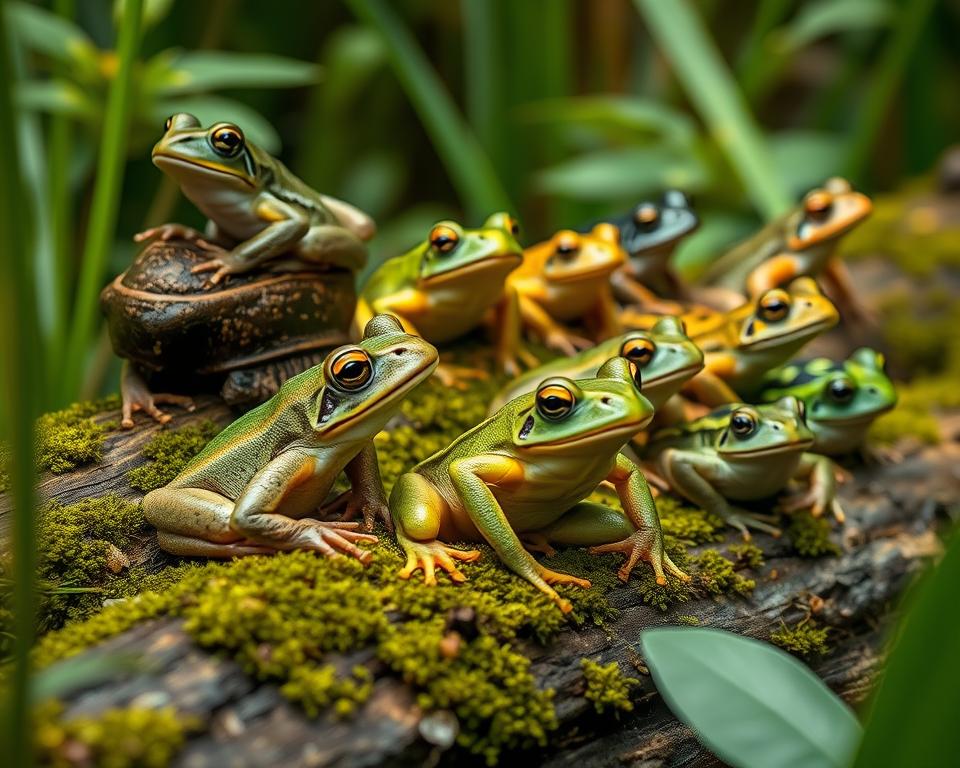
Green Treefrog — clean, bell-like “quonk.” Solo or loud in chorus, plus a rain variant. Listen near porch lights and shrubs at dusk.
Squirrel Treefrog — raspier “quank,” often in short bursts before rain. Found in gutters, bushes, and garden edges.
Spring Peeper — sharp, piercing “peep.” Can become a wall of sound in breeding chorus at cooler nights and shallow pools.
Southern Cricket Frog — rapid, hard clicks. Often solo along pond margins and easy to pick out inside heavy choruses.
Southern Leopard Frog — rolling chuckles and cackles. Part of big wetland gatherings at night near marsh edges.
Pig Frog — deep snorts in repeating sets (er-er-er). Hears best over permanent water: lakes and canals.
| Caller | Pitch / Rhythm | Habitat |
|---|---|---|
| Little Grass Frog | Very high, thin peeps; rhythmic strings | Grassy edges, high-pitch layer |
| Pinewoods Treefrog | Rapid, buzzy trills | Pine flatwoods and edges |
| Barking Treefrog | Deep barks, spaced | Wet hardwoods, strong chorus presence |
| Eastern Narrow-mouthed Toad | Lamb-like bleat — baaaahhh | Ground cover near edges |
When and where to listen: seasons, rain, and the chorus effect
Walk pond edges just after the first drops and you’ll catch the chorus at its liveliest. Short windows after showers deliver the clearest mixes of callers. I recommend a quick weather check before you go.
Rain and barometric drops: why calls surge before and during storms
Rising humidity and falling pressure trigger many males to start. Calls often rise minutes to hours before visible rain.
After the first raindrops, activity spikes. Expect different mixes as showers move through neighborhoods.
Seasonal choruses: spring, July, August, and winter soundscapes
Spring and early summer bring large wetland choirs. July and August often peak with diverse tree callers during warm, wet nights.
Winter still offers vocal pockets where cooler nights suit certain species. Compare seasons to train your ear.
Why only males call, and how chorus density aids identification
Only males call to attract mates and reduce predation risk through numbers. A dense chorus makes it easier to isolate one voice and follow it.
- Watch the weather: falling pressure sparks pre-storm calling.
- Best listening: just after first rain and during humid evenings.
- Locations: wetland edges, roadside ditches, retention ponds, and pine flatwoods after storms.
- Urban tips: check porch lights, gutters, and shrubs for tree callers and small frogs.
- ID hint: sustained hums often mean a toad; sharp pulses or trills point to tree frogs.
| Habitat | Likely Voice | Listening Tip |
|---|---|---|
| Permanent lake | Low, resonant notes | Stand across open water at night |
| Grassy shallows | High, rapid peeps | Scan shallow edges after rain |
| Pine flatwoods | Buzzy trills and tree calls | Walk vegetation margins at dusk |
Conclusion
Turn tonight’s chorus into a lesson: pick one voice, record a short clip, and match it to trusted examples.
Start with the checklist — pitch, rhythm, repetition, habitat — and practice during the first evening rain this week.
Compare your recordings to Green Treefrog, Squirrel Treefrog, Pig Frog, and Southern Toad examples to calibrate your ear.
Scout multiple sites: retention ponds for low notes, grassy ditches for trills, and porch lights for tree callers.
Keep a seasonal log of weather, time, and frogs heard. When confident, share labeled recordings with local groups to help track native species and manage invasive toad issues.
FAQ
How can I identify frogs by their calls at night?
What is a fast checklist for listening to calls?
What does a Green Treefrog sound like?
How does a Squirrel Treefrog differ in sound?
What is the Spring Peeper call like?
How can I recognize a Southern Cricket Frog?
What does a Southern Leopard Frog sound like?
How would I describe a Pig Frog call?
What makes the Little Grass Frog’s call distinct?
How does a Pinewoods Treefrog sound?
What does a Barking Treefrog sound like?
How can I identify a Bird-voiced Treefrog by ear?
What do Ornate and Southern Chorus Frogs sound like?
How do Gopher and Bronze Frogs sound near permanent water?
What is the Eastern Narrow-mouthed Toad’s call like?
How does a Southern Toad sound in a chorus?
How can I tell Cane Toads from Southern Toads by sound?
What does an invasive Cuban Treefrog sound like?
When do calls surge before storms?
Which seasons have the loudest choruses?
Why are only males the ones calling?


